French Roadtrip Part 3. A bus to La Rochelle

After 2 days of exploring by bike our ‘behinds’ needed a day off the saddle, so we headed for La Rochelle by bus.

After consulting the timetable we had picked up at the Tourist Information centre in St Martin, I discovered the bus stopped on the main road a few yards from the end of the driveway to the site. We arrived 10 minutes early just in case – remembering to stand on the correct side of the road!- then bang on time a coach with ‘La Rochelle’ emblazoned in lights across the front pulled up. €4.50  bought us each a return ticket and we took our seats on a comfy air conditioned coach for a whistle stop tour of Ile de Re on the way.

Bus number 150 stops at most of the villages on the Island, departing from the far north there are 37 stops in total arriving at La Rochelle Gare 2 hours 7 minutes later. We were getting on at stop no:12 which took 1.5 hours to reach our  destination. It is an ideal way to initially discover the many villages and then decide whether they warrant a return visit of their own. It was a popular bus with every seat full by the time we crossed the Pont de L’ile de Re from the island, its passengers were a mixture of tourists doing the same as us and locals escaping for the day to the big City. The timetables issued only seem to be valid for a few weeks at a time changing I guess for seasonal demand, so best to check that you have a current one before making plans.

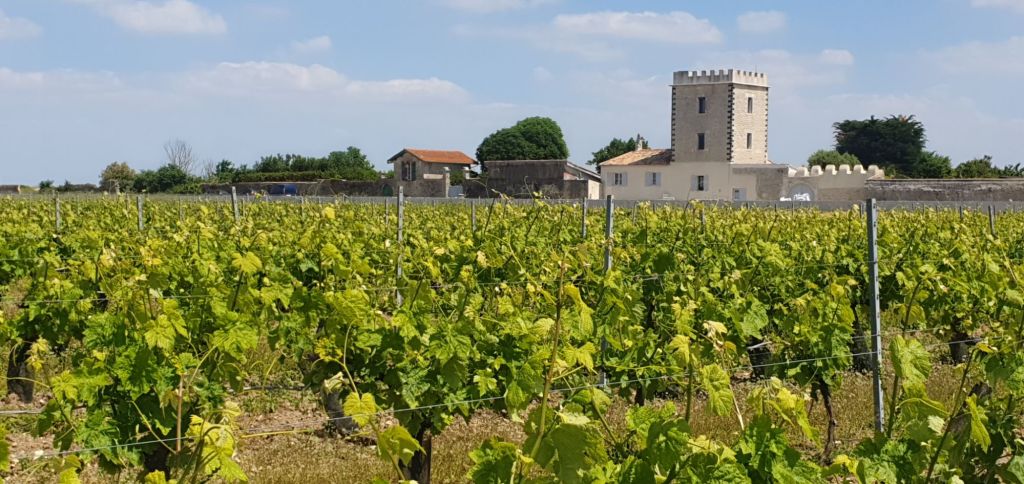
Gazing out of the window at the passing countryside we whizzed past vineyards, oyster farms and poppy fields, often taking sharp intakes of breath and closing our eyes as the driver skilfully manoeuvred the coach around 90 degree bends and down the narrowest of village streets. We made mental notes where the Intermarche and petrol station were for our journey out the following day, and the villages we would want to return to on a future visit to the Island.

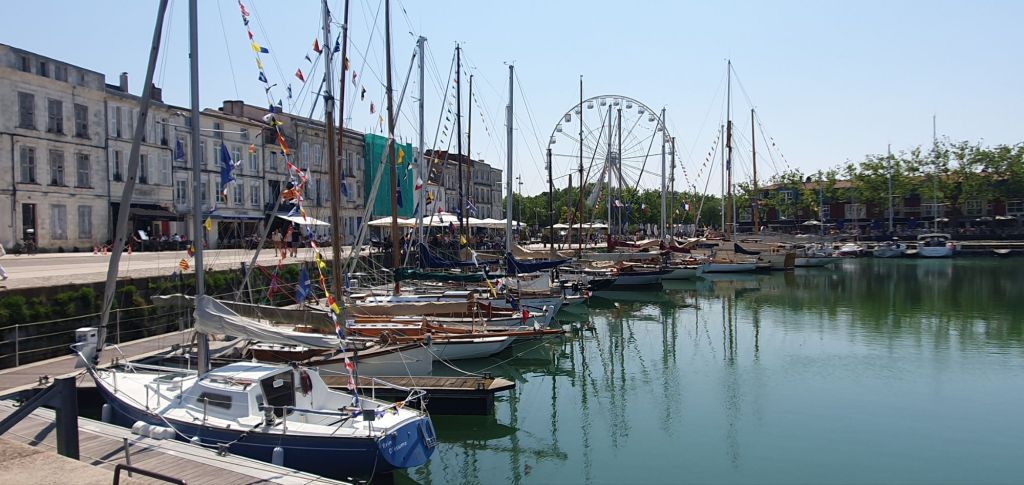
We stayed on the bus to its last stop which was the train station terminus. From here it was less than a 10 minute walk to the Vieux Port La Rochelle (old harbour) ‘Fort Boyard’ a physical challenge gameshow that first aired in 1998 was filmed in a Napoleonic sea fortress just off the coast, you can take boat trips from the harbour to view it close up but cannot access the Fort itself.
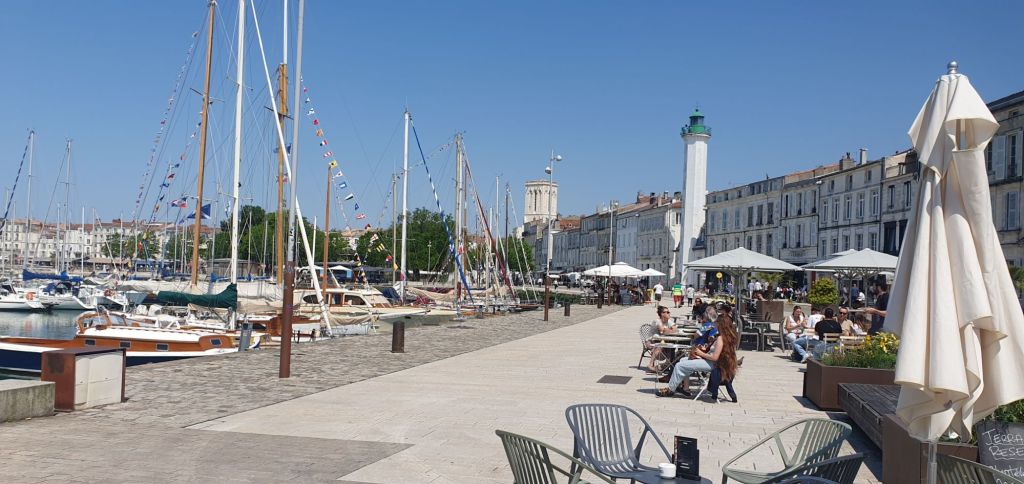
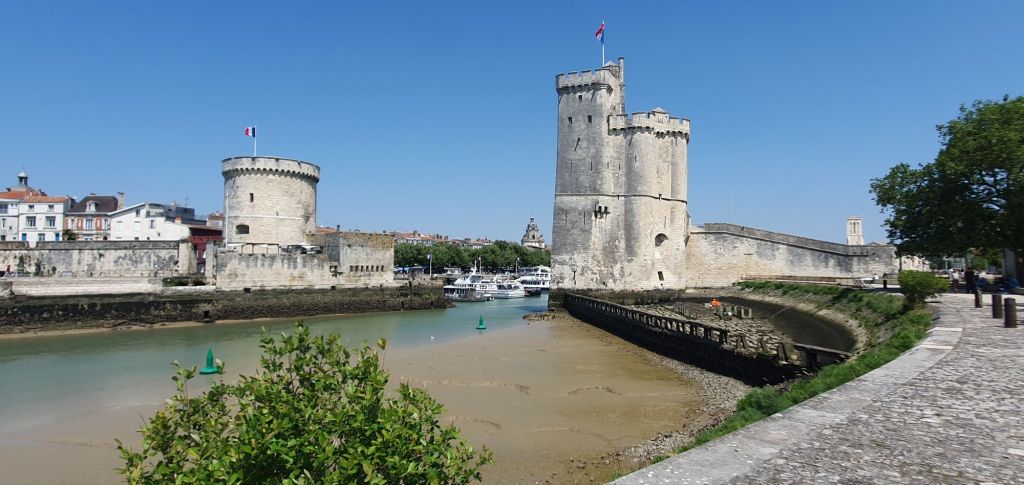
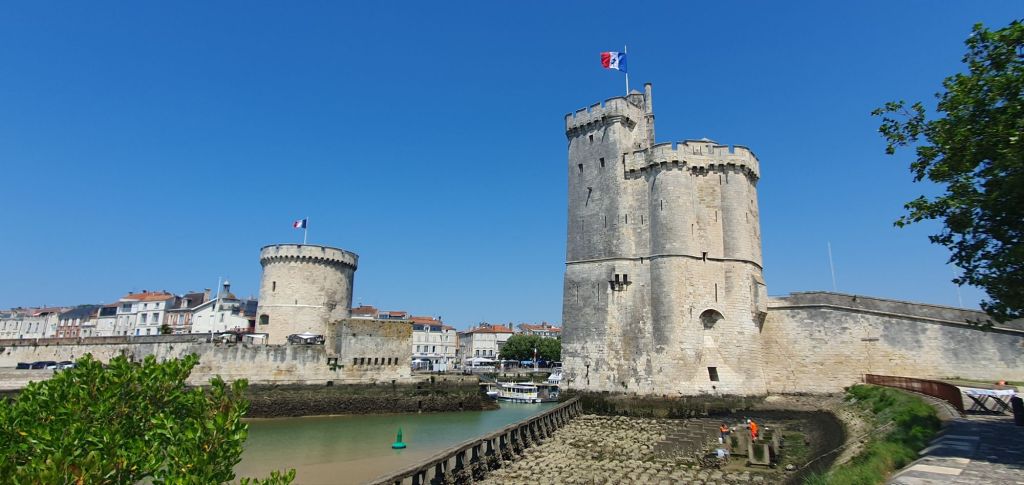
We headed first to view the 2  towers that guard the entrance to the port from the Atlantic. Dating from the 14th century they formed part of the towns medieval fortifications each originally home to a Captain and his soldiers and also housing dungeons, they have been listed buildings since 1879.

From there we walked back around the harbour to the other side, the sun bouncing brightly off the vast white stone pavements covered with tables chairs and umbrellas, each looking very inviting as a respite from the heat.

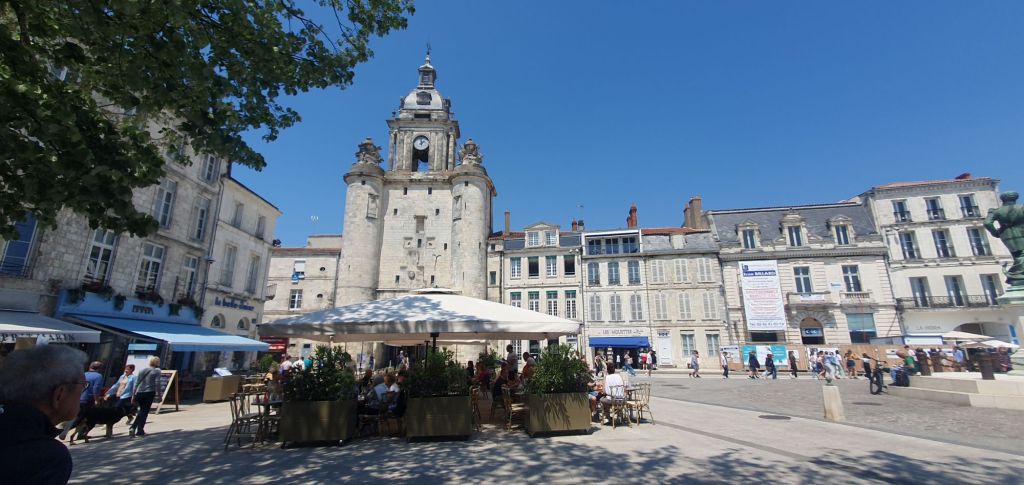
More shade along this side of the harbour allowed us to enjoy an ice-cream before wandering through the Porte de la Grosse Horloge- Big Clock Gate- to the shopping areas and alleyways beyond. This gateway to the old city was constructed in several stages, the lower part in the 12th century as part of the towns fortifications. The clock and bell tower were added in 1478 to house a two tonne bell which sounded the instruction each evening to close the entrance to the port by means of a chain slung between the two towers. The part containing the clock and bell tower was then rebuilt in 1746 in the style of Louis XV.

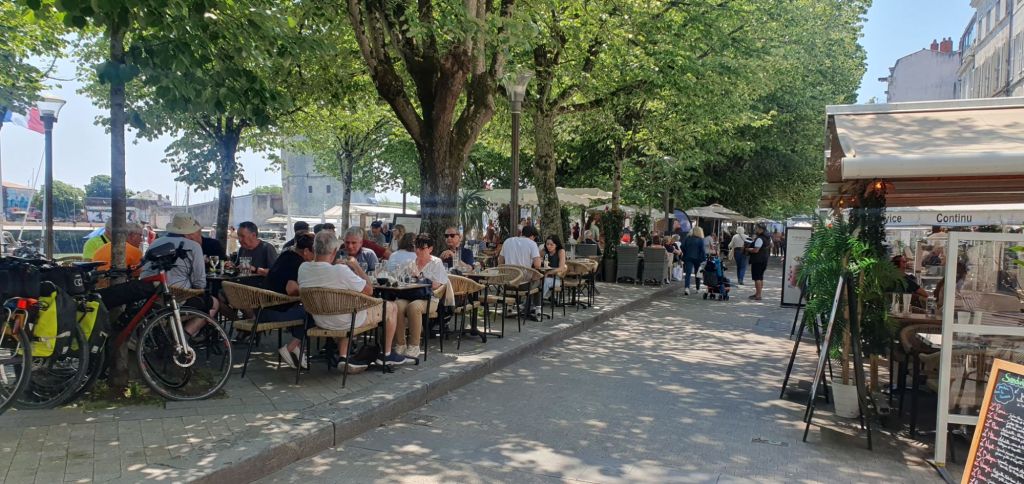
Through the archway lies half timbered buildings, cream stone covered arcades, shops, alleyways and squares. The arcades were built as protection for market stalls and traders from bad weather but today gave shelter from the sun.
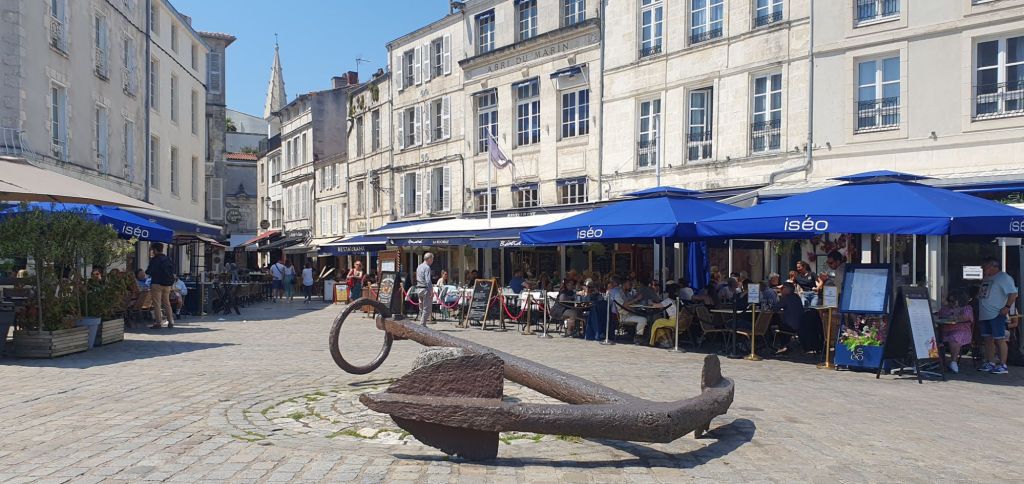
After wandering and exploring these interesting streets it was now approaching the time of our return bus to Ile de Re so we started to make our way back to the train station stopping off for refreshments overlooking the harbour on the way. An oompah band were sitting at the tables playing an impromptu concert for passersby.

The city has so much more to see and do including an aquarium, several museums, a cathedral, a secret wartime bunker and even a beach. We didn’t get to explore any of these this time but without a doubt we will return.

Coming soon- Read about the next leg of our French Roadtrip Part 4 when we visit the Loire valley Chateaux.

French Roadtrip Part 2, Le Mans to Ile de Re

According to the satnav it was a 4 hour journey from Le Mans to our next destination Ile de Re. With luck a straightforward run on the toll roads should see us there for late afternoon as we always mentally add an hour on for the ‘unexpected’

The sky had brightened during our time inside the Le Mans 24h Museum and as we headed south the sun began to break through. This was more like the weather we’d hoped for. The trusty satnav successfully skirted us around La Rochelle and the Pont de L’ile de Re soon appeared on the skyline up ahead of us. We paid the €8 toll to cross the bridge and it felt like we were travelling to another country. The sky above us was clear, its deep blue colour reflecting in the sun sparkled waters beneath us. How therapeutic it was to see the sea again.

Pont de L’ile de Re

Ile de Re is 19 miles long and 3 miles across at its widest point. It almost looks like two islands on a map as salt marshes carve into the flat landscape leaving thin strips of land navigable only by bicycle and one road. Cycling is the main mode of transport here, there being hundreds of miles of designated mostly off road cycling paths criss crossing the Island taking you to picturesque villages and out of the way beaches. Our chosen campsite was about half way along the island so a few more miles of navigating through small villages, catching tantalising glimpses of sandy beaches through pine trees and passing through vineyards and poppy fields until we spotted the turning off to the site.

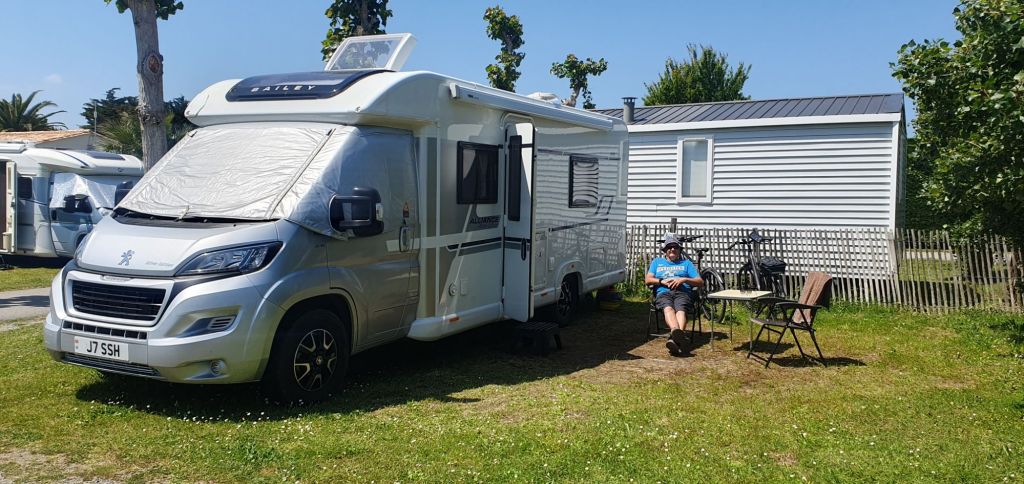
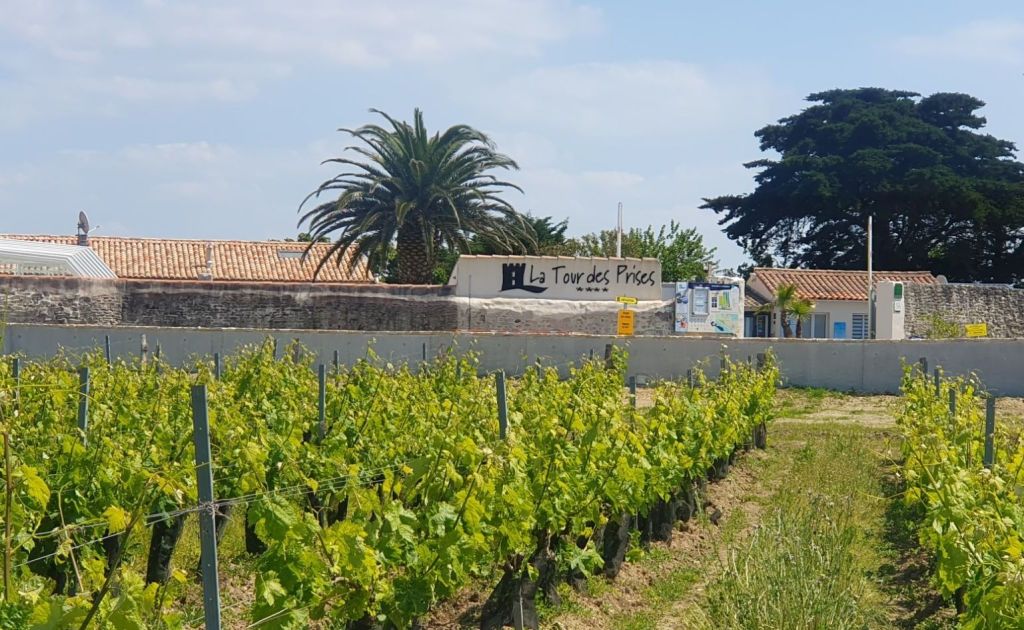
La Tour des Prises Campsite sits surrounded by vines and salt marshes the nearest large village being La Couarde sur Mer. It has a covered swimming pool, games room and bike hire, but no shop or restaurant. The facilities are mixed gents/ladies showers and toilets which are plentiful and clean. The pitches are the usual European standard having bare soil patches on sparse grass with hedging between. Our motorhome is 8m long with the bike rack on the back and didn’t fit on the first pitch they allocated us so we had to revisit the reception to request another.

Our first excursion on the bikes was to St Martin de Re, a main town and marina on the north coast of the Island. Armed with the cycle map we set out from the site directly onto the marked off road route, pedalling through a landscape of vines and poppies we reached the coast in less than 10 minutes. The sea was a long way out and barely visible leaving a vast expanse of wet rippled sand on which oyster farmers could be seen at work. Huts were dotted all along the coast path selling their produce and offering temptingly cool drinks. There are between 6-8000 tonnes of oysters farmed every year on the Island. 

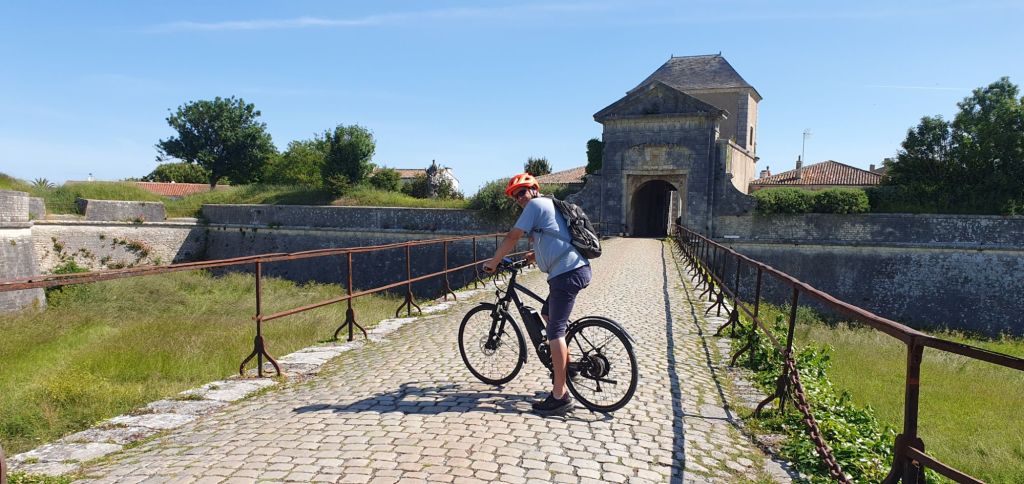
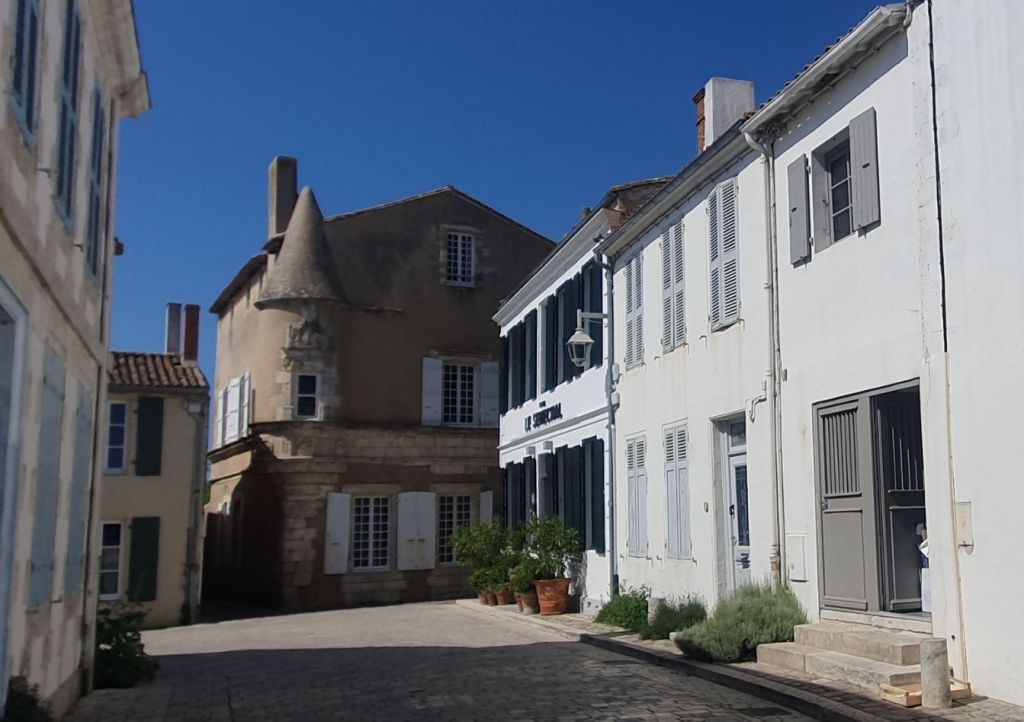
Our approach to St Martin was across a moat bridge and through 17th century ramparts which surround the town. Pretty blue shuttered houses on narrow cobbled streets led us down to the marina, a buzzing area lined with restaurants as far as the eye could see. It was barely midday and each one was doing a roaring trade. We secured the bikes and spent a couple of hours strolling around being tourists, visiting the lighthouse, browsing the shops and having lunch overlooking the marina. There was a TinTin shop which kept Steve occupied for a while whilst I raided the Tourist Information centre for more maps and the bus timetable to La Rochelle. Reluctantly it was all too soon to get back on our bikes and retrace our wheels back to the site. The cycle path was incredibly busy, a constant stream of bikes snaking both ways along it. A stop off halfway back to find some shade under which to enjoy a patisserie we had bought earlier was very welcome.

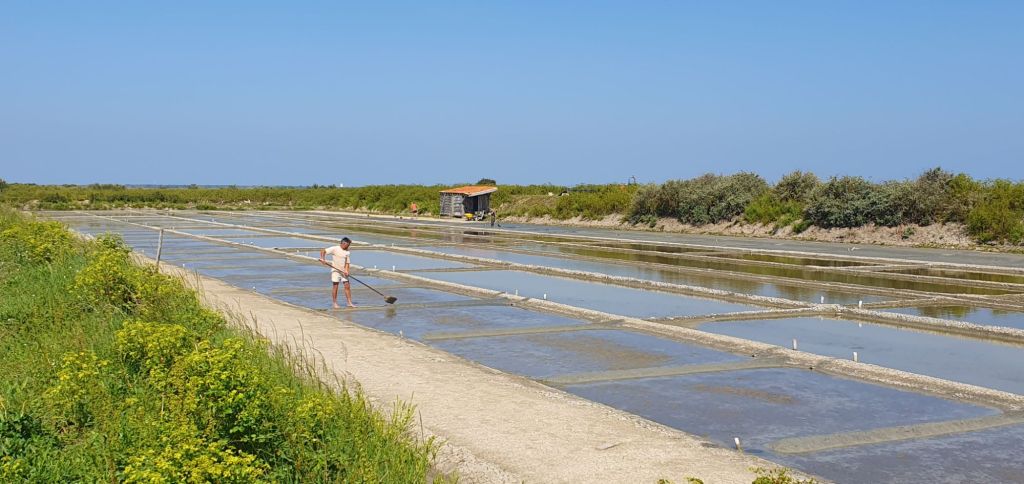
Following another study of the cycle maps we decided our next excursion was going to be through the salt marshes to Ars- en-Re, a small coastal village to the West of us. Again we rode straight out of the site onto the traffic free network of paths that guided us through the flat countryside. We rode along a warren of pathways weaving around the patchwork of salt beds baking in the sun, tended to by their owners patiently waiting for the water to evaporate and leave their bounty behind. Little huts selling their precious produce were dotted along the route.

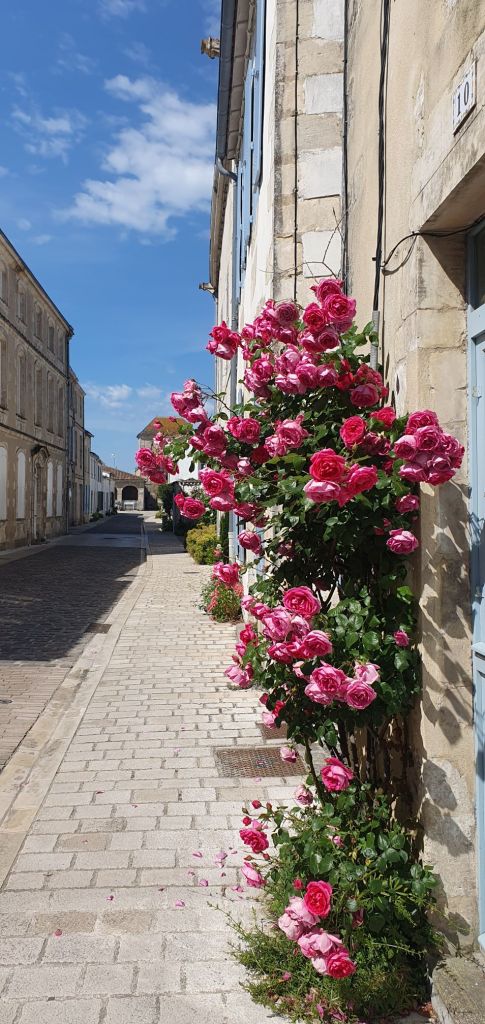
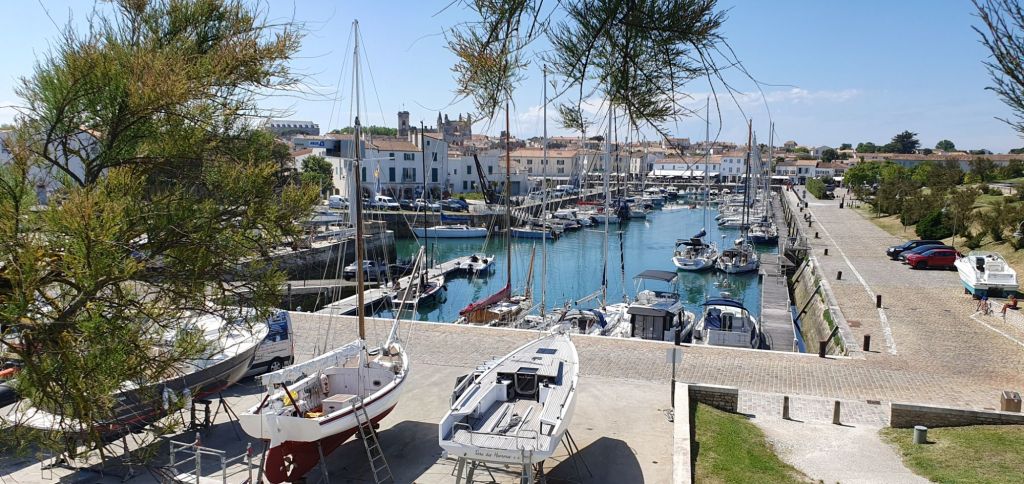
We arrived at Ars-en-Re secured the bikes by the small harbour and strolled into the village centre. It’s central square is dominated by the 12th century church with a distinctive black and white bell tower which serves as a navigational aid for sailors. The cobbled streets are again typical of the Ile de Re villages, pretty shuttered stone houses with flowers tumbling from window boxes and around their doorways. After an hour of losing ourselves amongst the many dead ends and alleyways we found our way back to the harbour and ready for the ride home.

Two days of bike riding had left our ‘behinds’ needing a well earned rest so the following day we let the bus take the strain instead and whisk us off the island to La Rochelle.

Read about our day out in La Rochelle in the next blog: French Roadtrip Part 3

Homeward Bound

After the sale of the family home at the beginning of the year, and us initially thinking we would be fulltime van-dwellers for the foreseeable future, the ‘foreseeable’ only turned out to be a few months. It was a perculiar feeling not having somewhere to call ‘home’ and not one we had expected to feel at all. Far from feeling free and unshackled we felt lost and adrift, nomads with no roots. There may be many reading or listening to this who are living their dream of permanent vanlife and horrified that we have committed to bricks and bills again (but thankfully with no mortgage this time) there will be those that are in between lifestyles wondering whether to take the plunge and sell up and equally those who couldn’t contemplate life without a castle to call their own. Not one option is right for everyone and whatever you choose or believe to be the right decision at the time doesn’t have to be a forever decision. Its OK to change your mind and travel a different road, the main thing is to do what’s right for you. For us that’s having the best of both worlds, we love living in the caravan and the lifestyle our jobs as assistant site managers gives us, but after 8 months of that we are equally happy to have a proper roof over our heads for the winter and an oven I can fit the turkey in on Christmas Day!

So subsequently we started looking for a new abode, which wasn’t easy being 250 miles away from our search area. We’d settled on an area of Shropshire as it was equal distance between family and after Steve announcing he’d always wanted a cottage with 4 windows on the front and a door in the middle that’s what we were on the hunt for. It didn’t take long to find just that and on a day off we were whizzing up the motorway from Devon for a viewing. All the way up the M5 we were trying to convince each other there was no way we would be buying it, we were just looking. Yeah right, once we saw it there was no way we would be walking away! It was perfect, big enough for the two of us and small enough to lock up and leave when we were away during the caravan working season. We were looking forward to being home for winter already!

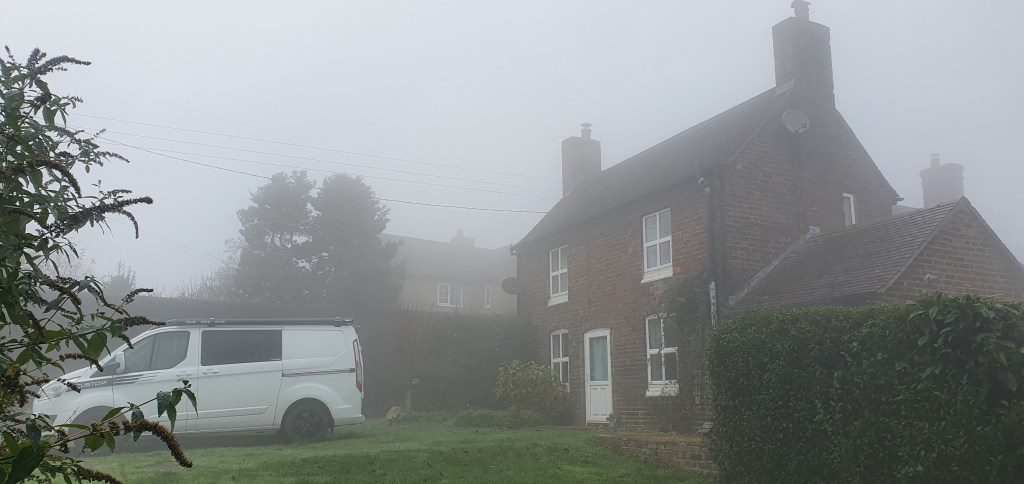
A misty morning in Shropshire

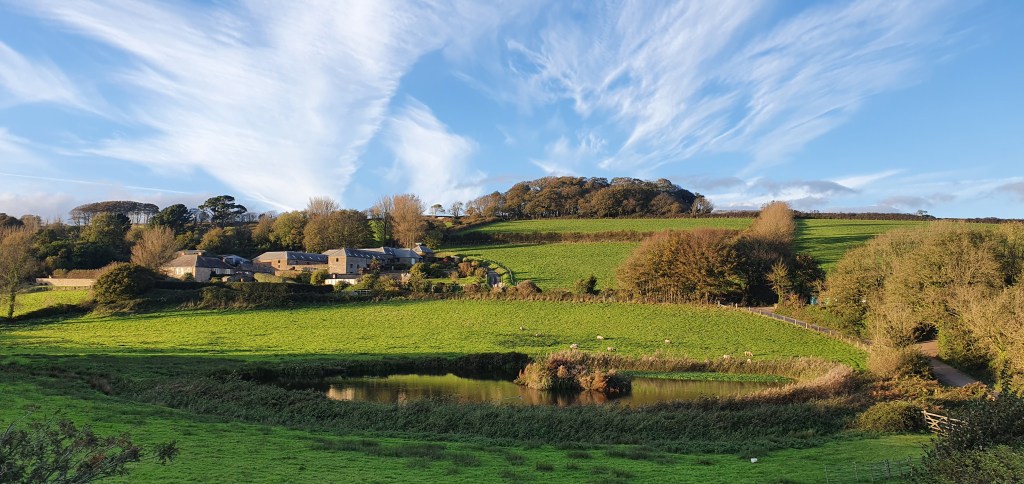
Meanwhile we still had 2 months of warden life to plough on with in Devon. After plenty of much needed rain newly seeded pitches were springing back into life with bright green blades of grass visible through the once bare earth. Trees were dropping their leaves early due to the hot weather and others were starting to turn towards shades of autumn. For so long the caravan door had been permanently flung open to cool down but now increasingly we shut out the cold, wind and rain and kept cosy warm in our small space. Days were still sunny but temperatures dropped once the sun went down.

Seasons starting to change

We were still keen to get out and about realising our sightseeing opportunities around here were numbered as time was drawing nearer by the day to us leaving the area.

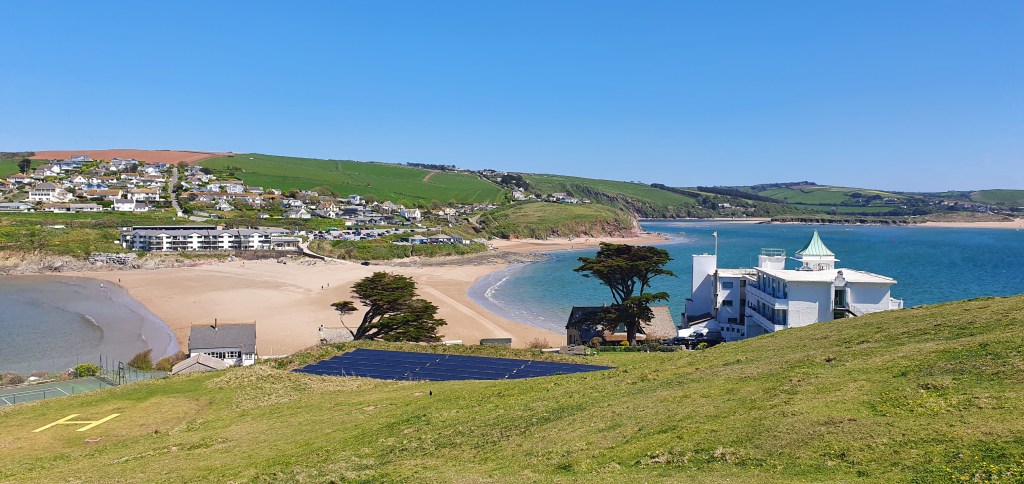
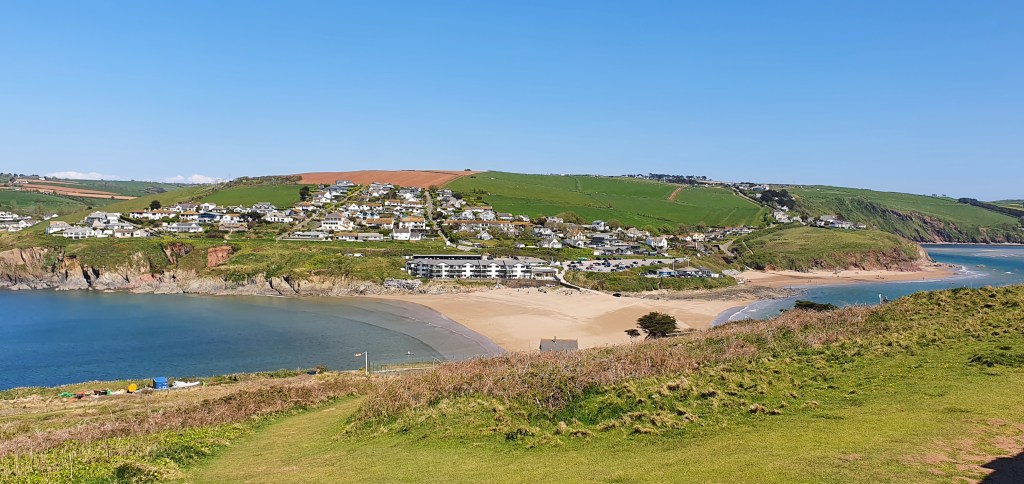
Burgh Island and Bigbury on Sea are a short hop along the coast and an iconic South Devon landmark. Featured in many TV and film locations the Island is only accessible at low tide by walking across the sands or by way of a sea tractor at higher tide. It boasts an art deco hotel built in 1929 that welcomed many rich and famous keen on its exclusive location. Agatha Christie was a regular visitor and used the setting for two of her novels which she wrote in the beach house. You can walk around the island and climb the hill above the hotel for stunning views both back to the mainland across the sands and in the other direction out to sea. Don’t forget to make a note of the tide times though otherwise you’ll get wet feet or have to queue for a tractor ride back!

Views from Burgh Island

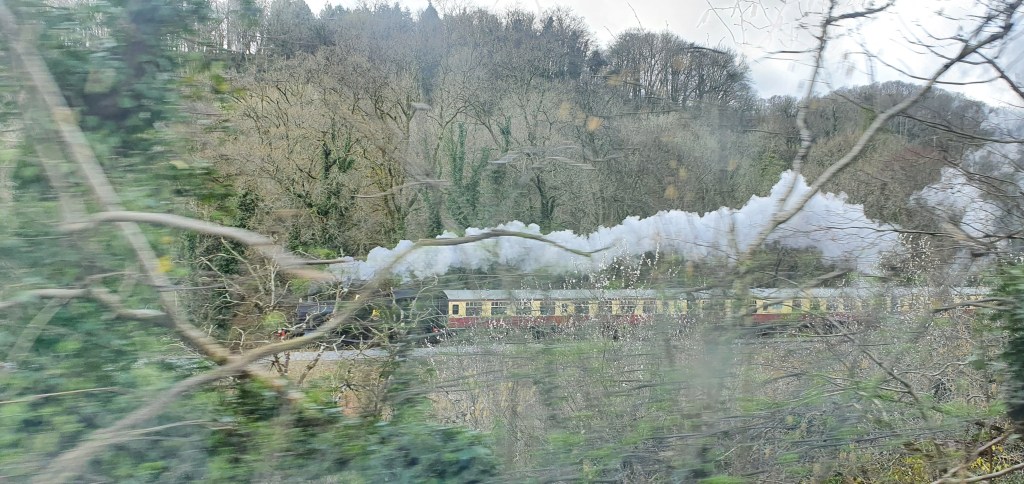
Away from the coast we visited South Devon Railway. A steam heritage line first built in 1872 where you can ride the 14 miles from Buckfastleigh to Totnes and back through the stunning valley of the River Dart. There is refreshments, a gift and very extensive model shop, a museum, gardens and a picnic area at Buckfastleigh Station.

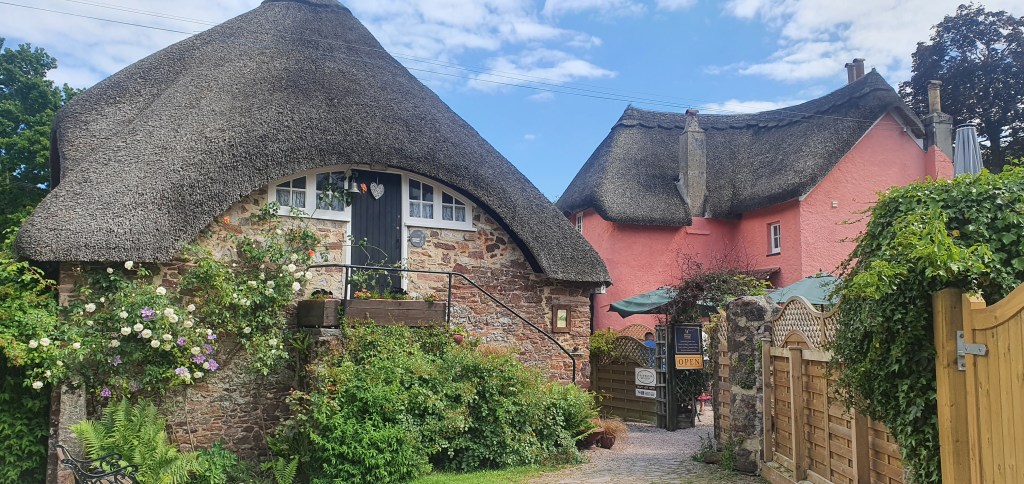
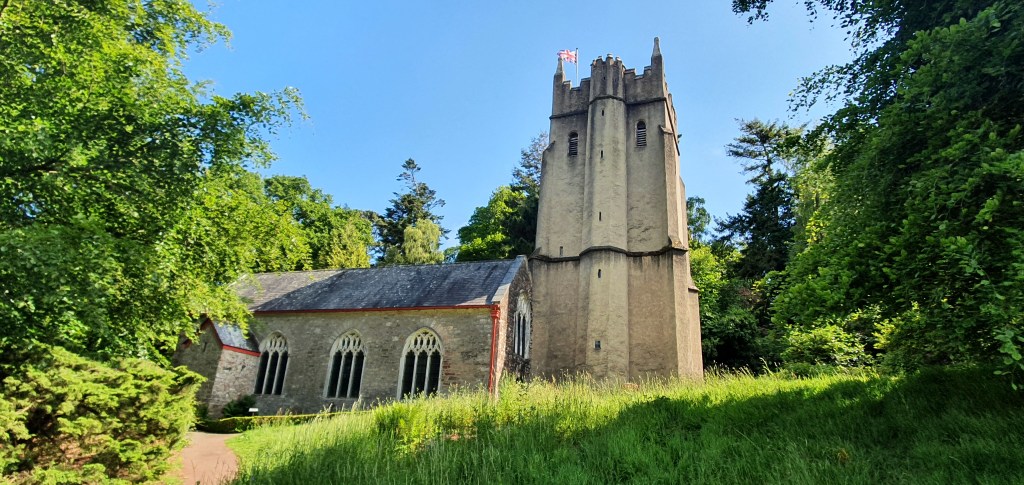
Cockington Court and village is a lovely place to stroll, visit art and craft studios and have a great lunch at the Drum Inn. It is by Torquay so we try to combine it with a trip across the River for other reasons. Cockington Country Park is an area of woodland, parkland, rural countryside and formal garden landscapes and amongst the 450 acre site there are ornamental lakes, a Manor House, chocolate box thatched cottages, art and craft studios, an 11th century church, picnic areas and a cosy pub serving delicious food. Inside the 16th century manor house there are over 20 craft studios, a contemporary art gallery, a tea room and a rose garden, and housed in the stables behind you can watch craft makers at work blowing glass, a blacksmith creating items at his forge, a chocolatier, leather maker, jeweller and sculptor to name a few. The Cockington Estate was owned by only three families from 1066 through to 1932 when it passed into public ownership and was created into a Park in 1991. There is a visitors centre in the heart of the village together with a tea room and a number of gift shops and a game of cricket can be watched enjoying a picnic on the sloping grass banks in front of the manor house. All very quintessentially English!

Cockington Village and Church

Middle of October was time to take down the awning and assess what had to go where ready for taking home or staying in the caravan for next season. Lists were made so as not to misplace anything and piles of our belongings began to appear on every available inch of floorspace. Who knew we had so much or even needed so much stuff in such a small space. The site numbers dwindled first week into November somedays with no comings or goings at all, so slowly the site began to prepare for closedown. Goodbyes and best wishes were given to the seasonal members who had become good friends during their time with us and then it was our time to go too. We pulled out of the gates at 7am to be sure to miss the bus and anything bigger coming the otherway. Vinny the van pulling Bill the Bailey are 40ft long and 8ft wide so meeting another vehicle on these Devon lanes was not going to be a pleasant experience. Luckily it all went to plan and we were soon on the wider roads heading North. We waved goodbye to Devon, its stunning coastline, glorious beaches and picture postcard villages and focused our sights on the next adventure – home.

Don’t forget to read next time as we begin work on the new house and get out and about in Shropshire.

Summer Sunshine

July and August saw an influx of families and holidaymakers spending their 2 week annual summer holiday at Start Bay site. After having mostly couples stay during the early part of the season the change in site dynamics was very apparent. Add to that the hot summer temperatures and being by the sea in Devon, the site definitely had that holiday feeling. Caravans and campers arrived laden down with paddleboards, kyhaks and all manner of water sports equipment that was carried down to the sea every morning by eager enthusiasts and then wearily trudged back up to site just before sunset. Wet suits and swimming gear were hanging out to dry on every washing line ready for use again the following day, and ice creams were outselling the cream teas. The location of our site was a winner for coastal activities and even just for enjoying being by the sea and not necessarily in it – as is the case for me!

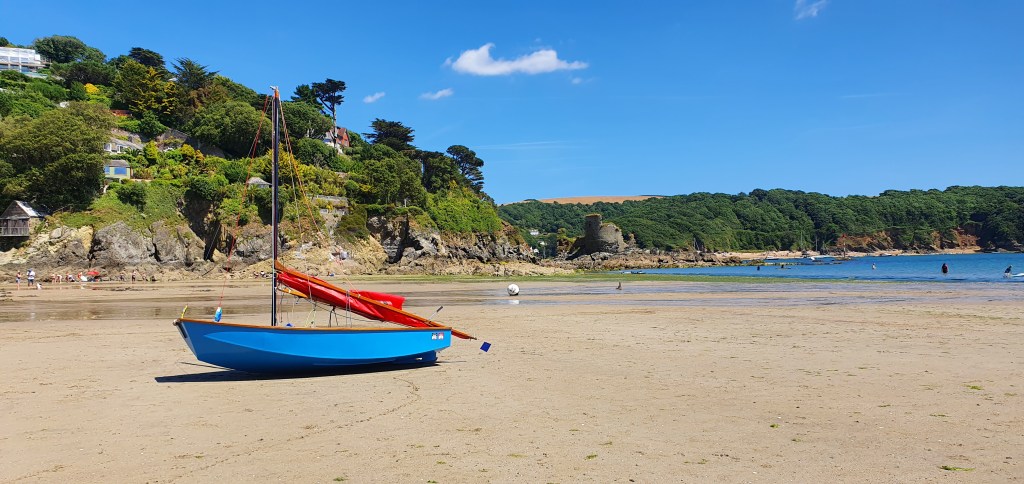
Steve was keen to embrace the water sport culture and so had a days paddleboard tuition on a course in Dartmouth. After a theory lesson on land they hit the water and paddled down the estuary heading for Dartmouth Castle at the mouth of the river, weaving in and out of the creeks, amongst the moored boats and getting enviable views of the millionaires houses clinging to the steep hillsides overlooking the River Dart. Thankfully the weather was still very hot so his (quite a) few dunkings into the water was actually welcomed and he had the last laugh over those that had mastered the art of standing upright and staying on the board better than him! A few days later he got the chance to have another go at North Sands Salcombe, whilst I watched from a dry spot on the beach.

Steve paddleboarding at North Sands Salcombe

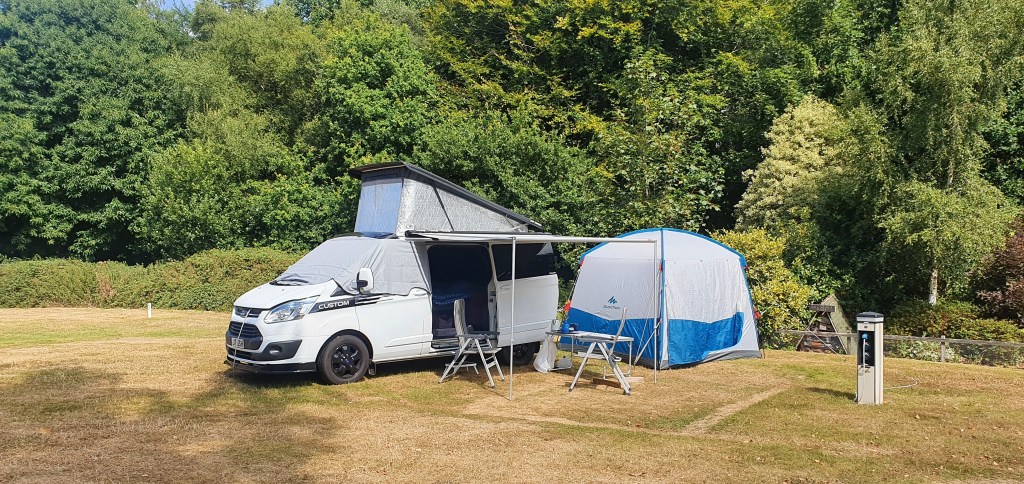
At the beginning of August we made a trip back to Rookesbury Park site in Hampshire where we had worked the previous two seasons. We went in Vinny the van and really enjoyed being “the other side of the fence” for a few days staying on a pitch amongst other members and using all the site facilities for a change. You really do appreciate the standard of cleanliness  knowing all the hard work that’s gone into it. Rookesbury had a little makeover during last years closedown and now boasts 10 fully serviced pitches which were proving to be very popular and the whole site was looking splendid, even with brown grass. We were able to catch up with familiar faces and friends we had made during our time there and it was good to see so many still returning for their weekends away and main summer holidays. In fact we enjoyed being back there so much it got us thinking about next years placement and without having to confer and with no debate we both confessed we wanted to return for next season. Selection 2023 process was announced and Rookesbury Park was our choice, we then had to wait another month until the beginning of September to find out our future. 

Weekend at Rookesbury Park

A few days after returning from Rookesbury our world was rocked and our hearts broken. Belle our beautiful cat was found lying at the site entrance by a passing motorist and carried to a patch of grass just inside the gates. There wasn’t a mark to be seen on her and she was always very mindful of cars and traffic never venturing onto the road, so we will never know what really happened to her, she was just in the wrong place for a split second and her 9 lives were obviously all used up. For quite a while afterwards we spiralled into despair, overcome by sadness and loss and it became tough to then love and appreciate the site and the area that had taken Belle from us. We knew then for sure we could not stay another season working here in Devon, the memories were too painful to bear.

Our beautiful Belle

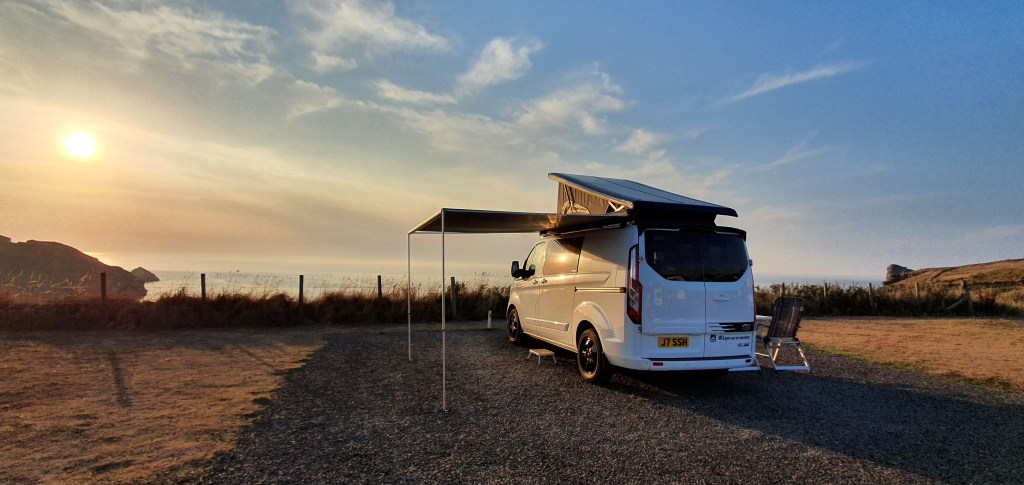
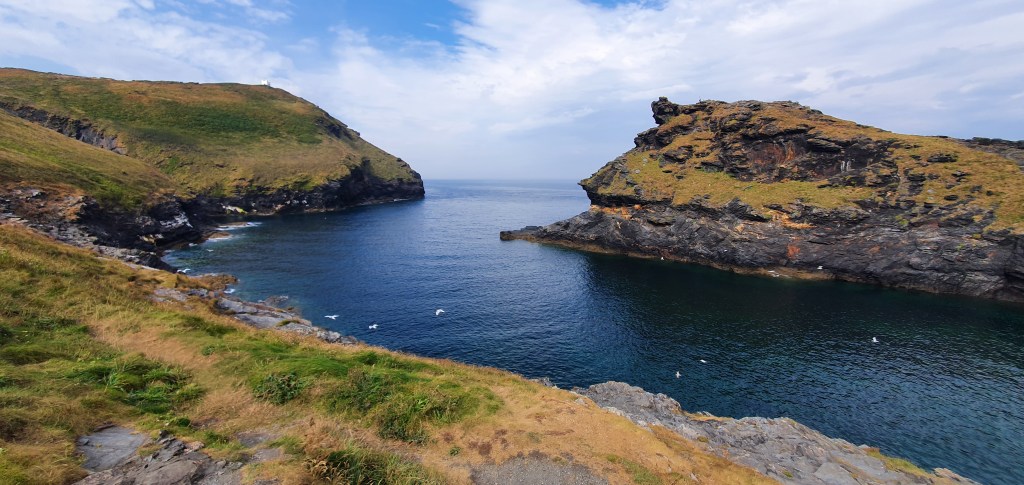
Without Belle to keep us on the site in our time off we planned another few days away in Vinny at Trewethett Farm CAMC on the north Cornish coast between Boscastle and Tintagel. We bagged a stunning pitch on the front row with uninterrupted views of the sea and the famous sunsets and enjoyed a couple of days as holidaymakers. We caught the bus which stops outside the site entrance and got off in pretty Boscastle a couple of miles away. We had visited there previously and so had a nice wander around the village and walked down the inlet past the harbour to where the river meets the sea. A hundred years ago Boscastle was a busy commercial port and the only place where a boat could pull into harbour along the 40 miles of the north coast of Cornwall. Perhaps it is more famous  recently due to the flash floods in 2004 that washed many cars out to sea, flattened around 1000 trees, destroyed homes and businesses and deposited 20 years of silt and sediment on the village in a few hours. The Visitors Centre shows news footage of the scenes as it was unfolding and its incredible to see the force of water as it rages down the valley taking everything with it in its wake. Today the village stands proud and picturesque with little signs of the devastation in endured that day.

Perfect pitch at Trewethett CAMC
Boscastle

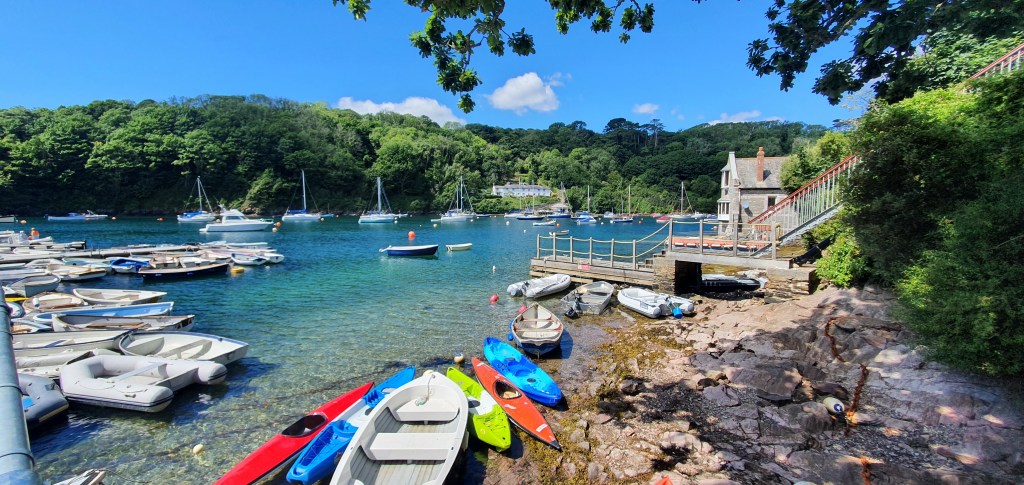
I had heard of a picturesque spot just a few miles along the coast called Newton Ferrers, so a day trip was duly planned to see it for ourselves. Well it certainly didn’t disappoint. Set on a creek of the River Yealm estuary it is a stunning location with breathtaking views at every step. Parking is a little limited but being able to visit on weekdays we managed to find a space in a side road and walked down the hill to the harbour. Pastel painted and thatched cottages with flower filled gardens line the waters edge and modern designer glass fronted properties stand higher up the hillside overlooking the perfect bays below. We spent a long while sitting on a bench by the jetty, soaking up the sun and watching all the activity out on the water. Yachts, ribs and tiny row boats all jostle for a spot to bob about in the picture postcard scene. It has a pub and shop but other than that its the views, peace and tranquillity that are the main attraction. A pure gem of a place.

Newton Ferrers

6 weeks of mayhem and madness soon drew to a close. August Bank Holiday saw a mass desertion from the site and we could once again see sight of empty pitches and areas of grass. Albeit still brown grass from the long hot summer and endless comings and goings. By mid September the member clientele had reverted back to pre-school holiday mode and couples were venturing back out on their road trips. Devon lanes in July and August are not for the faint hearted, especially with caravans and larger motorhomes. After doing battle with oncoming vehicles in Vinny the van, and sometimes feeling like we were reversing backwards more times than we were going forwards, we decided the best idea was to get a small car to whizz around the country roads in instead. After much scouring of the Internet and  garages we found a Hyundai dealer in Torquay who had just the job, an i10. Right mileage right colour right price so I drove it back the same day. We love it and so much less stressful to drive around Devon and get parked in the tourist hotspots.

September also brought us confirmation that we would be returning to Hampshire for the 2023 season, back to Rookesbury Park our second home. I say ‘second home’ as our other news is we bought a house again.

Keep a look out for our next blog as we prepare to leave Devon, move back into a house for the winter and take 4 months off Vanlife.