French Roadtrip Part 6 – Last of the Chateaux then Heading for Home

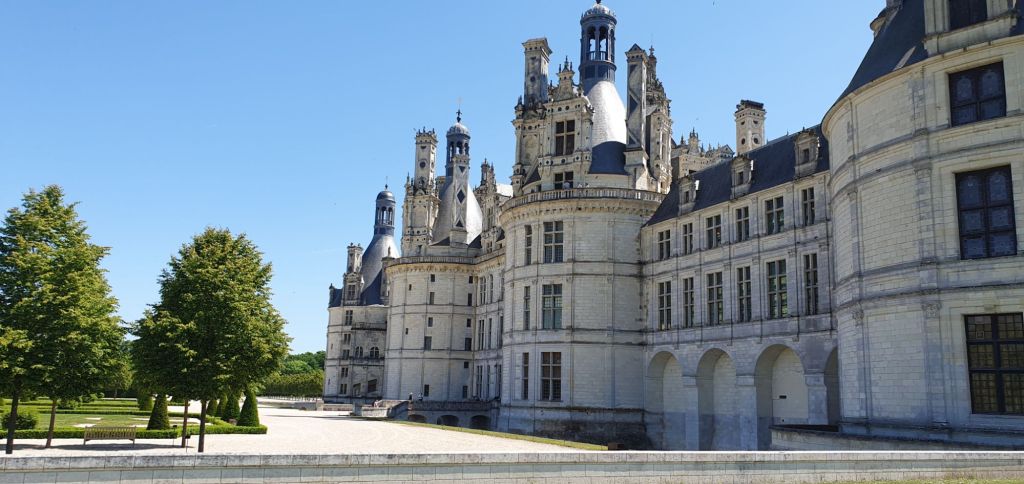
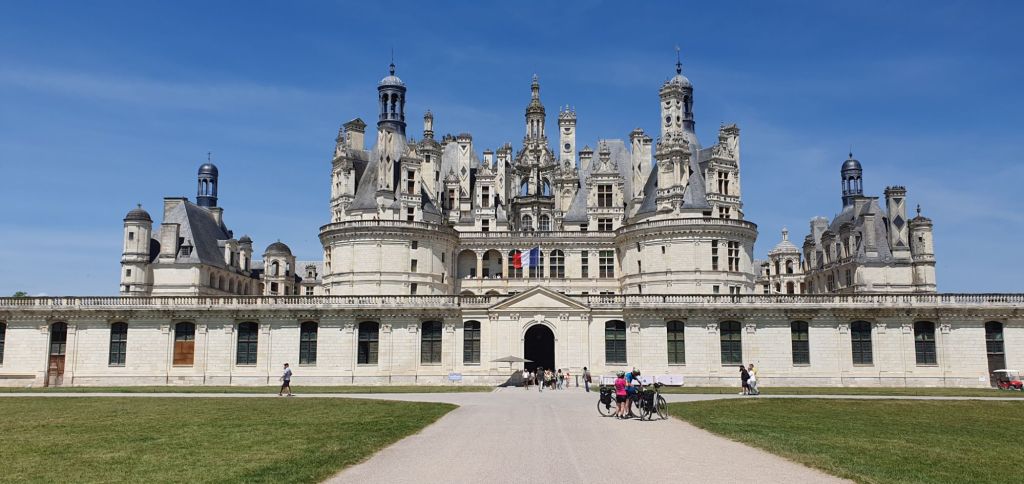
The final location on our 2025 French roadtrip was to visit Chateau de Chambord, an amazing construction built by the best French and Italian architects in order to entertain royalty, host hunting parties and dazzle guests with its grandeur and fascinating double spiral staircase said to have been designed by Leonardo Da Vinci.

We stayed at Camping Huttopia les Chateaux which is an 8km cycle ride through the forest to Chambord, so after our first night settling in there the following day we set off for the Chateau. After a few hundred yards cycling on roads we picked up the signs leading us onto the hardsurfaced forest trails. The sky was blue, the sun was shining and the temperature was rising so we were thankful of the coolness the shade of the trees gave us as we peddled along. The route was quiet and easy to follow, most sections being long straight pathways but towards the end the paths were weaving in and around the trees. Although it was an easy ride I don’t have the best cycling ability so I’m thankful I managed to stay upright on two wheels! As we emerged from the forest the last kilometre was then on smooth tarmac roads to the main vehicular entrance. Here there was a large bike park which was nearly full, obviously it was a popular way to travel to visit. It was much busier than the previous two Chateaux we had visited. After collecting our tickets and visitors guide we followed the crowds wandering the pathways and had our first glimpse of the magnificent Grande Facade.
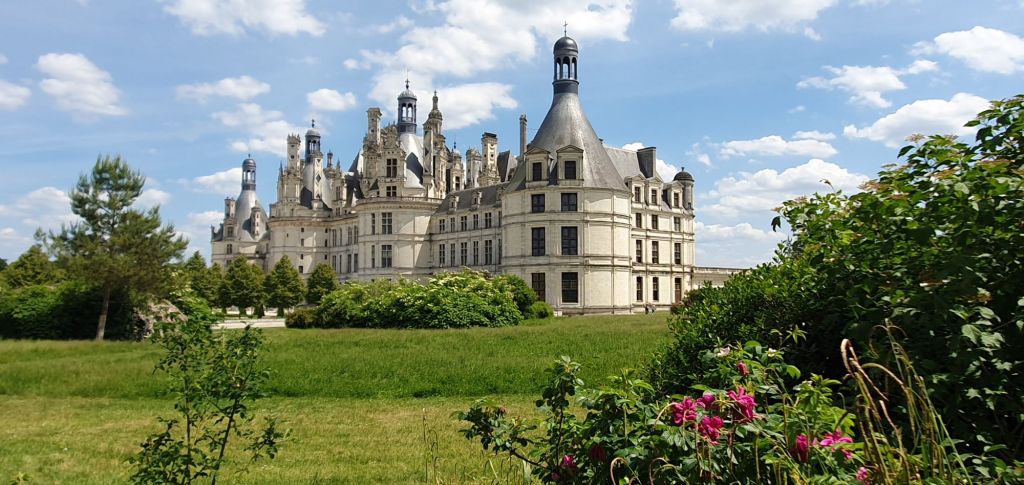
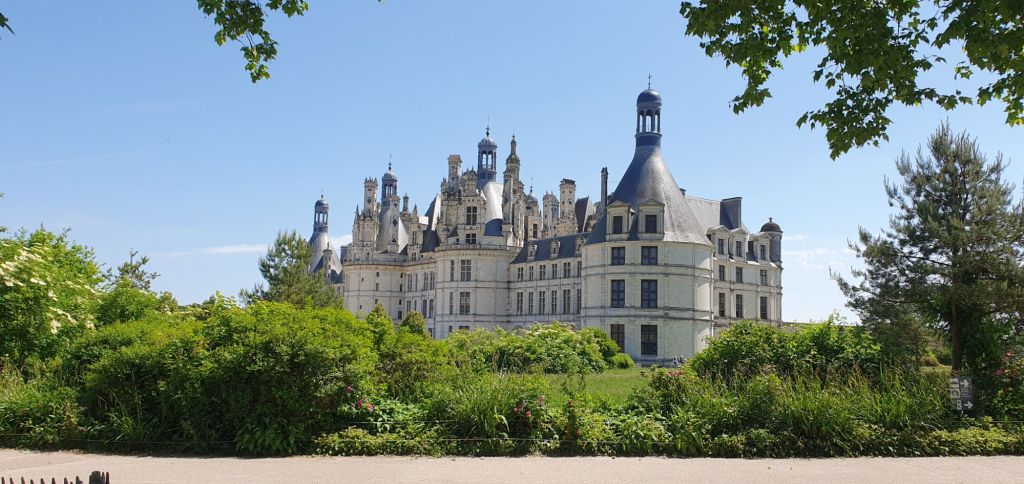
Chambord’s construction was started in 1519 by King Francis I with the keep and two wings being added during the next 150 years until the Chateau and its park was finally completed by Louis XIV in 1684. It has 4 floors, more than 400 rooms, 77 staircases and 282 chimneys. Following several changes of ownership it was bought by the State in 1930 and listed as a World Heritage Site (UNESCO) IN 1981.
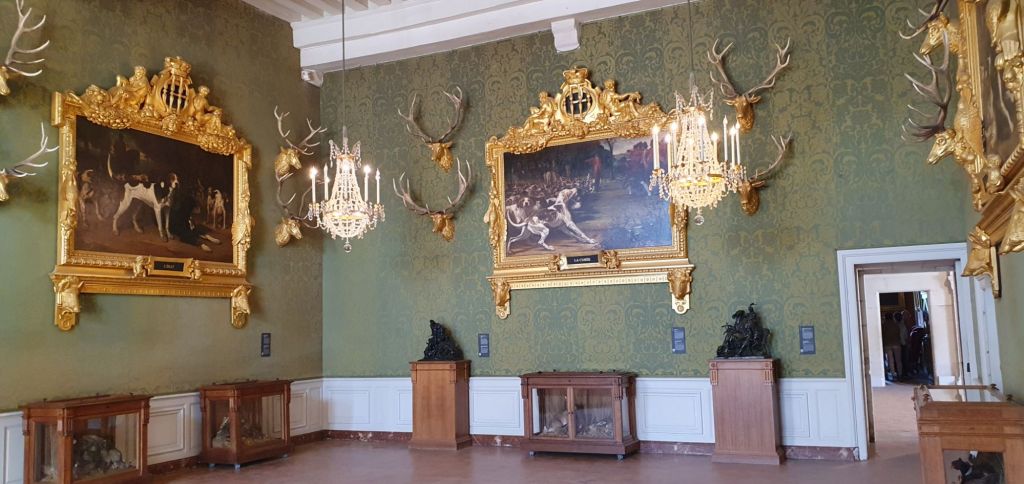
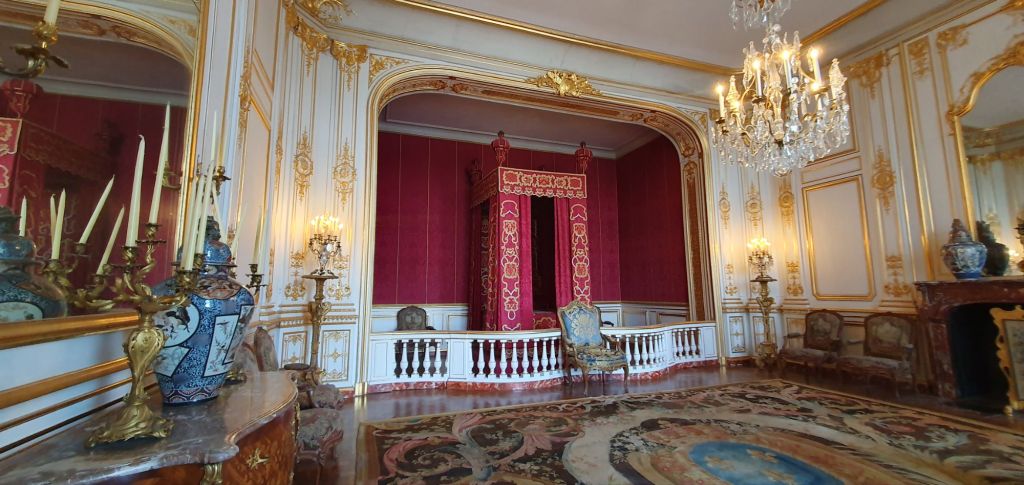
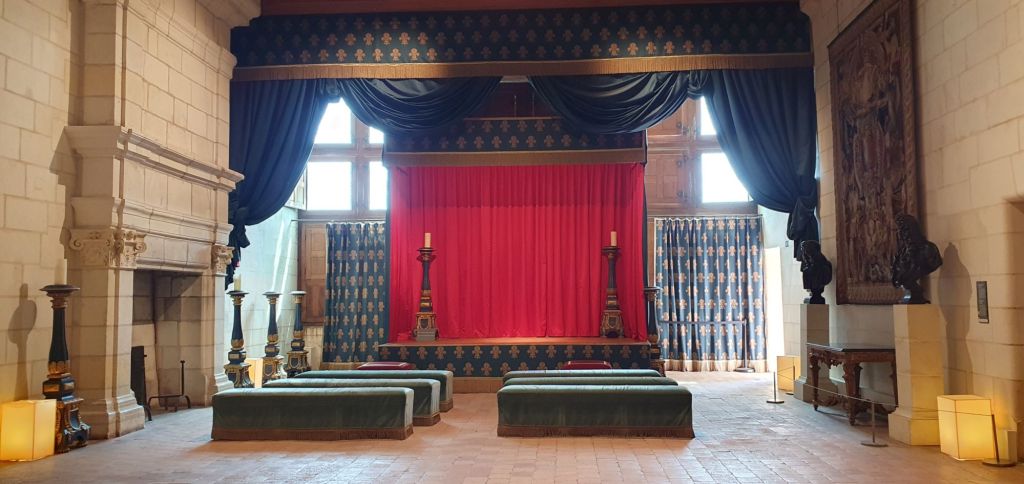
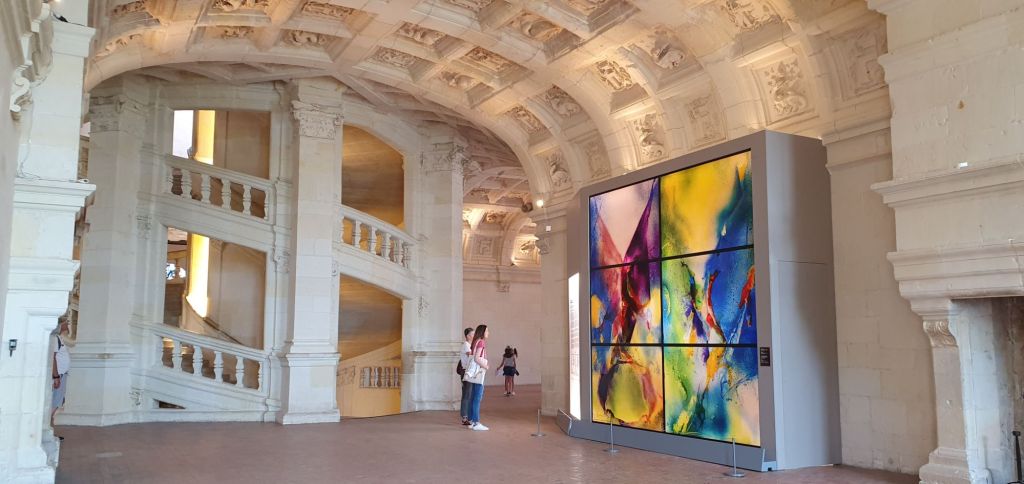
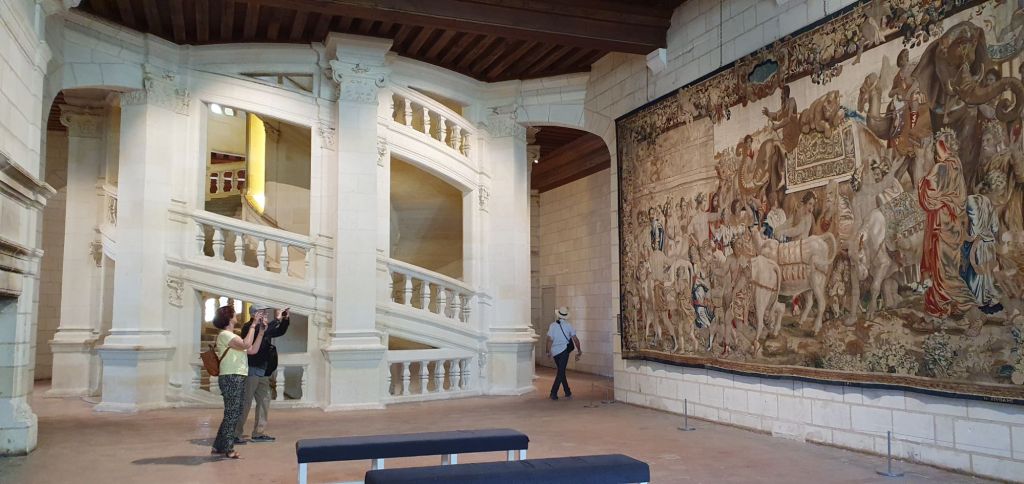
After entering through the keep the focal point is the grand double spiral staircase at its centre. Inspired by Leonardo Da Vinci it is a monument in its own right. Formed of two flights of steps that wind one above the other with windows opening onto a central core, it is a puzzling mind game as you can see others climbing the same staircase but your paths will never cross. The building was designed so that you can wander aimlessly in and out of rooms on each floor but are always able to return to the staircase at its core so never get lost – although that’s easier said than done as Steve and I were losing each other all the time as we explored its many rooms and exhibitions! Royal bedchambers, ceremonial apartments and Louis XIV’s theatre are all authentically recreated to relive the different centuries of the Chateau’s occupation.

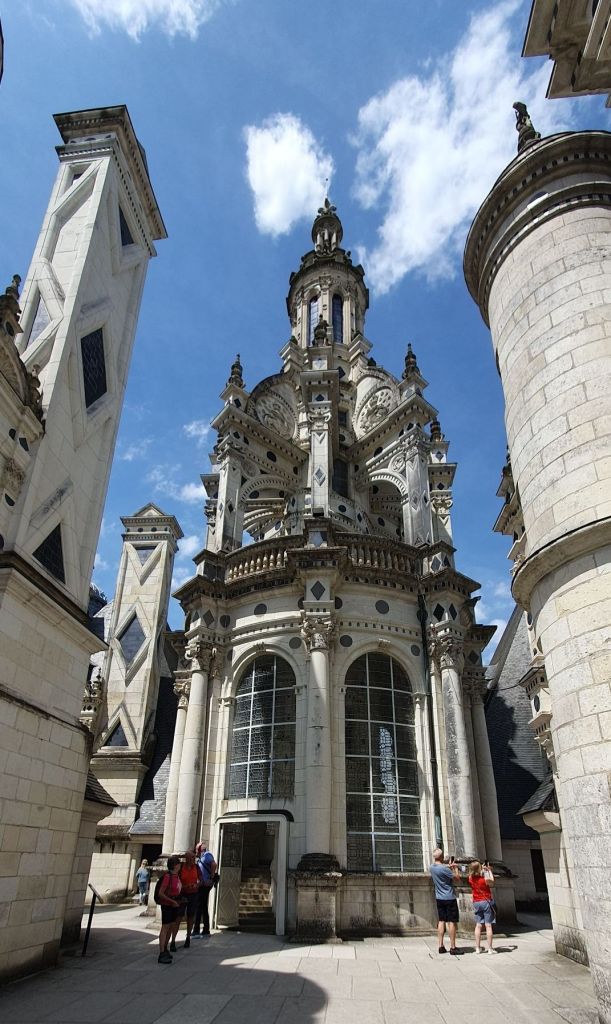
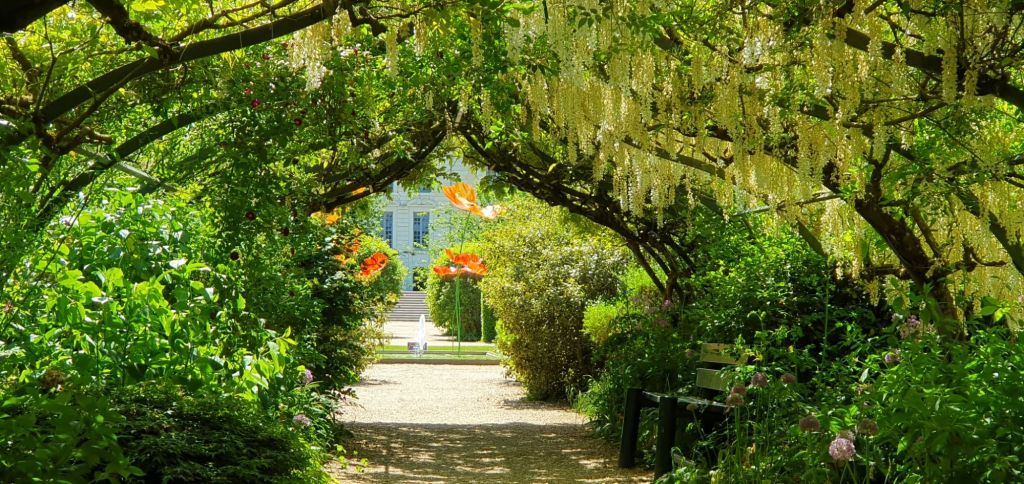
At the top of the keep the grand staircase leads out onto the open terraces which offer a magnificent panoramic view of the surrounding gardens and parkland. The French garden was restored in 2016/17 after years of research to reproduce the exact layout of the lost 18th century gardens with its symmetrical planting and fleur-de-lys design.

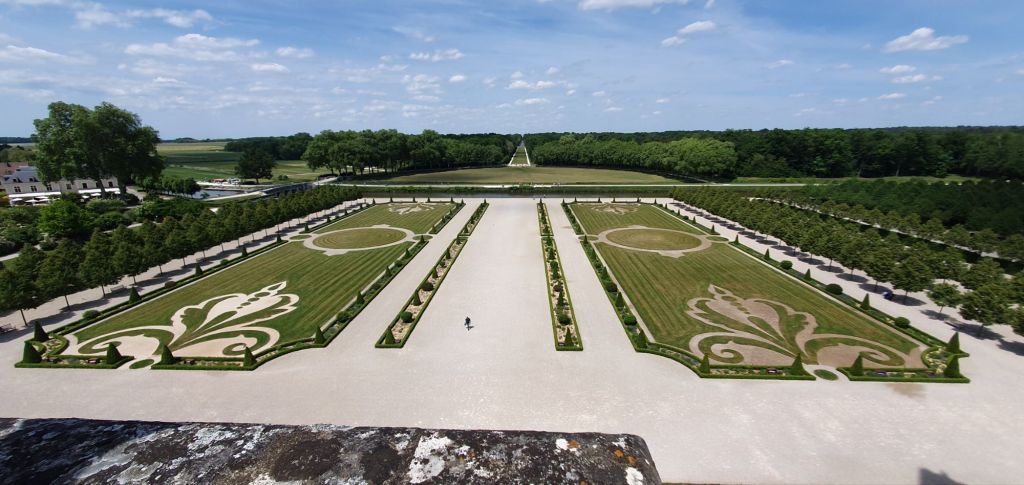
The surrounding parkland has over 20km of trails and walking routes to explore with bikes and electric carts available to hire. You can also take a 4×4 tour and hire a boat to cruise along the 4km of canal.

After several hours of exploration inside and out we made our way back to the bike park and headed to the forest for our return cycle journey. Not quite sure of which windey path we had arrived on we ended up cycling about an additional kilometre before we recognised a signpost through the trees pointing back to the site. The scenery was tranquil and peaceful with birdsong, butterflies and wild flowers lining the route which helped us on our way under the cool canopy of trees. Arriving back at Huttopia we flopped into our deckchairs having clocked up several thousand of our daily steps and 16km of pedalling.

The next day was our penultimate holiday day, one where we had to forego leisurely sightseeing to hit the road North to get within an hours drive of Dieppe ready for our ferry the following morning. It was a 320km drive estimated by Google maps to take 3.5 hours, so add on an hour because we don’t drive as fast as they think we do, and there’s always more traffic than Google initially anticipates, and we should be at Pavilly by middle to late afternoon. As I have said in previous blogs we do use the toll autoroutes to get to and from our required destinations, not everyone’s choice I know, and hopefully in our future retirement years when time is not a constraint we will be able to wander the roads less travelled and make it all about the journey not the destination. But until then we can only have 10 days each trip in which to see the world!

We had decided on another Camping CarPark stop for our last night located in Pavilly just north of Rouen and under an hour from the ferry port. I had prebooked our spot there on the Camping CarPark app just to be safe as it only has 8 pitches. It was easy to find located in the village and looked like it had only recently been constructed. There were 4 vans already there and by early evening it was full. A 10 minute stroll into the village centre and there is a good sized, well stocked convenience store which provided us with our evening meal and snacks for the onward journey home. The rest of the village looked all closed up and as it had started drizzling with rain we didn’t get to explore any further.

After a good nights sleep we arose the next morning, ate an unusual breakfast made up of everything that we shouldn’t be bringing back into the UK, and started the 55km journey to Dieppe ferry port. No hold ups at check in, not long to wait in our designated lane and we were boarding. We found our favourite reclining lounge seats and settled in with coffee and snacks for the four hour sailing. A few pages of our books and a little snooze later, we woke to the sight of white limestone cliffs on the horizon.

After only 10 days away driving back on the left suddenly seemed wrong and so unnatural. Roadworks and the M25 brought us quickly crashing back to reality though. During the journey home we reminisced about each day of the holiday, the locations, the views, the food, the wine, the experiences. And then the inevitable question was asked – “Right then, where are we going next time?”

So to find out keep reading the blogs to see where our travels take us next.

French Roadtrip Part 5- Another Loire Châteaux

After two nights at the perfectly placed Camping de Moulin Fort it was time to move further up the Loire Valley to be within cycling distance of another Chateau on our bucket list, Chateau de Chambord, but before we arrived there another one was due to be visited on the way.

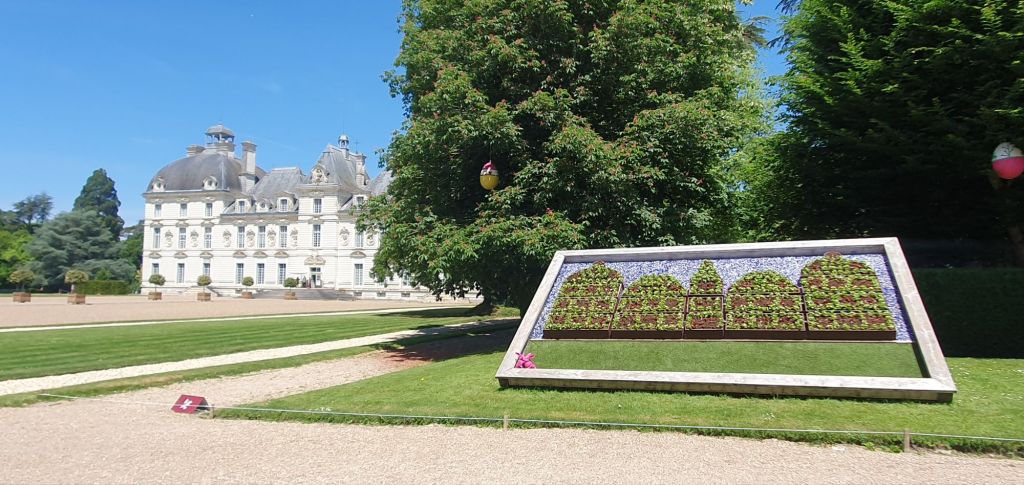
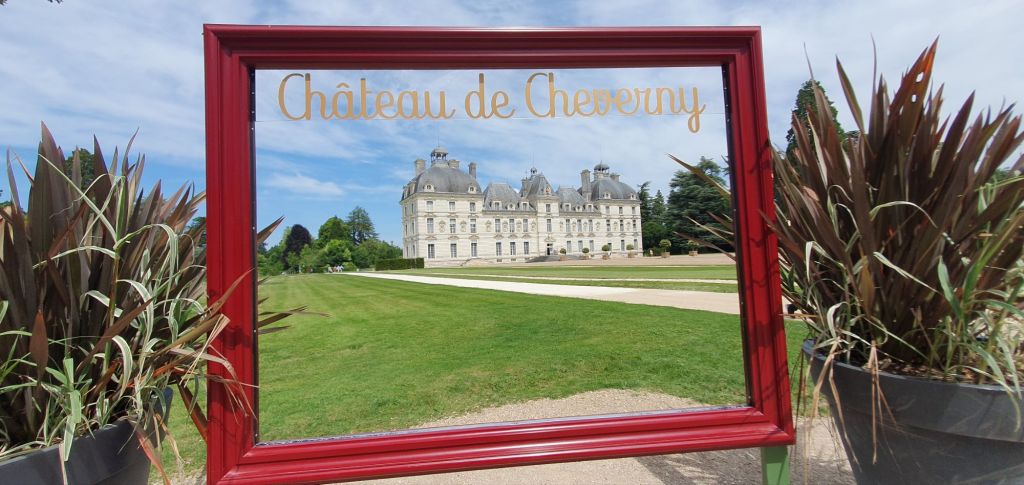
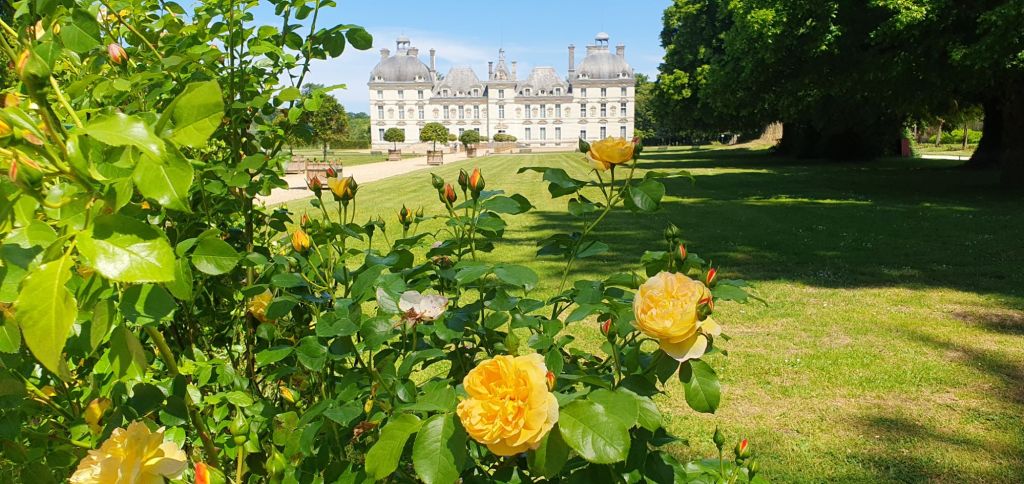
The planned driving route took us virtually past the front door of yet another Chateau that was not to be missed, so with time to spare before check in at our next site we found ourselves parking up in the village of Cheverny.

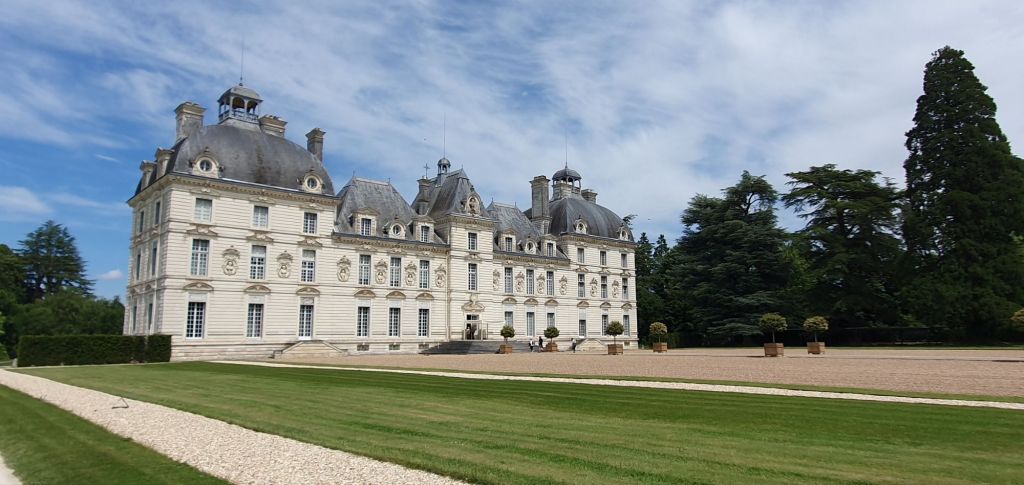
The village aswell as the motorhome park up was virtually deserted so no problem in finding a space for our 8m long vehicle. There is also an area next to the designated parking that appeared to be for overnight stays as it had a service point and we could see that this was nearly full. A short walk down the village street brought us to the elaborately gated entrance of Chateau de Cheverny. After paying our entry fee at the shop we were given a site map and guide and stepped back out into the warm May sunshine to explore this French gem. Yet another stunning vista awaited us as we walked along the pathways and rounded a corner.

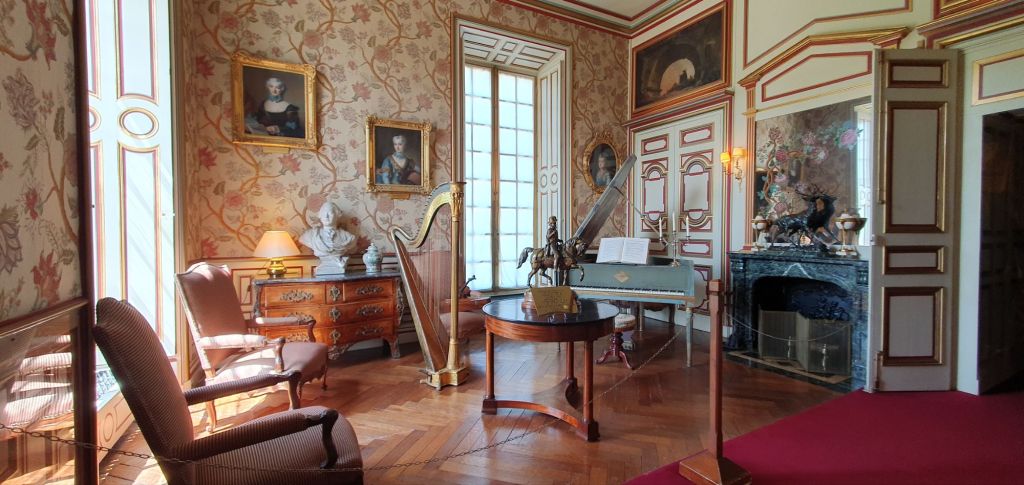
The Chateau was one of the first French stately homes to open to the public in 1922 and the estate has been owned by the same family for more than 6 centuries, although the Chateau itself has slipped out of their hands twice in that time. Once being bought by Diane de Poitiers after she was ousted from Chenonceau by Catherine de Medici. It was bought back by the Marquis de Vibraye in 1825 and so returned to the Hurault family whose descendants now live in the apartments in the right wing. Whether it’s because it still is partly a family home but we thought it felt intimate and homely even though it is stunning on a grand scale.

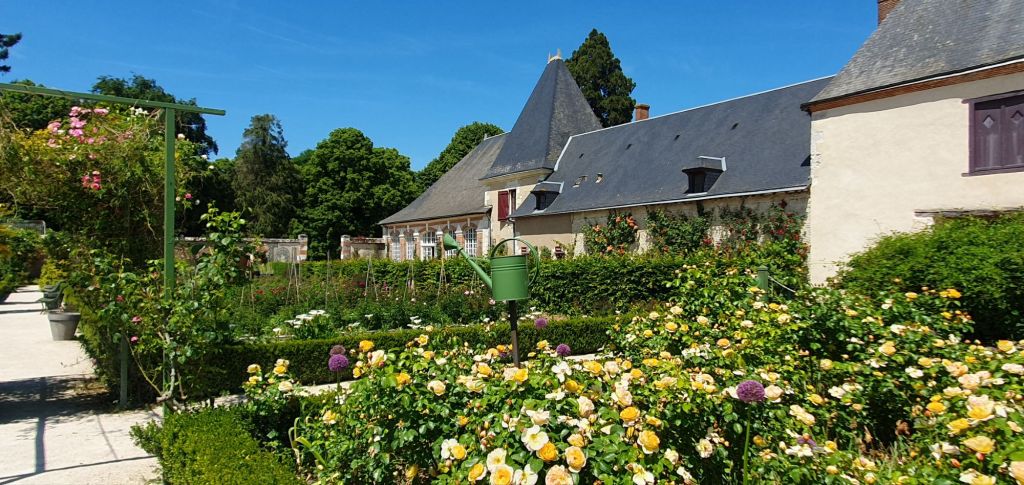
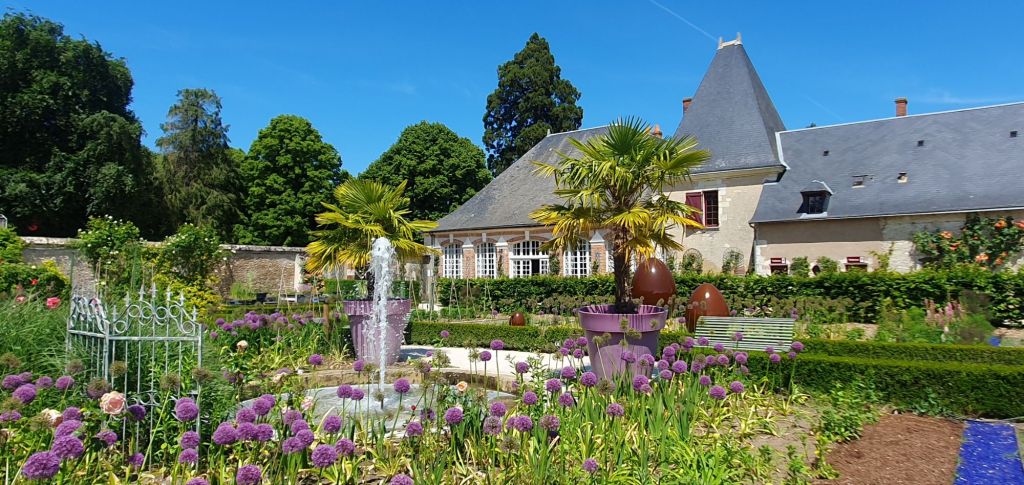
In 1943 Herge, the author of Tintin, was inspired by the architecture of Cheverny when he created Marlingspike Hall for his comic book strips. There is a Tintin museum located in the former stables and a large shop as you leave, which was a great bonus for Steve and kept him entertained whilst I took a tour of the beautiful flower filled gardens. Strangely this was our holidays’ second encounter with Tintin as there was also a shop on the quayside in St Martin on Il de Re that we had discovered a few days before.

Cheverny is also an important hunting venue. The onsite kennels house about a hundred French hounds, each with V for Vibraye shorn into its right flank. One or two were lounging around their compound in the full sun but most were taking shelter in the shade against the kennels.

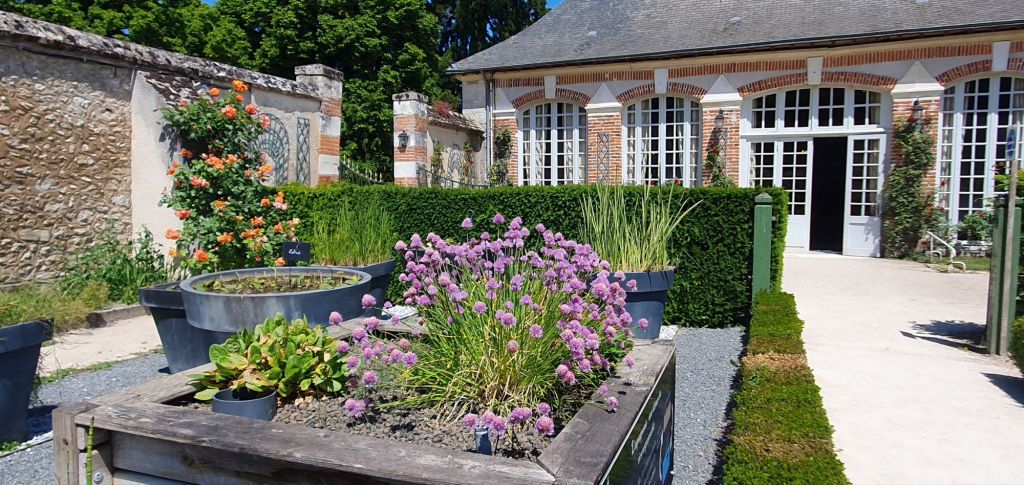
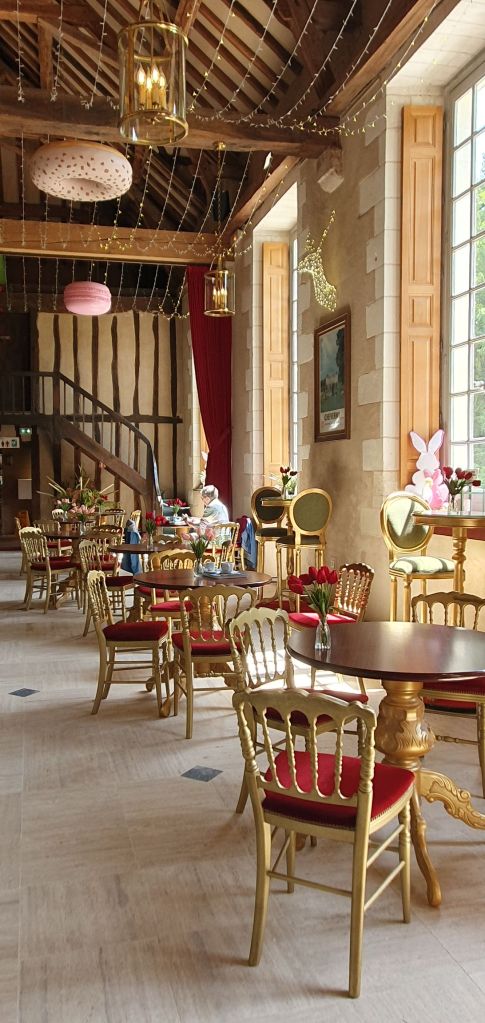
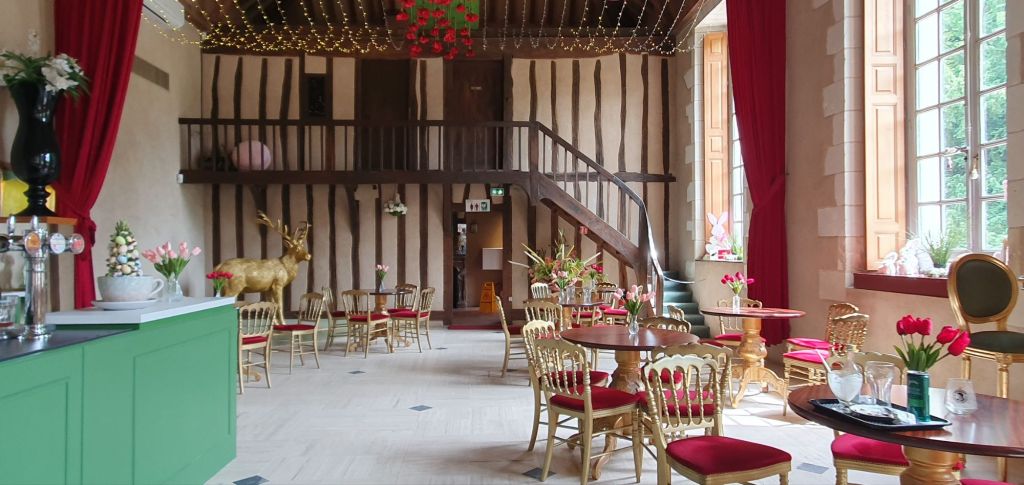
The 18th century Orangery now houses a cafe where we enjoyed our lunch surrounded by its decadent gold furnishings. As with many Chateaux this Orangery building was used to hide the nations art and valuable property during the Second World War, most notably apparently the Mona Lisa.

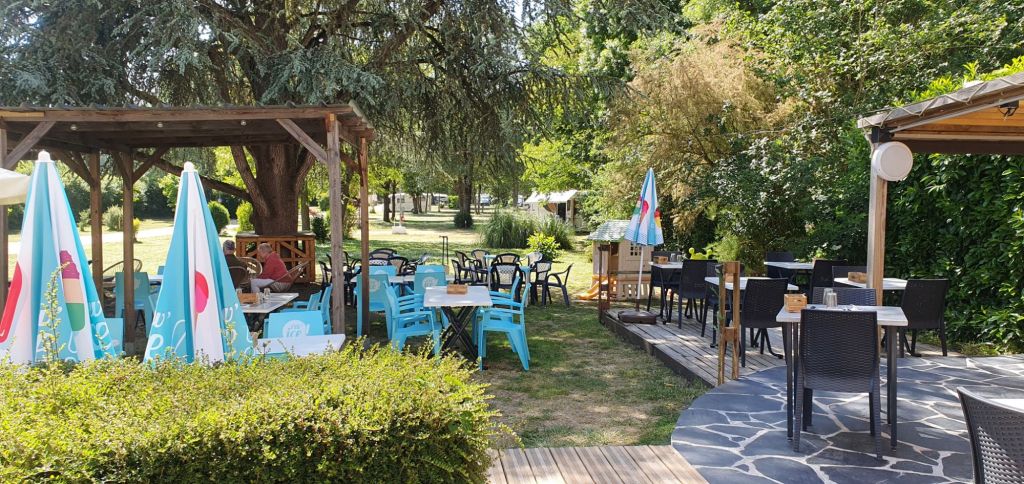
After we had toured the Chateau, its gardens, Tintin museum and had lunch, time was marching on and we could now check in to our next campsite. We reluctantly left the stunning vistas of Cheverny and took to the road heading for Bracieux. A short drive later we arrived at Camping Huttopia les Chateaux, a fairly large site situated in a forest. After having to inform the reception that we couldn’t fit on the pitch they had initially reserved for us, we ended up on a large sunny pitch with its own picnic table, what a bonus. The site has a bar, restaurant, bike hire, swimmimg pool and playground, alot of amenities but it felt spacious and quiet out of the main holiday season. The pitches were all lush grass making a change from the dusty patches you usually encounter on European sites. Chilling out in the last of the evening sun we had a bbq and plenty of wine to round off another amazing day of our French roadtrip holiday.
Read the next and final part of our French Roadtrip blog as we cycle through the forest to Chateau de Chambord and our trip comes to its end.

French Roadtrip Part 4 – Loire Valley Chateaux

Driving back across the Pont de L’ile de Re we waved goodbye to  4 magical days on the Isle promising to return again soon to explore more of its beautiful countryside, culture, beaches and villages. It certainly hasn’t seen the last of us, but for this trip it was now time to move on to our next destination. The Loire Valley and visiting its Chateaux were next on our plans.

The Autoroutes were once again kind to us navigating around La Rochelle and heading North East towards Tours, within a couple of hours the scenery was changing and we were seeing signs for Chateaux. Our Campsite for 2 nights was Camping Le Moulin Fort a CAMC recommended site located alongside Le Cher river at Francueil.

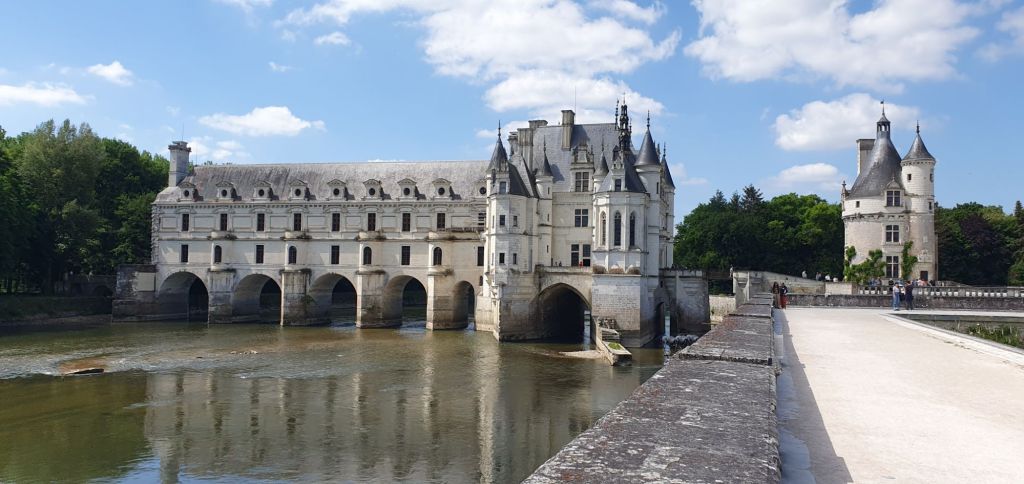
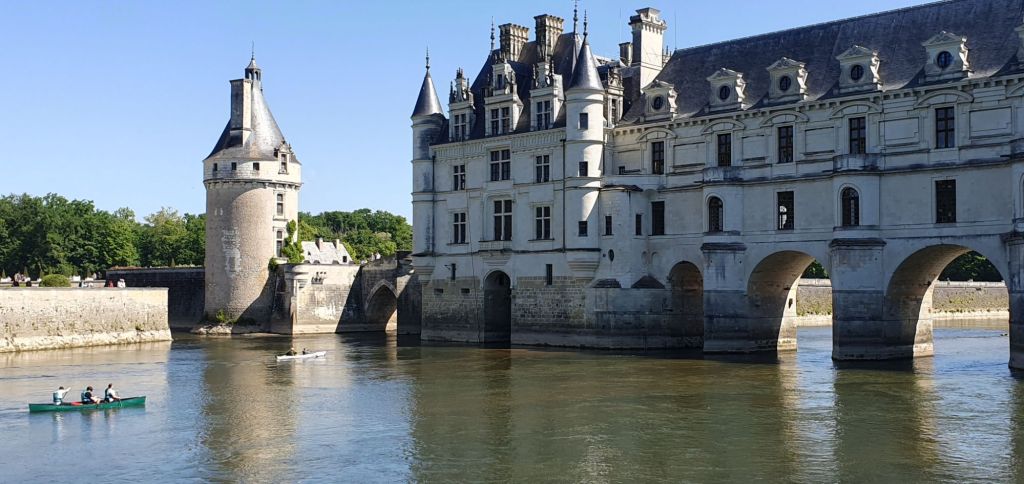
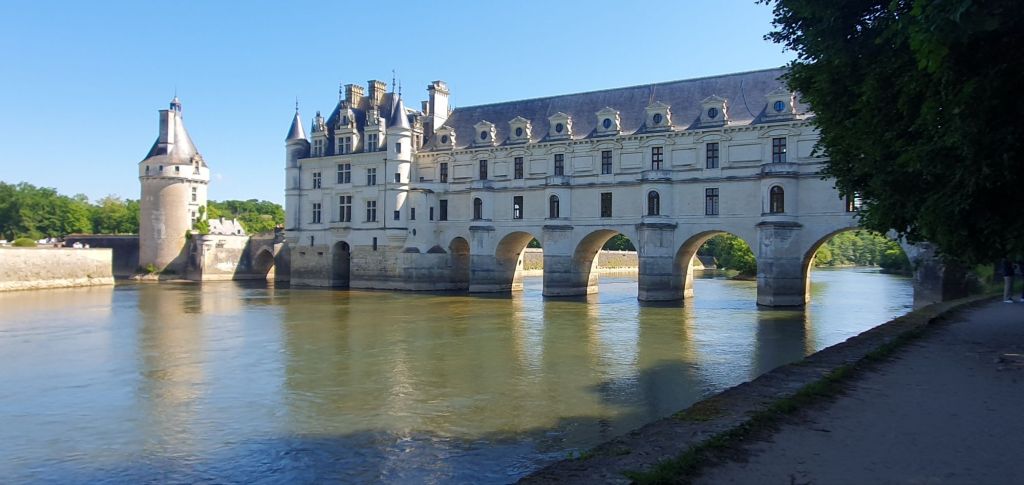
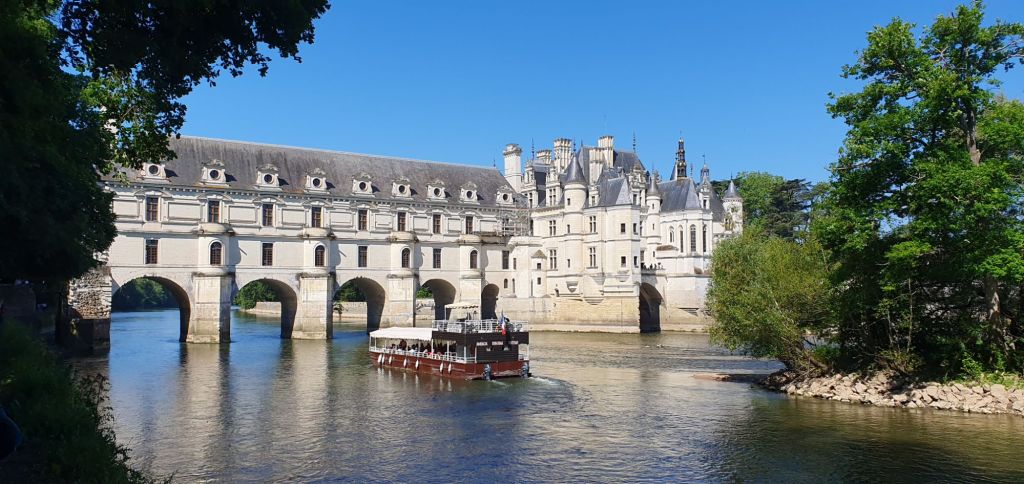
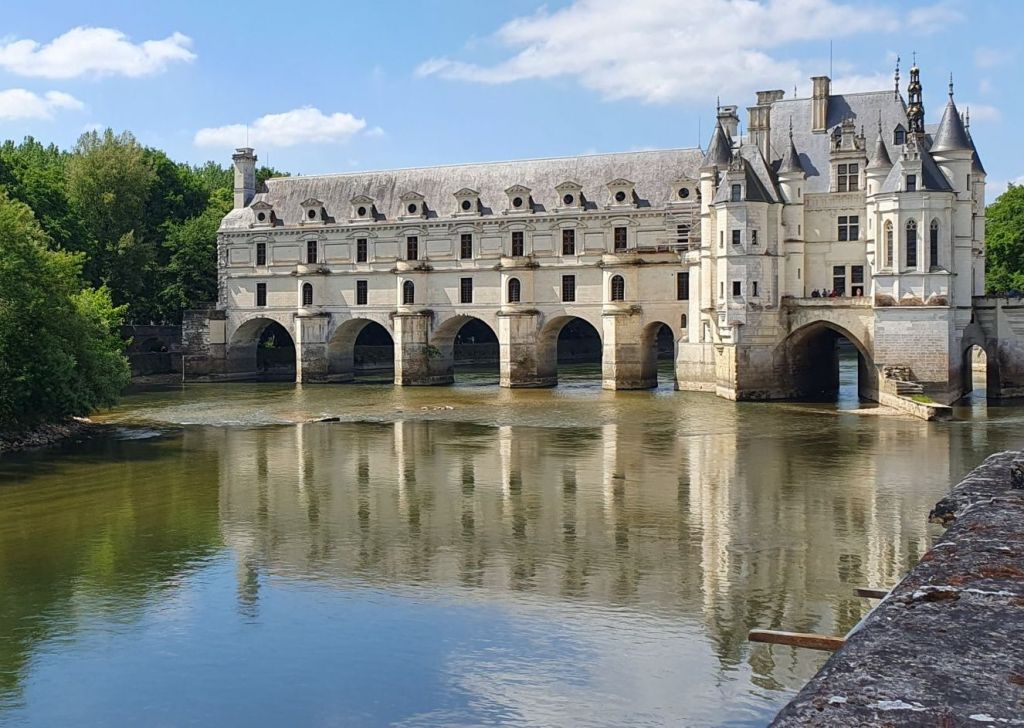
The site was in a superb location being only 10 minutes cycle ride to Chateau de Chenonceau which had been a must see on my bucket list for years. A dream of mine as an avid photographer being to capture the arches spanning the river.

We soon settled on our allocated pitch which was large and flat with just the right amount of tree shade to enjoy dappled sunlight for most of the day. It was a bonus when our neighbours arrived back who were English and had been coming to this site for the last 30 years so knew all there was to know about the area. The rest of the day was spent enjoying their lovely company and partaking of some very lovely wine.

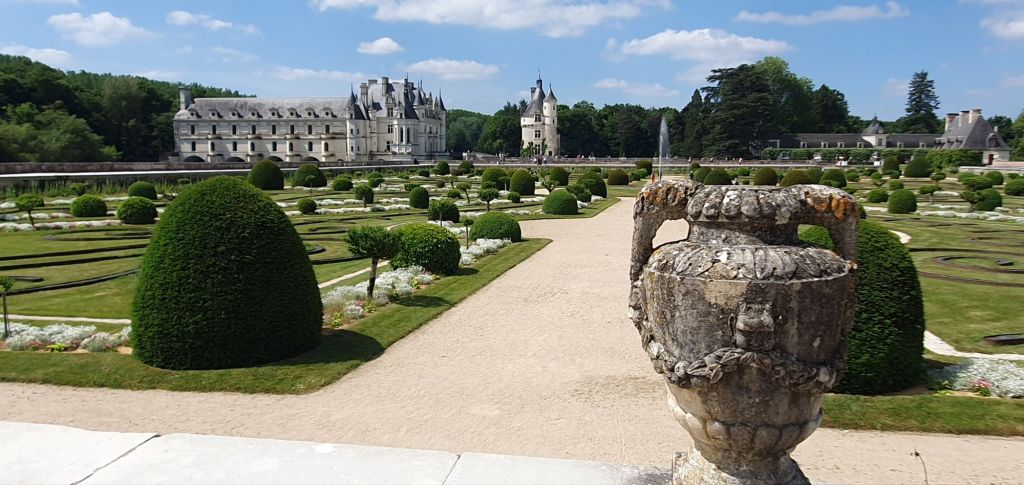
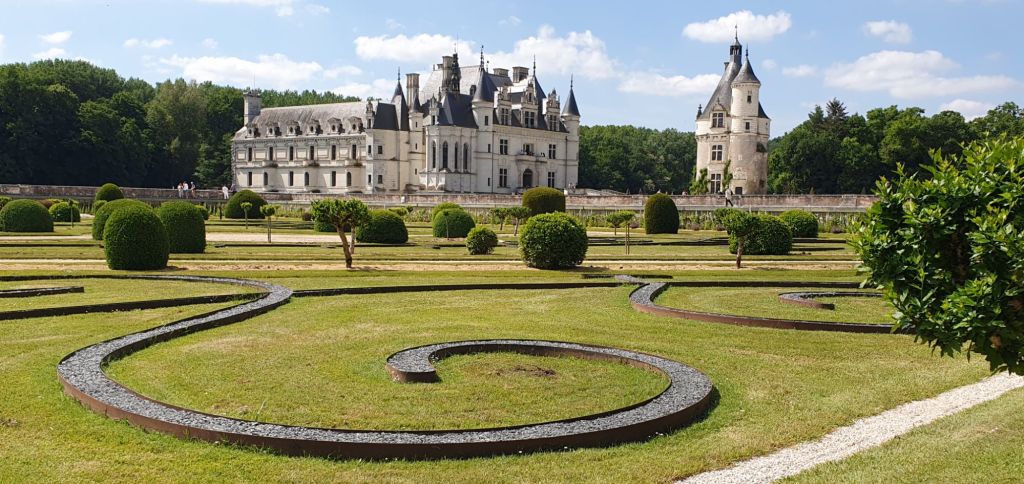
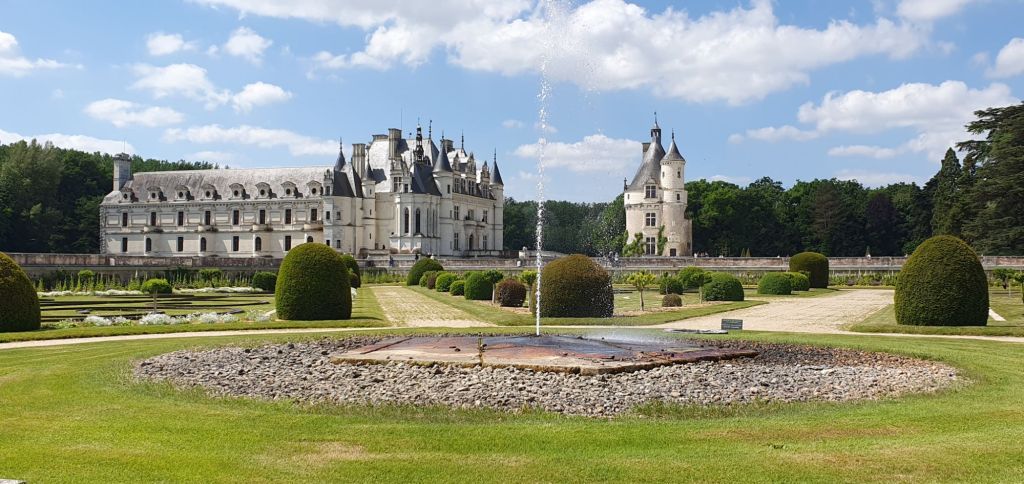
The following day we offloaded the bikes from the motorhome and pedalled the short distance alongside the river to Chenonceau. Being a Sunday we hoped that it wasn’t going to be too overcrowded but despite the many coaches in the capark it was surprisingly crowd free. The grounds and Chateau are so vast there was plenty of room for all. The avenue of tall plane trees leading to the Chateau set the scene for a view on a grand scale. Emerging from under their shade we were met with a fairytale scene of towers, turrets and balconies, their white stone facades blindingly bright against the brilliant blue sky. I was in photo heaven.

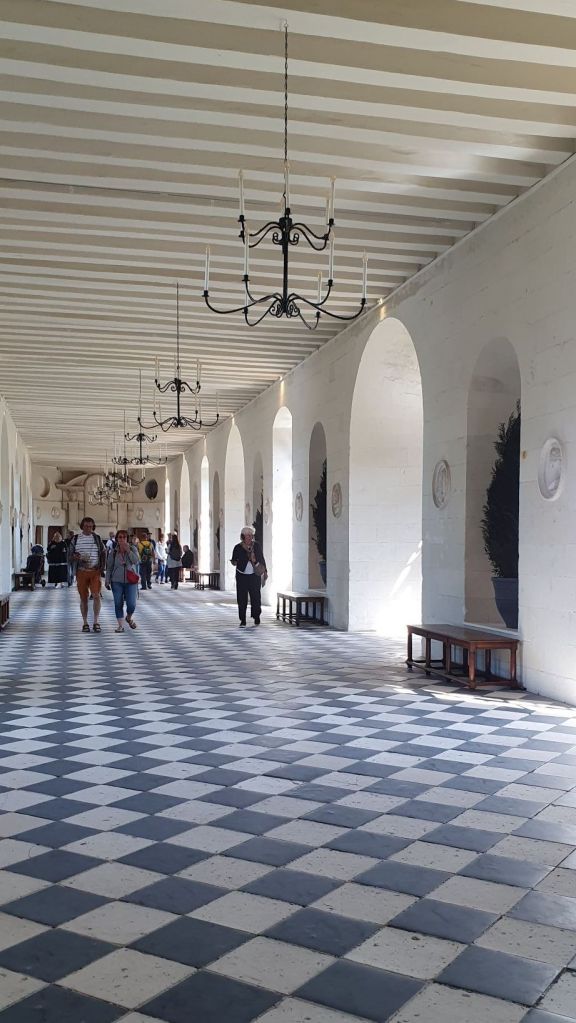
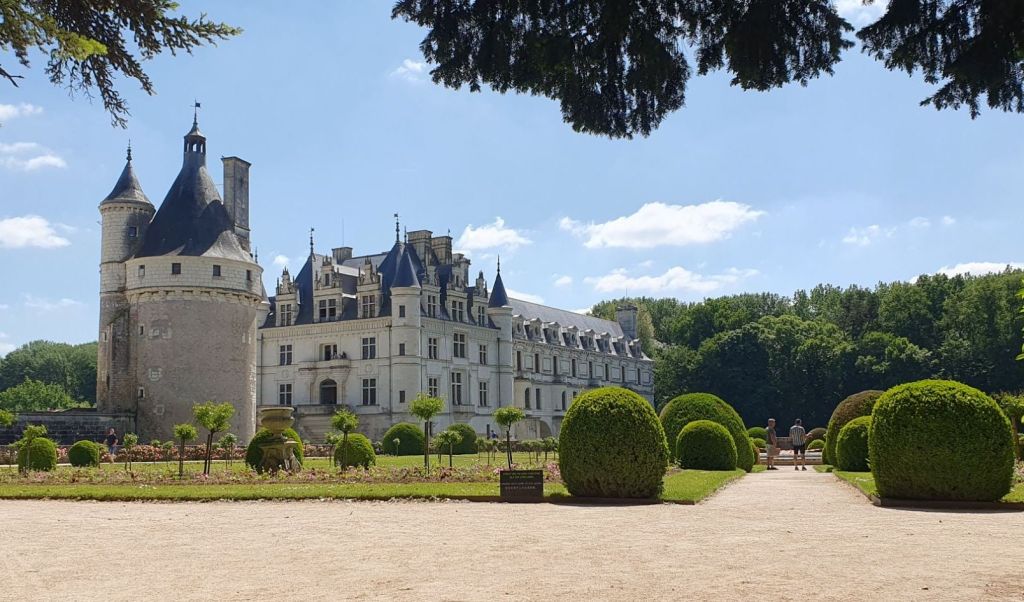
The Chateau was built in the 16th century on the former site of a fortified castle and mill owned by the Marques family. Only the keep- The Marquess Tower- was left standing which they restored in Renaissance style. Chenonceau is known as the Ladies’ Chateau as throughout its history females have played the most prominent role in restoring and embellishing the complex and its gardens. One such lady was Diane de Poitiers, being King Henry II favourite lady and who he gave Chenonceau to in 1547. She commissioned the famous arched bridge over the River Cher making the architecture of Chenonceau unique in the world. Then lo and behold Catherine de Medici- who was King Henry II widow, exchanged Chaumont-sur-Loire with Diane for Chenonceau and had a gallery built on top of the bridge to be used as a Ballroom. It is 60m long and has 18 windows. During the second World War the River Cher was the line of demarcation between occupied and unoccupied zones. The main entrance to the Chateau was on the right bank in the occupied zone and the South door of the Gallery gave access to the left bank so making it possible for the Resistance to pass many numbers of people through it and into the free zone.

The Gallery Ballroom

We continued our tour of the many rooms inside, walls elaborately decorated with tapestries, ceilings panelled and intricately painted, and four poster beds far too small for an adult of today’s average height.

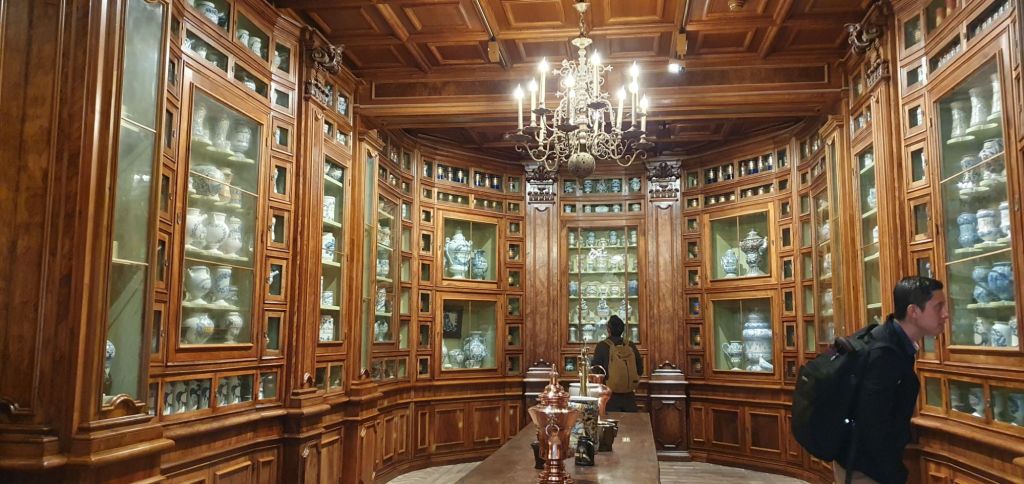
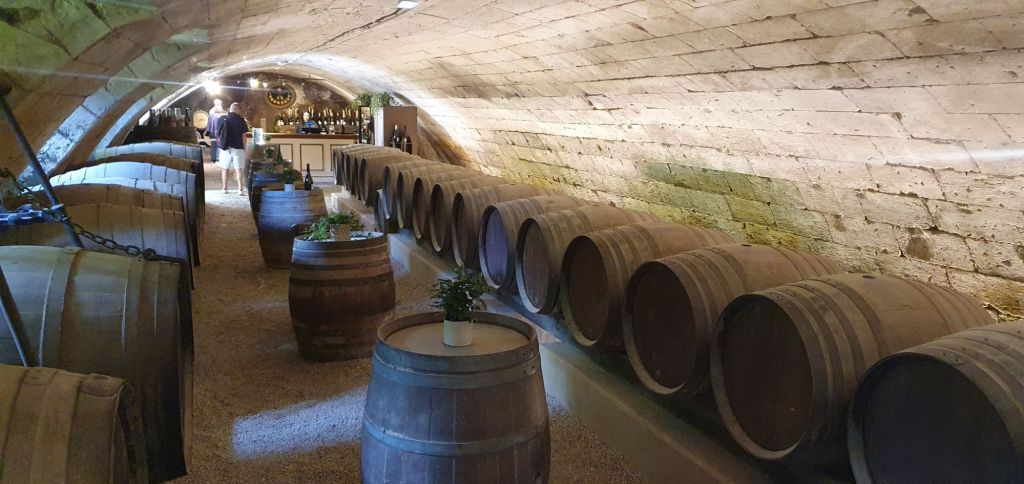
Stepping back out into the dazzling sunshine we toured the immaculate formal gardens, vegetable and flower gardens, the maze, orangery, apothecary, wine cellars and donkeys in a buttercup meadow.

After spending some time with the donkeys we reluctantly wound our way back to the bike park and cycled back to the site, collapsing in our deckchairs with a welcome cool drink and reflecting on an amazing day.

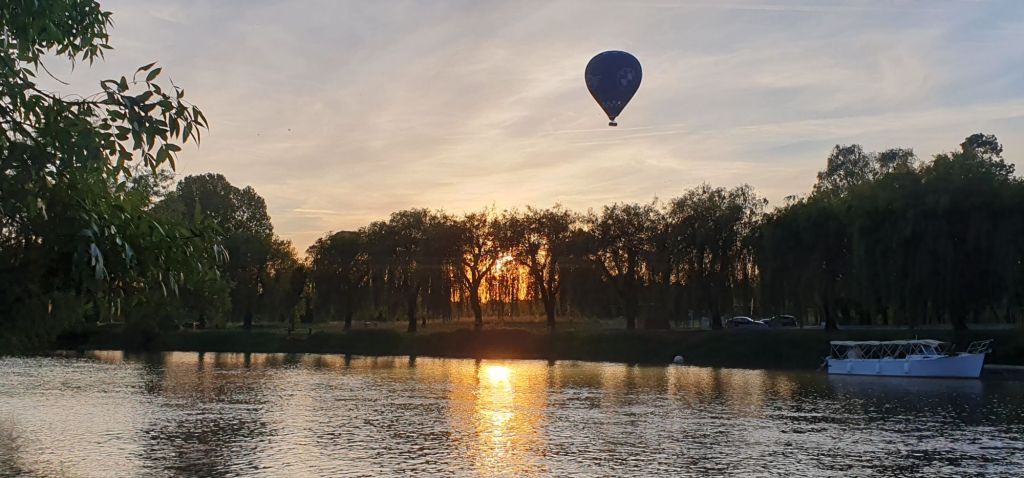
As the sun was setting we were treated to a display of hot air balloons slowly gliding along the course of the river and over the Chateau. Now that’s the photo I wish I’d snapped!

Catch the next and final blog of our French Roadtrip Part 5- More Châteaux and Heading for Home

French Roadtrip Part 2, Le Mans to Ile de Re

According to the satnav it was a 4 hour journey from Le Mans to our next destination Ile de Re. With luck a straightforward run on the toll roads should see us there for late afternoon as we always mentally add an hour on for the ‘unexpected’

The sky had brightened during our time inside the Le Mans 24h Museum and as we headed south the sun began to break through. This was more like the weather we’d hoped for. The trusty satnav successfully skirted us around La Rochelle and the Pont de L’ile de Re soon appeared on the skyline up ahead of us. We paid the €8 toll to cross the bridge and it felt like we were travelling to another country. The sky above us was clear, its deep blue colour reflecting in the sun sparkled waters beneath us. How therapeutic it was to see the sea again.

Pont de L’ile de Re

Ile de Re is 19 miles long and 3 miles across at its widest point. It almost looks like two islands on a map as salt marshes carve into the flat landscape leaving thin strips of land navigable only by bicycle and one road. Cycling is the main mode of transport here, there being hundreds of miles of designated mostly off road cycling paths criss crossing the Island taking you to picturesque villages and out of the way beaches. Our chosen campsite was about half way along the island so a few more miles of navigating through small villages, catching tantalising glimpses of sandy beaches through pine trees and passing through vineyards and poppy fields until we spotted the turning off to the site.

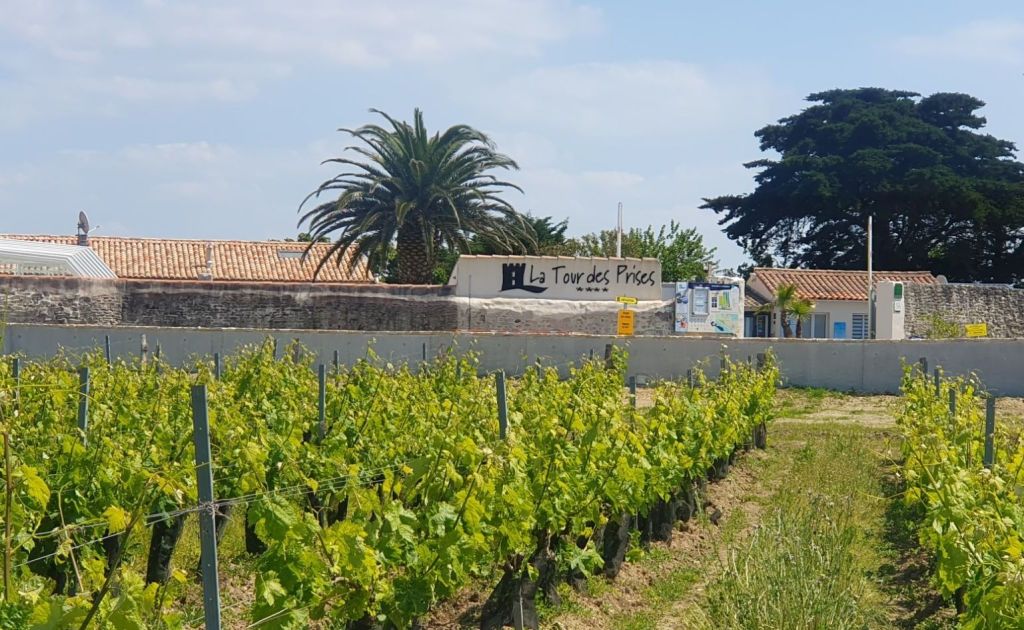
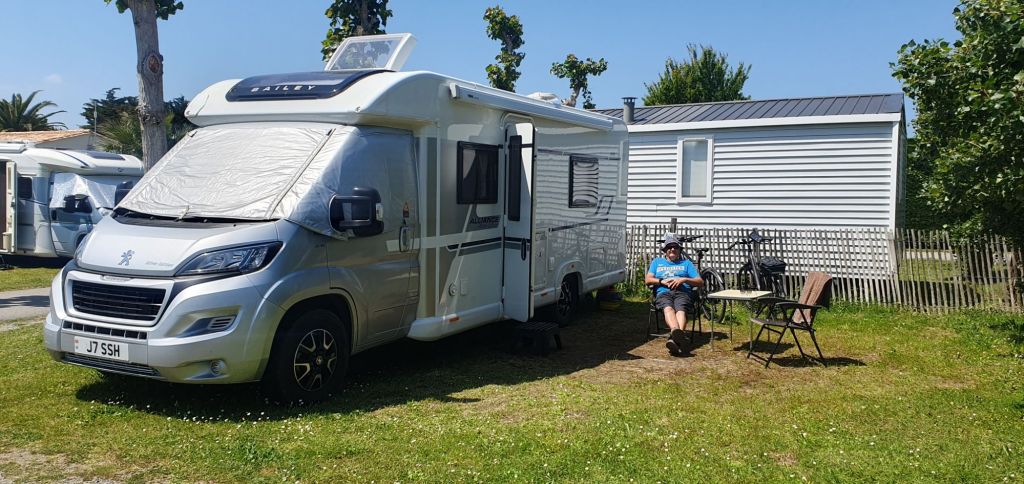
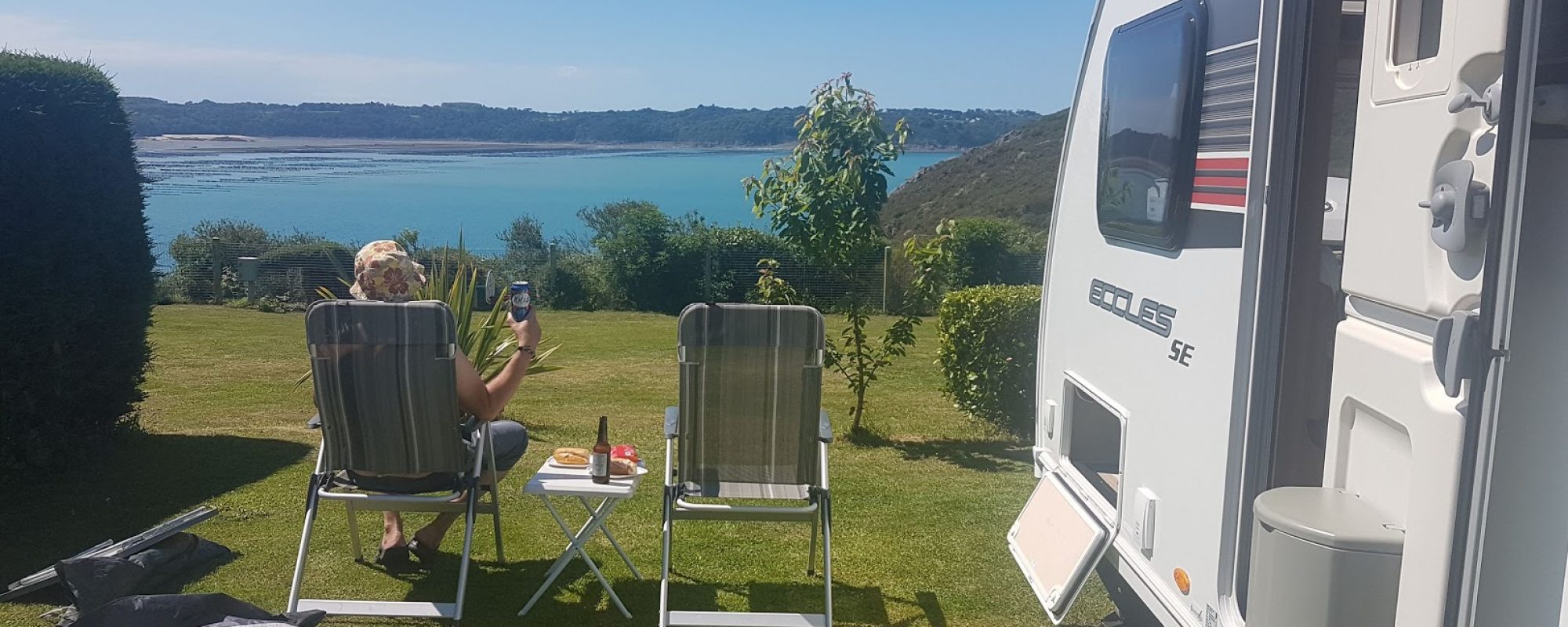
La Tour des Prises Campsite sits surrounded by vines and salt marshes the nearest large village being La Couarde sur Mer. It has a covered swimming pool, games room and bike hire, but no shop or restaurant. The facilities are mixed gents/ladies showers and toilets which are plentiful and clean. The pitches are the usual European standard having bare soil patches on sparse grass with hedging between. Our motorhome is 8m long with the bike rack on the back and didn’t fit on the first pitch they allocated us so we had to revisit the reception to request another.

Our first excursion on the bikes was to St Martin de Re, a main town and marina on the north coast of the Island. Armed with the cycle map we set out from the site directly onto the marked off road route, pedalling through a landscape of vines and poppies we reached the coast in less than 10 minutes. The sea was a long way out and barely visible leaving a vast expanse of wet rippled sand on which oyster farmers could be seen at work. Huts were dotted all along the coast path selling their produce and offering temptingly cool drinks. There are between 6-8000 tonnes of oysters farmed every year on the Island. 

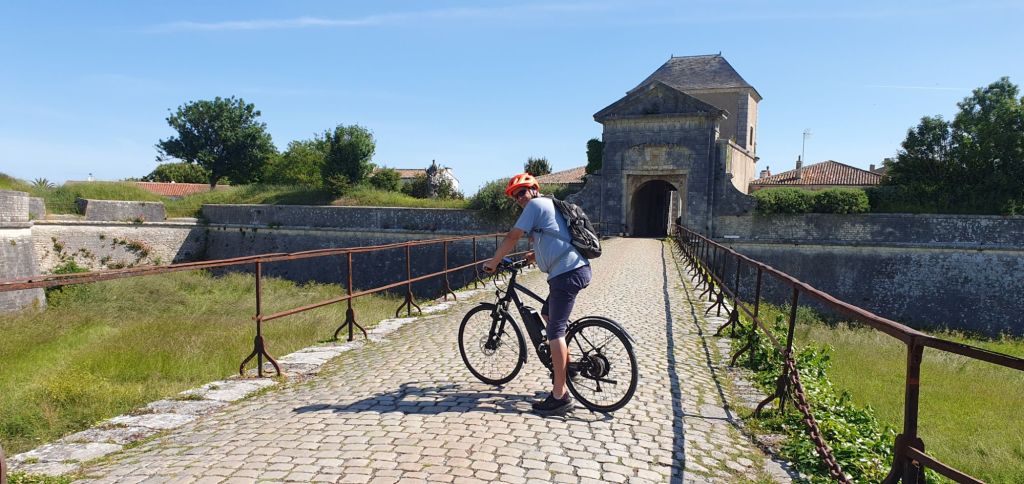
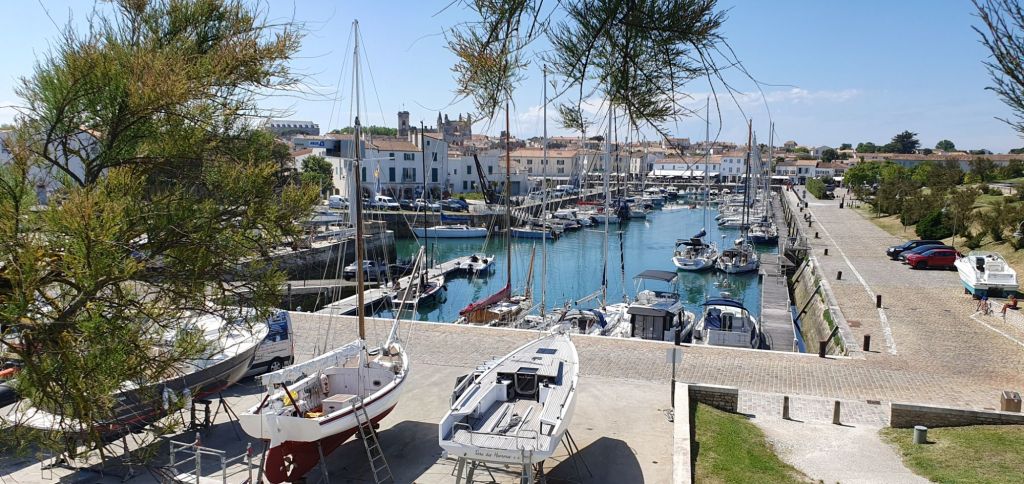
Our approach to St Martin was across a moat bridge and through 17th century ramparts which surround the town. Pretty blue shuttered houses on narrow cobbled streets led us down to the marina, a buzzing area lined with restaurants as far as the eye could see. It was barely midday and each one was doing a roaring trade. We secured the bikes and spent a couple of hours strolling around being tourists, visiting the lighthouse, browsing the shops and having lunch overlooking the marina. There was a TinTin shop which kept Steve occupied for a while whilst I raided the Tourist Information centre for more maps and the bus timetable to La Rochelle. Reluctantly it was all too soon to get back on our bikes and retrace our wheels back to the site. The cycle path was incredibly busy, a constant stream of bikes snaking both ways along it. A stop off halfway back to find some shade under which to enjoy a patisserie we had bought earlier was very welcome.

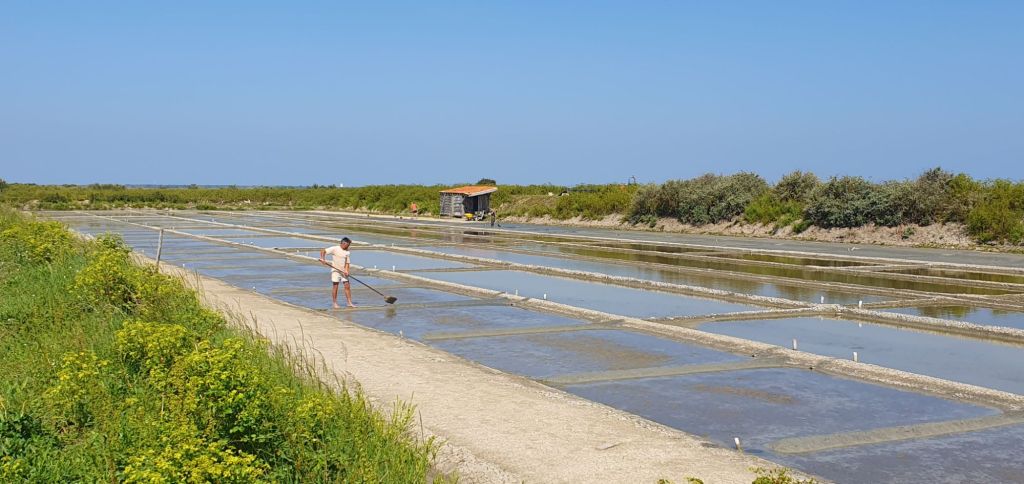
Following another study of the cycle maps we decided our next excursion was going to be through the salt marshes to Ars- en-Re, a small coastal village to the West of us. Again we rode straight out of the site onto the traffic free network of paths that guided us through the flat countryside. We rode along a warren of pathways weaving around the patchwork of salt beds baking in the sun, tended to by their owners patiently waiting for the water to evaporate and leave their bounty behind. Little huts selling their precious produce were dotted along the route.

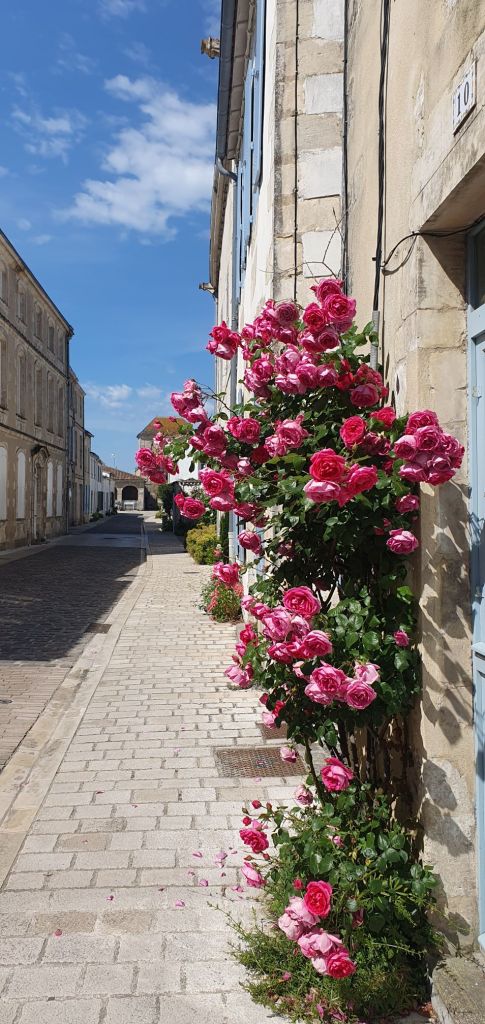
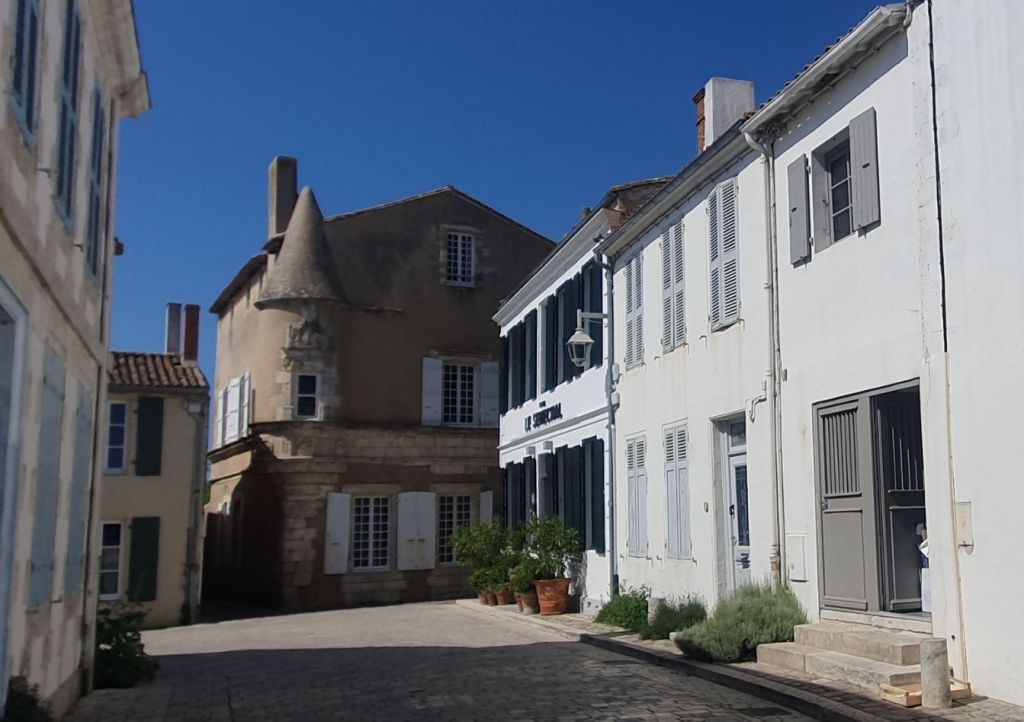
We arrived at Ars-en-Re secured the bikes by the small harbour and strolled into the village centre. It’s central square is dominated by the 12th century church with a distinctive black and white bell tower which serves as a navigational aid for sailors. The cobbled streets are again typical of the Ile de Re villages, pretty shuttered stone houses with flowers tumbling from window boxes and around their doorways. After an hour of losing ourselves amongst the many dead ends and alleyways we found our way back to the harbour and ready for the ride home.

Two days of bike riding had left our ‘behinds’ needing a well earned rest so the following day we let the bus take the strain instead and whisk us off the island to La Rochelle.

Read about our day out in La Rochelle in the next blog: French Roadtrip Part 3