French Roadtrip Part 6 – Last of the Chateaux then Heading for Home

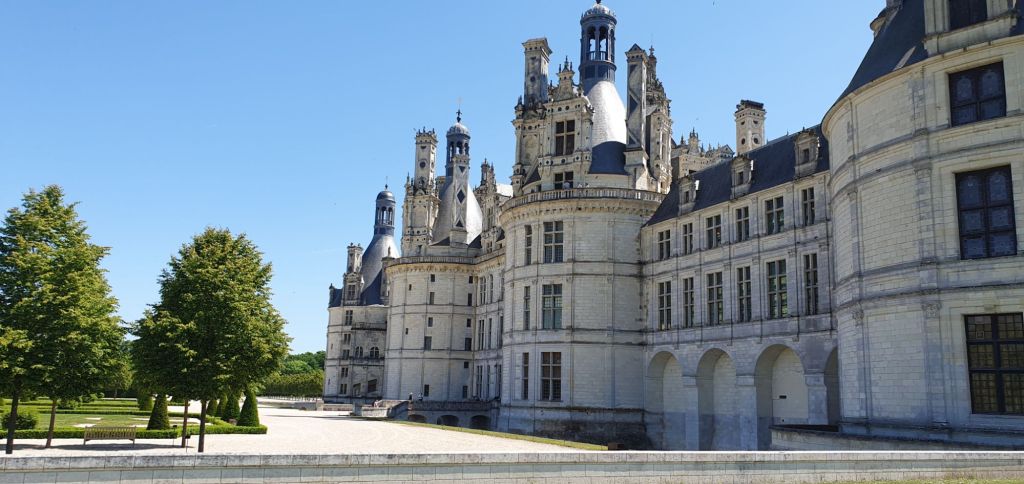
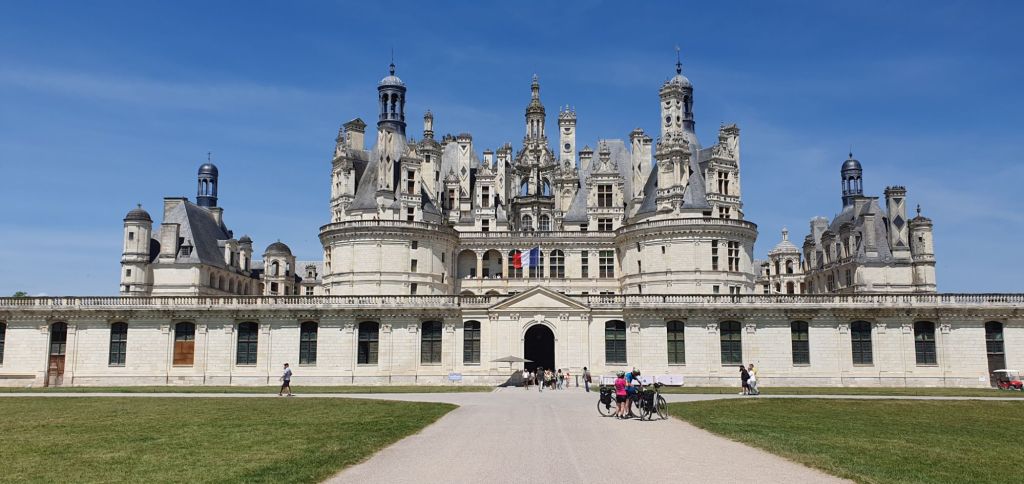
The final location on our 2025 French roadtrip was to visit Chateau de Chambord, an amazing construction built by the best French and Italian architects in order to entertain royalty, host hunting parties and dazzle guests with its grandeur and fascinating double spiral staircase said to have been designed by Leonardo Da Vinci.

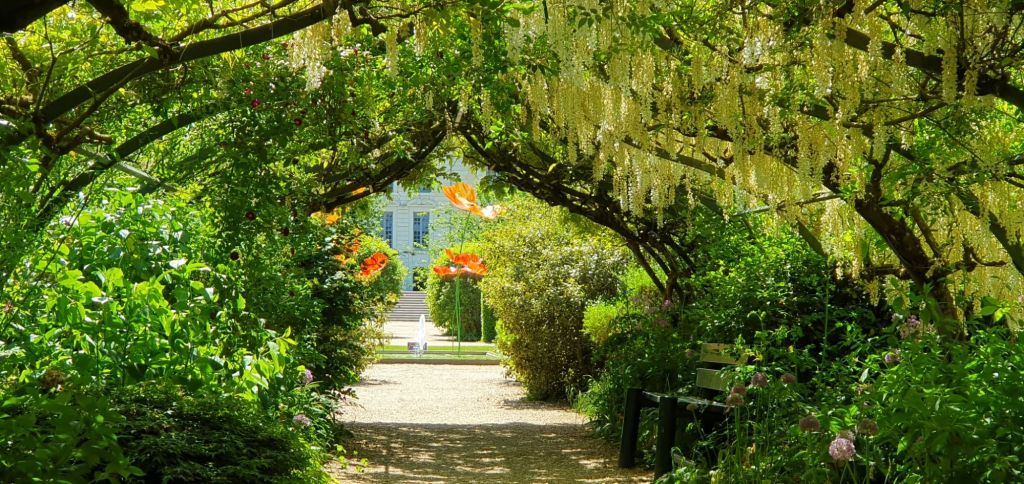
We stayed at Camping Huttopia les Chateaux which is an 8km cycle ride through the forest to Chambord, so after our first night settling in there the following day we set off for the Chateau. After a few hundred yards cycling on roads we picked up the signs leading us onto the hardsurfaced forest trails. The sky was blue, the sun was shining and the temperature was rising so we were thankful of the coolness the shade of the trees gave us as we peddled along. The route was quiet and easy to follow, most sections being long straight pathways but towards the end the paths were weaving in and around the trees. Although it was an easy ride I don’t have the best cycling ability so I’m thankful I managed to stay upright on two wheels! As we emerged from the forest the last kilometre was then on smooth tarmac roads to the main vehicular entrance. Here there was a large bike park which was nearly full, obviously it was a popular way to travel to visit. It was much busier than the previous two Chateaux we had visited. After collecting our tickets and visitors guide we followed the crowds wandering the pathways and had our first glimpse of the magnificent Grande Facade.
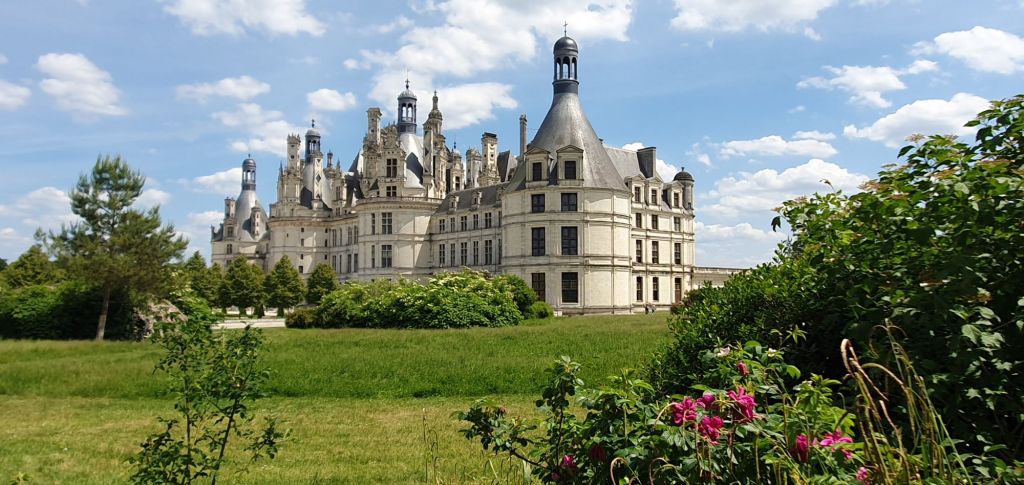
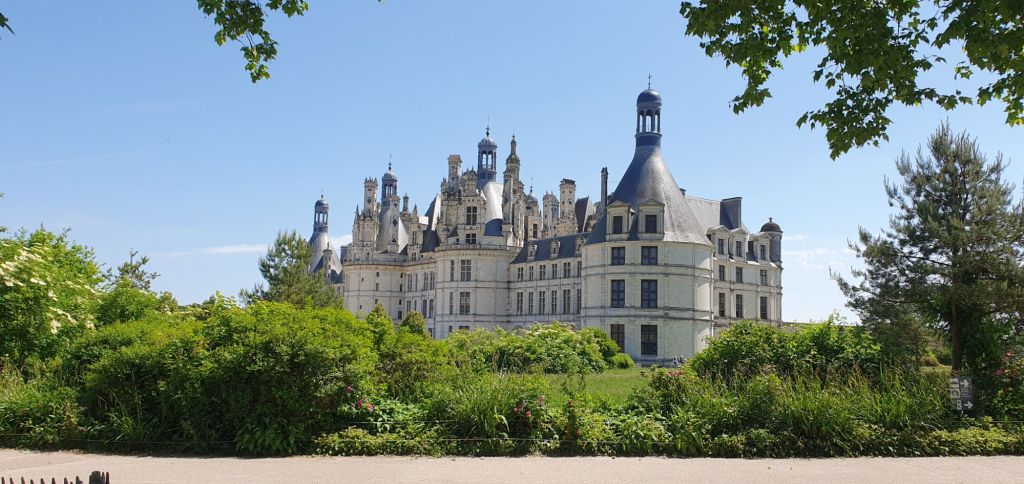
Chambord’s construction was started in 1519 by King Francis I with the keep and two wings being added during the next 150 years until the Chateau and its park was finally completed by Louis XIV in 1684. It has 4 floors, more than 400 rooms, 77 staircases and 282 chimneys. Following several changes of ownership it was bought by the State in 1930 and listed as a World Heritage Site (UNESCO) IN 1981.
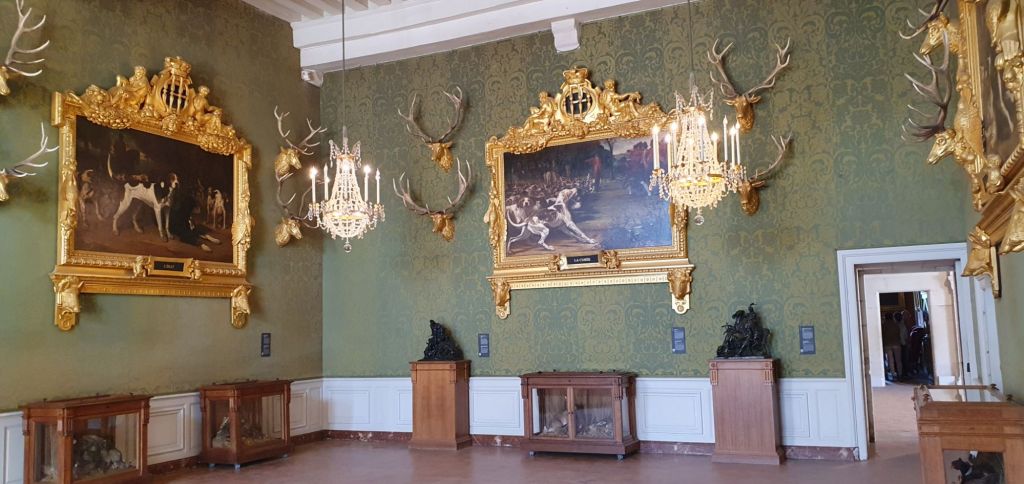
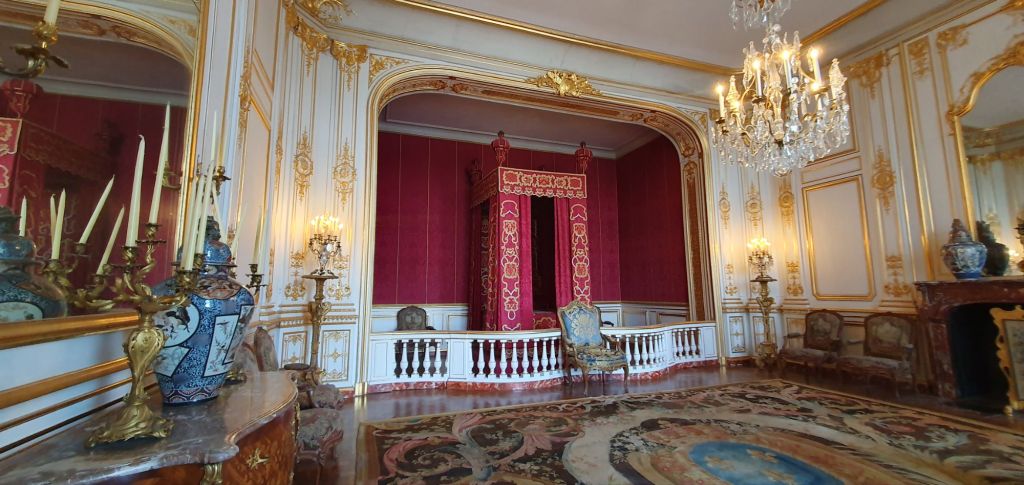
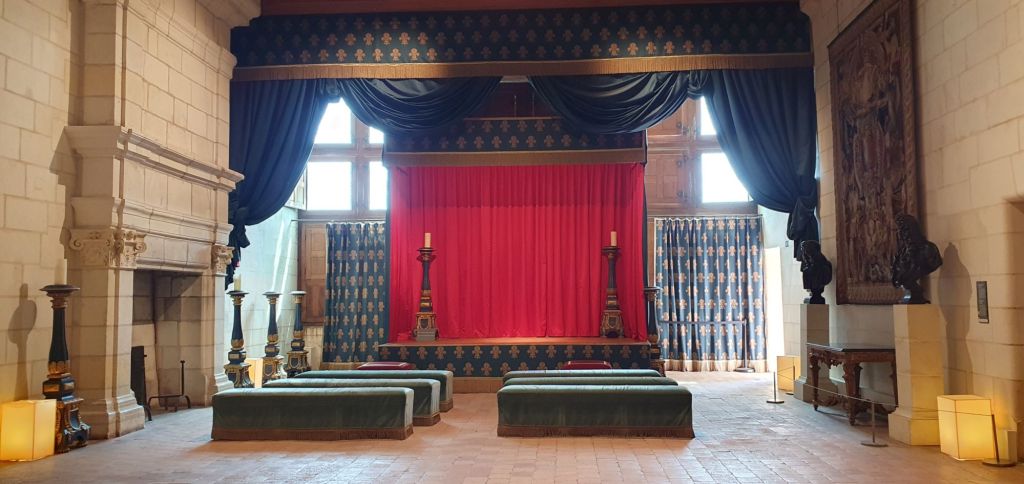
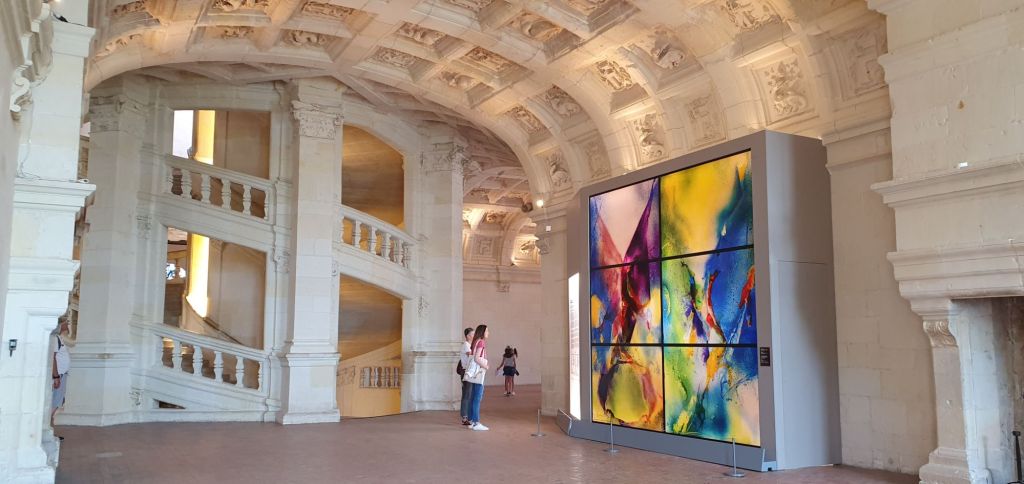
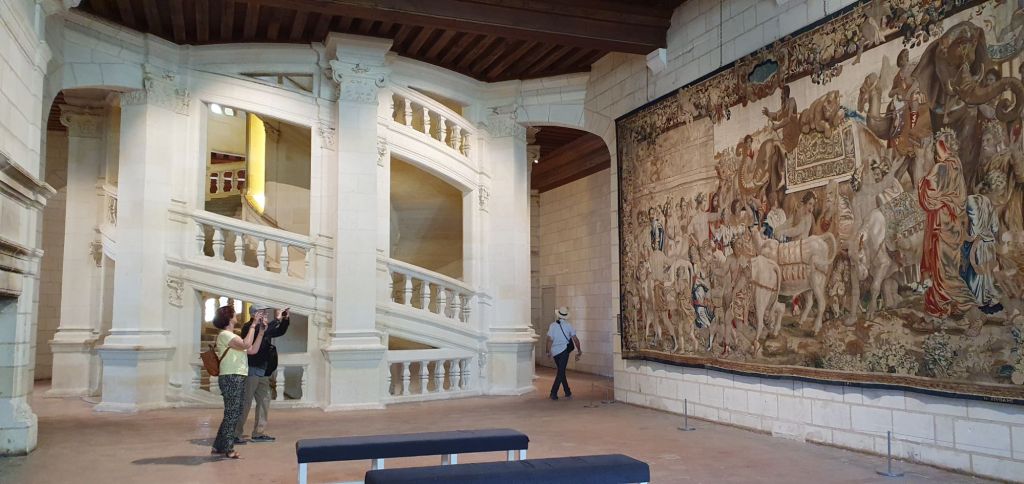
After entering through the keep the focal point is the grand double spiral staircase at its centre. Inspired by Leonardo Da Vinci it is a monument in its own right. Formed of two flights of steps that wind one above the other with windows opening onto a central core, it is a puzzling mind game as you can see others climbing the same staircase but your paths will never cross. The building was designed so that you can wander aimlessly in and out of rooms on each floor but are always able to return to the staircase at its core so never get lost – although that’s easier said than done as Steve and I were losing each other all the time as we explored its many rooms and exhibitions! Royal bedchambers, ceremonial apartments and Louis XIV’s theatre are all authentically recreated to relive the different centuries of the Chateau’s occupation.

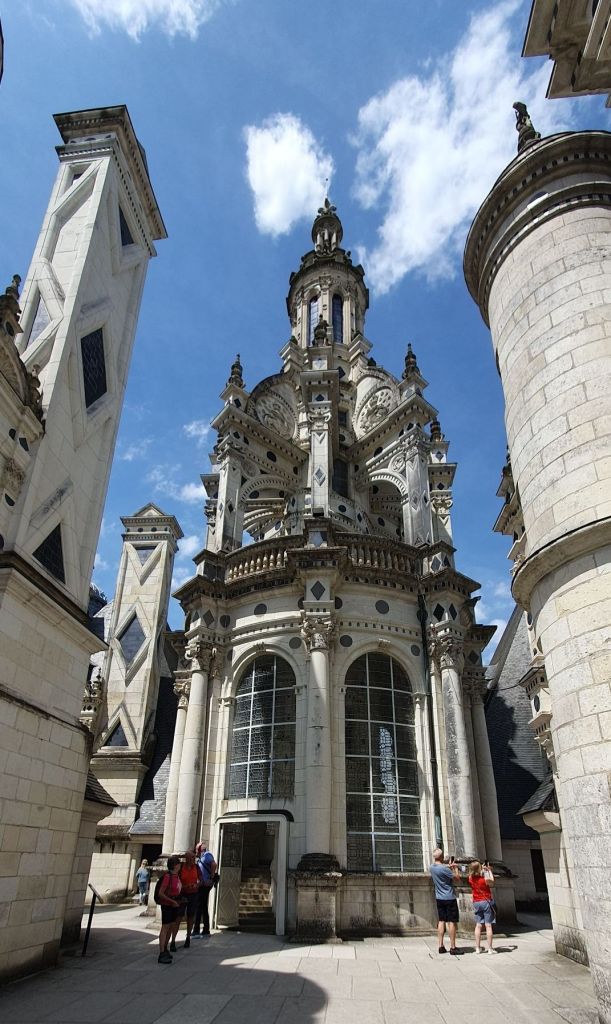
At the top of the keep the grand staircase leads out onto the open terraces which offer a magnificent panoramic view of the surrounding gardens and parkland. The French garden was restored in 2016/17 after years of research to reproduce the exact layout of the lost 18th century gardens with its symmetrical planting and fleur-de-lys design.

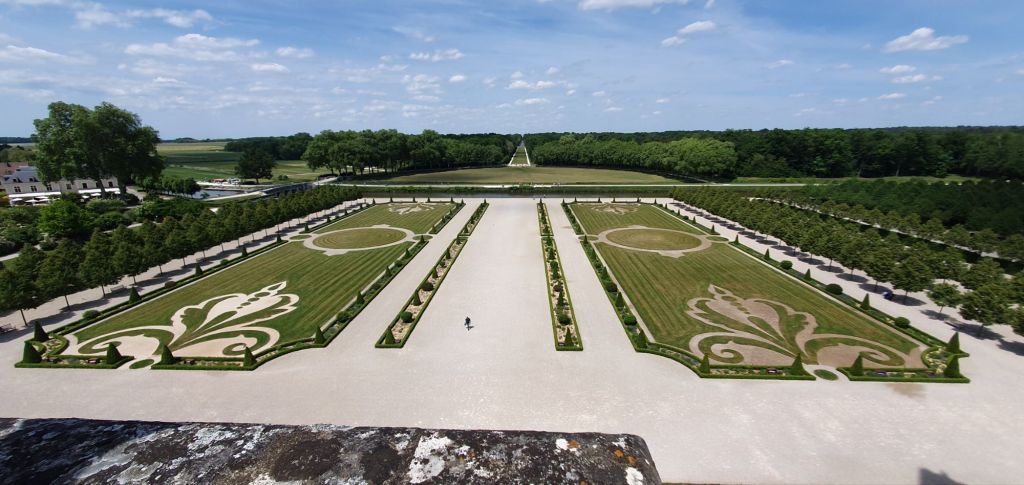
The surrounding parkland has over 20km of trails and walking routes to explore with bikes and electric carts available to hire. You can also take a 4×4 tour and hire a boat to cruise along the 4km of canal.

After several hours of exploration inside and out we made our way back to the bike park and headed to the forest for our return cycle journey. Not quite sure of which windey path we had arrived on we ended up cycling about an additional kilometre before we recognised a signpost through the trees pointing back to the site. The scenery was tranquil and peaceful with birdsong, butterflies and wild flowers lining the route which helped us on our way under the cool canopy of trees. Arriving back at Huttopia we flopped into our deckchairs having clocked up several thousand of our daily steps and 16km of pedalling.

The next day was our penultimate holiday day, one where we had to forego leisurely sightseeing to hit the road North to get within an hours drive of Dieppe ready for our ferry the following morning. It was a 320km drive estimated by Google maps to take 3.5 hours, so add on an hour because we don’t drive as fast as they think we do, and there’s always more traffic than Google initially anticipates, and we should be at Pavilly by middle to late afternoon. As I have said in previous blogs we do use the toll autoroutes to get to and from our required destinations, not everyone’s choice I know, and hopefully in our future retirement years when time is not a constraint we will be able to wander the roads less travelled and make it all about the journey not the destination. But until then we can only have 10 days each trip in which to see the world!

We had decided on another Camping CarPark stop for our last night located in Pavilly just north of Rouen and under an hour from the ferry port. I had prebooked our spot there on the Camping CarPark app just to be safe as it only has 8 pitches. It was easy to find located in the village and looked like it had only recently been constructed. There were 4 vans already there and by early evening it was full. A 10 minute stroll into the village centre and there is a good sized, well stocked convenience store which provided us with our evening meal and snacks for the onward journey home. The rest of the village looked all closed up and as it had started drizzling with rain we didn’t get to explore any further.

After a good nights sleep we arose the next morning, ate an unusual breakfast made up of everything that we shouldn’t be bringing back into the UK, and started the 55km journey to Dieppe ferry port. No hold ups at check in, not long to wait in our designated lane and we were boarding. We found our favourite reclining lounge seats and settled in with coffee and snacks for the four hour sailing. A few pages of our books and a little snooze later, we woke to the sight of white limestone cliffs on the horizon.

After only 10 days away driving back on the left suddenly seemed wrong and so unnatural. Roadworks and the M25 brought us quickly crashing back to reality though. During the journey home we reminisced about each day of the holiday, the locations, the views, the food, the wine, the experiences. And then the inevitable question was asked – “Right then, where are we going next time?”

So to find out keep reading the blogs to see where our travels take us next.

French Roadtrip Part 5- Another Loire Châteaux

After two nights at the perfectly placed Camping de Moulin Fort it was time to move further up the Loire Valley to be within cycling distance of another Chateau on our bucket list, Chateau de Chambord, but before we arrived there another one was due to be visited on the way.

The planned driving route took us virtually past the front door of yet another Chateau that was not to be missed, so with time to spare before check in at our next site we found ourselves parking up in the village of Cheverny.

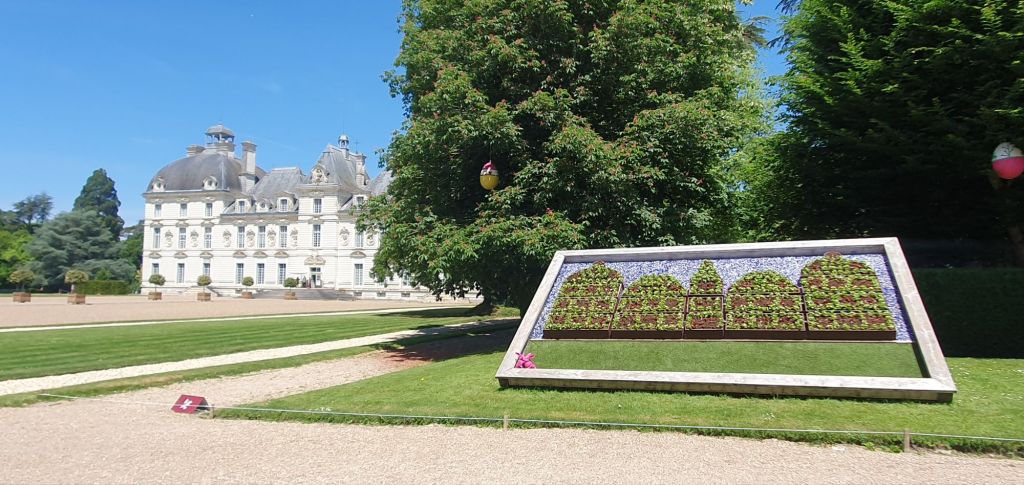
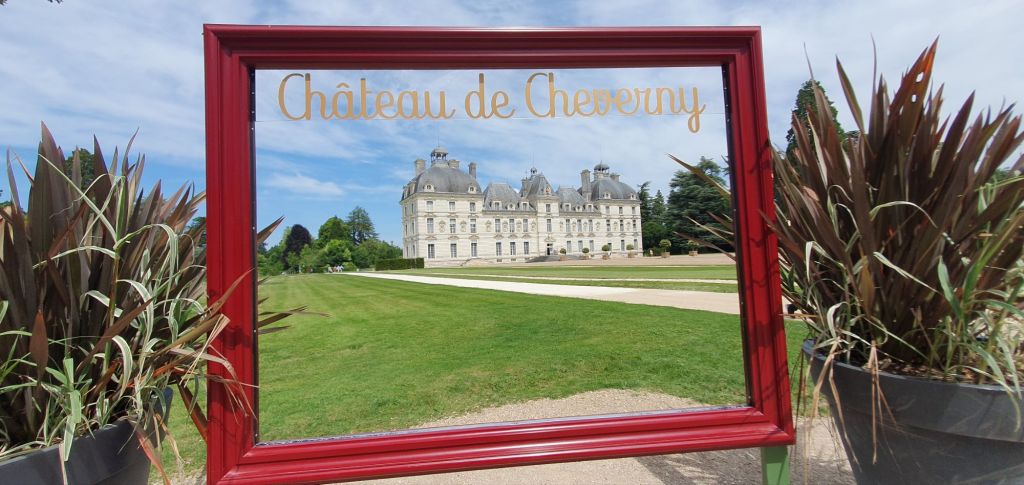
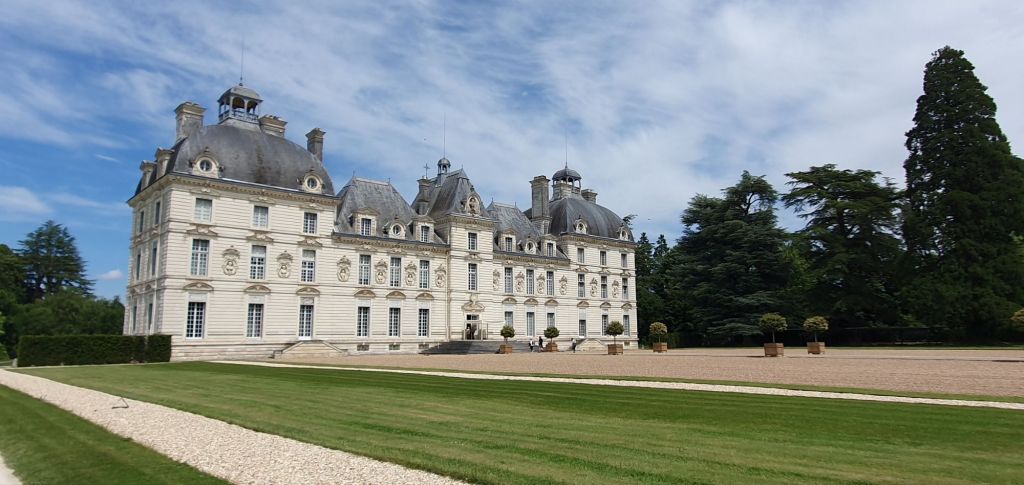
The village aswell as the motorhome park up was virtually deserted so no problem in finding a space for our 8m long vehicle. There is also an area next to the designated parking that appeared to be for overnight stays as it had a service point and we could see that this was nearly full. A short walk down the village street brought us to the elaborately gated entrance of Chateau de Cheverny. After paying our entry fee at the shop we were given a site map and guide and stepped back out into the warm May sunshine to explore this French gem. Yet another stunning vista awaited us as we walked along the pathways and rounded a corner.

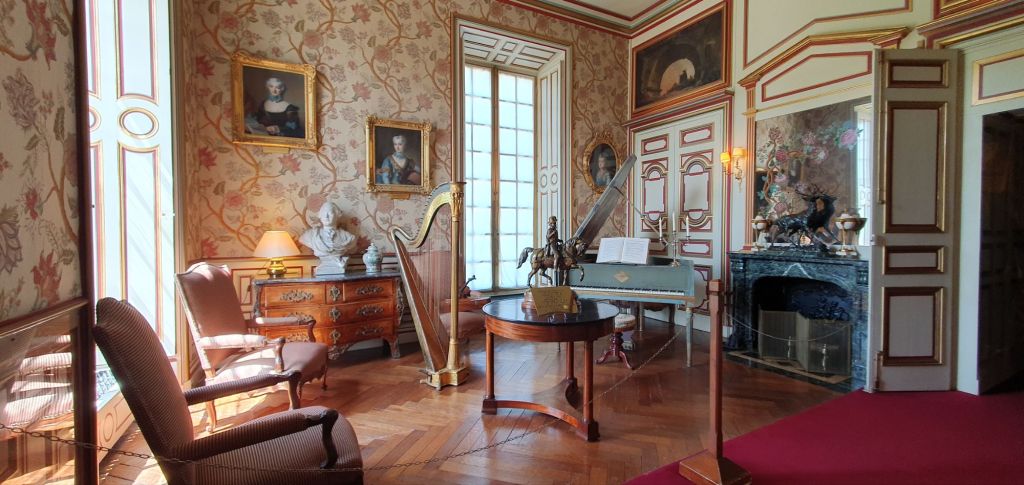
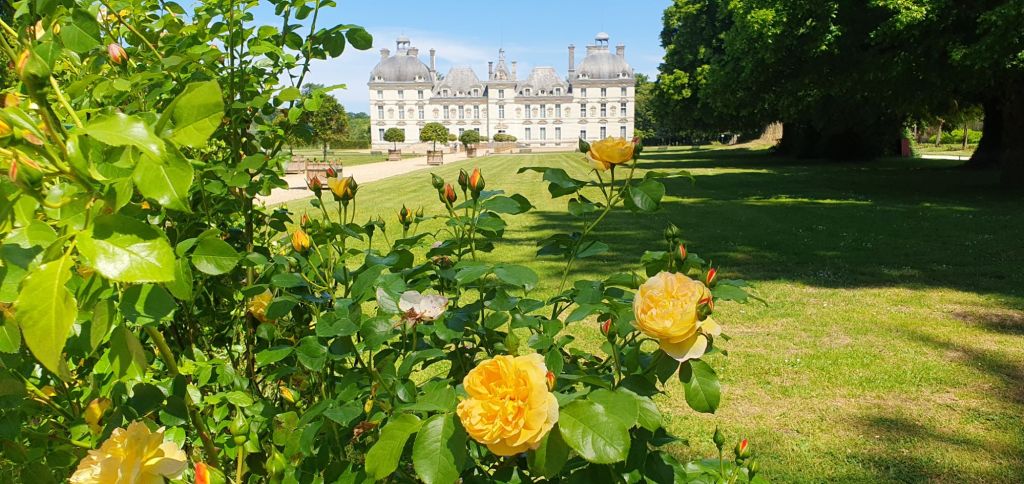
The Chateau was one of the first French stately homes to open to the public in 1922 and the estate has been owned by the same family for more than 6 centuries, although the Chateau itself has slipped out of their hands twice in that time. Once being bought by Diane de Poitiers after she was ousted from Chenonceau by Catherine de Medici. It was bought back by the Marquis de Vibraye in 1825 and so returned to the Hurault family whose descendants now live in the apartments in the right wing. Whether it’s because it still is partly a family home but we thought it felt intimate and homely even though it is stunning on a grand scale.

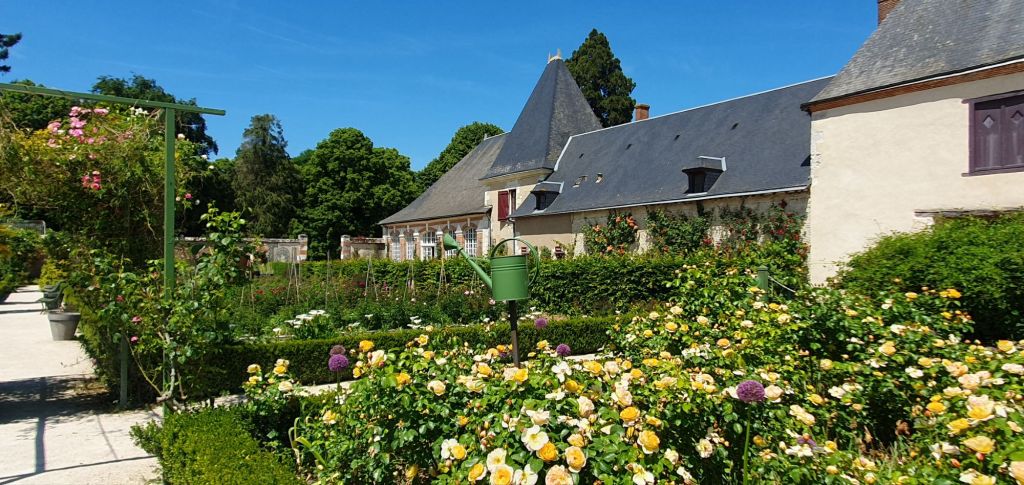
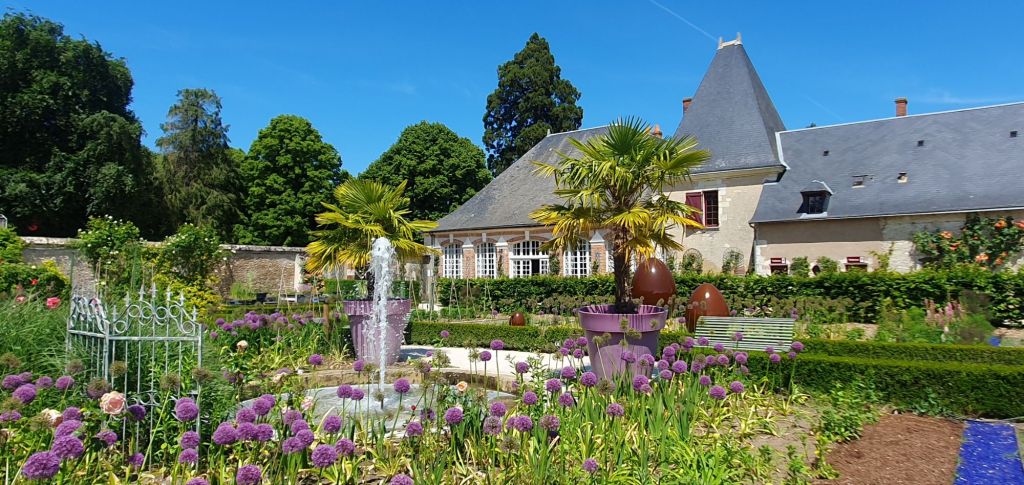
In 1943 Herge, the author of Tintin, was inspired by the architecture of Cheverny when he created Marlingspike Hall for his comic book strips. There is a Tintin museum located in the former stables and a large shop as you leave, which was a great bonus for Steve and kept him entertained whilst I took a tour of the beautiful flower filled gardens. Strangely this was our holidays’ second encounter with Tintin as there was also a shop on the quayside in St Martin on Il de Re that we had discovered a few days before.

Cheverny is also an important hunting venue. The onsite kennels house about a hundred French hounds, each with V for Vibraye shorn into its right flank. One or two were lounging around their compound in the full sun but most were taking shelter in the shade against the kennels.

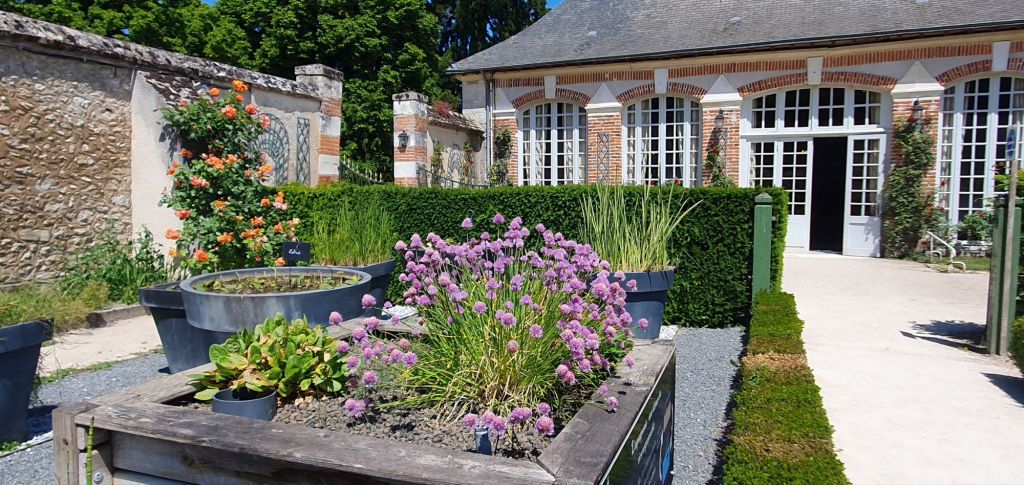
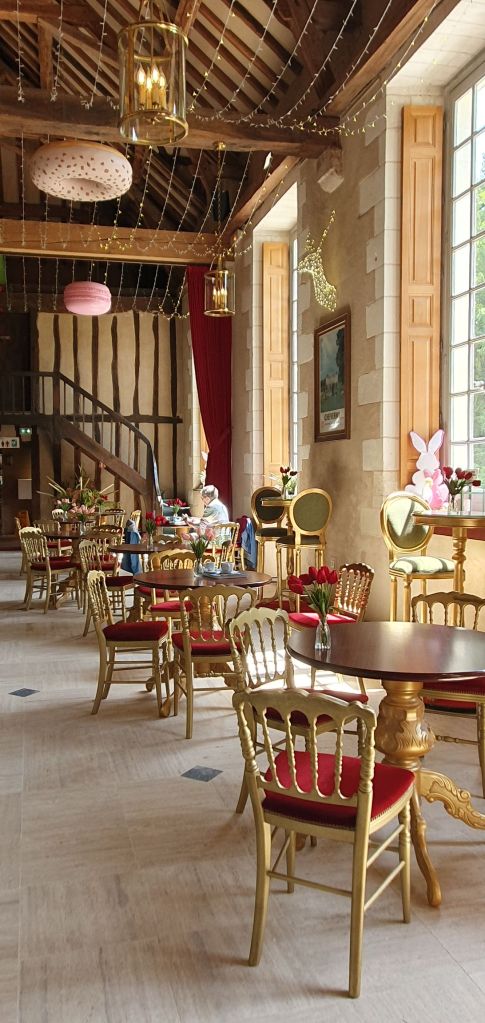
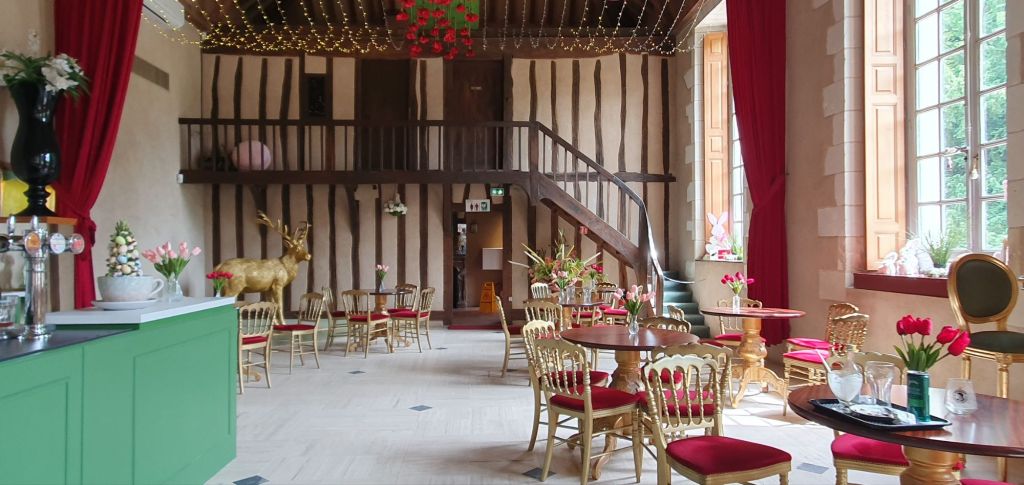
The 18th century Orangery now houses a cafe where we enjoyed our lunch surrounded by its decadent gold furnishings. As with many Chateaux this Orangery building was used to hide the nations art and valuable property during the Second World War, most notably apparently the Mona Lisa.

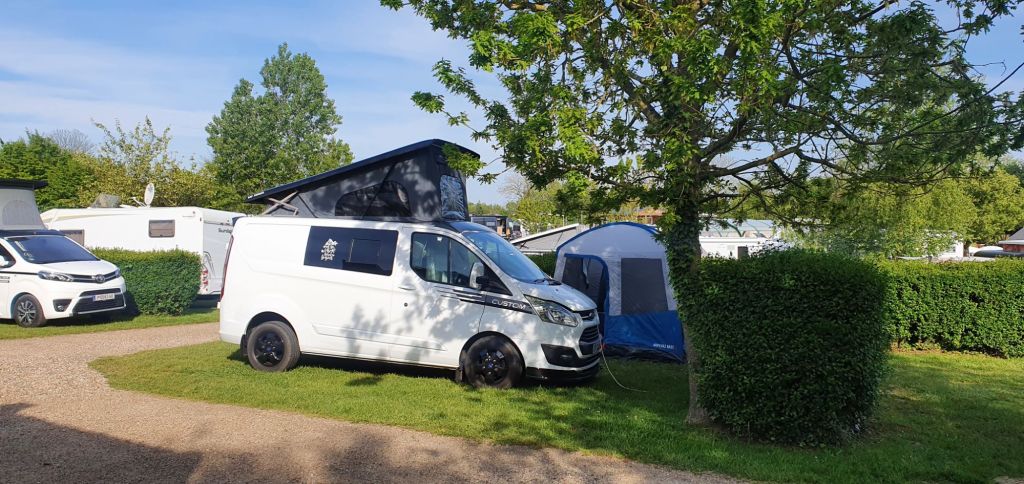
After we had toured the Chateau, its gardens, Tintin museum and had lunch, time was marching on and we could now check in to our next campsite. We reluctantly left the stunning vistas of Cheverny and took to the road heading for Bracieux. A short drive later we arrived at Camping Huttopia les Chateaux, a fairly large site situated in a forest. After having to inform the reception that we couldn’t fit on the pitch they had initially reserved for us, we ended up on a large sunny pitch with its own picnic table, what a bonus. The site has a bar, restaurant, bike hire, swimmimg pool and playground, alot of amenities but it felt spacious and quiet out of the main holiday season. The pitches were all lush grass making a change from the dusty patches you usually encounter on European sites. Chilling out in the last of the evening sun we had a bbq and plenty of wine to round off another amazing day of our French roadtrip holiday.

Read the next and final part of our French Roadtrip blog as we cycle through the forest to Chateau de Chambord and our trip comes to its end.

D-Day Road Trip

Having our new 12 on 12 off rota set out for the season meant we could plan our time off this year to include some holidays. Not used to being able to have holidays during the summer it was quite a novelty planning where and when we could go. We decided on a road trip in Vinny to Normandy in May. As it was the 80th D-Day Anniversary in June we hoped to avoid the masses but still get a feeling for the celebrations being planned. We had 10 days between shifts in which to experience this iconic stretch of French coastline.

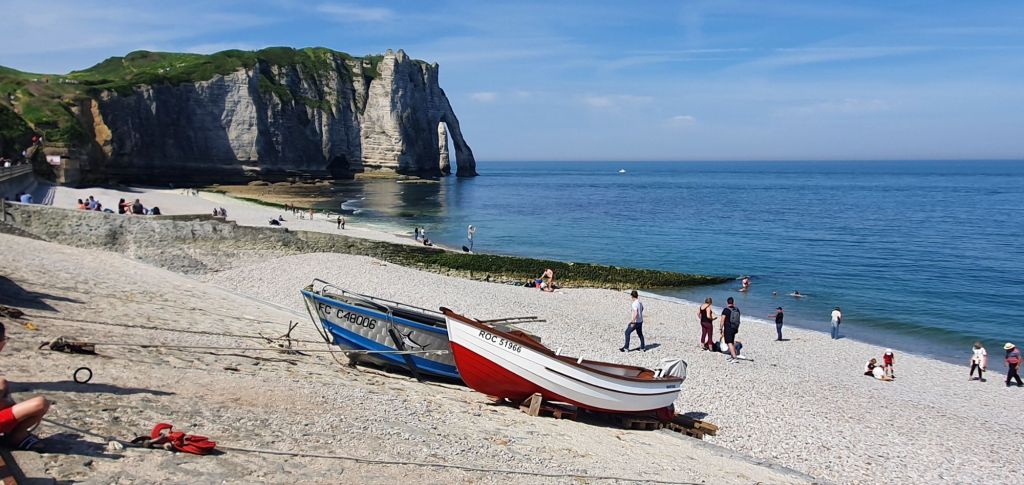
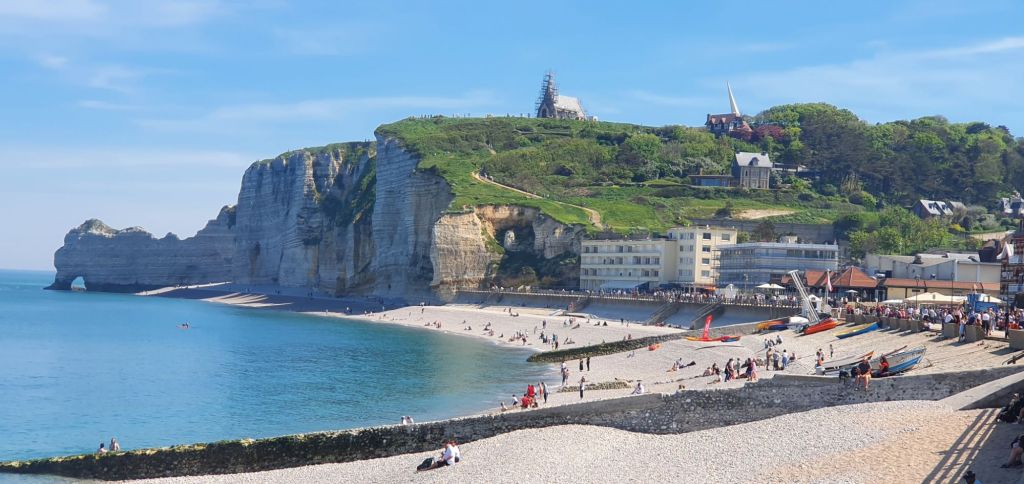
We left Warwick on handover day and headed down to the Brighton site for an overnight stay before boarding the DFDS ferry from Newhaven the following morning. It was a very clam crossing and after 4 hours onboard in a lovely reclining seat area we arrived in Dieppe. Our first stop over was located south of Dieppe near Etretat, a small coastal town with white pebbled beaches and a rock formation similar to Durdle Door in Dorset. The site was called L’Aiguille Creuse in Les Loges, it had a small shop, restaurant, takeaway, swimming pool and was a short walk to the village with shops, a market and the bus stop to Etretat.

Etretat

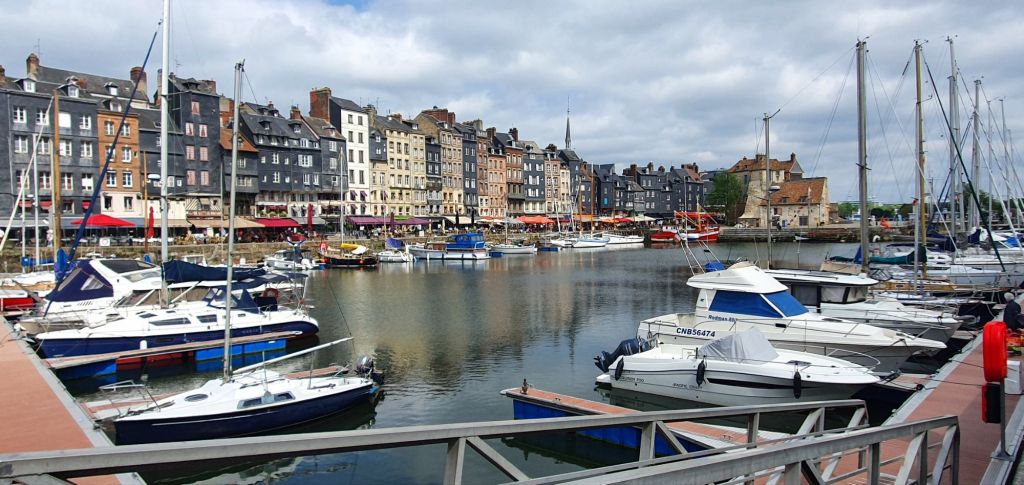
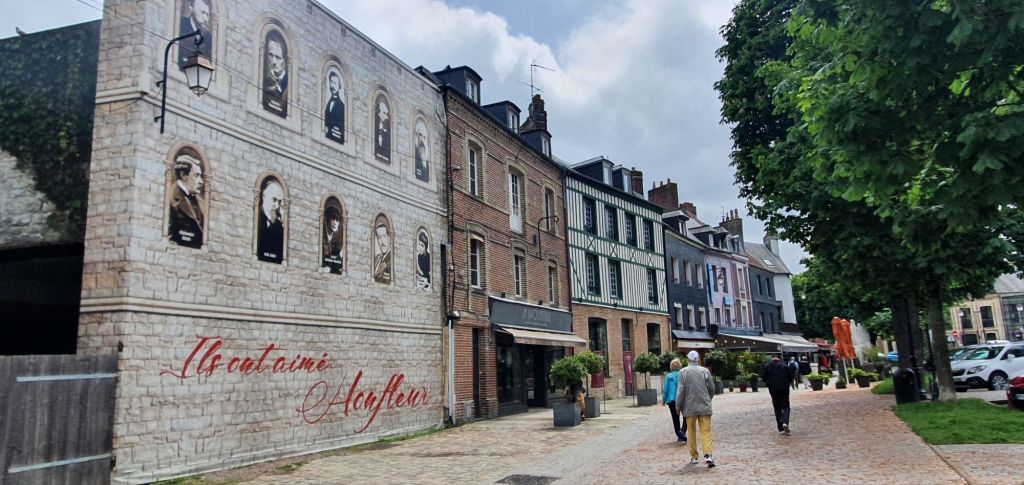
After two nights there we headed south west towards Mont St Michel, somewhere that had been on my bucket list for a number of years. Stopping off at Honfleur on the way we strolled around the picturesque old port and winding cobbled streets, it was a very pretty town with plenty to see.

Honfleur

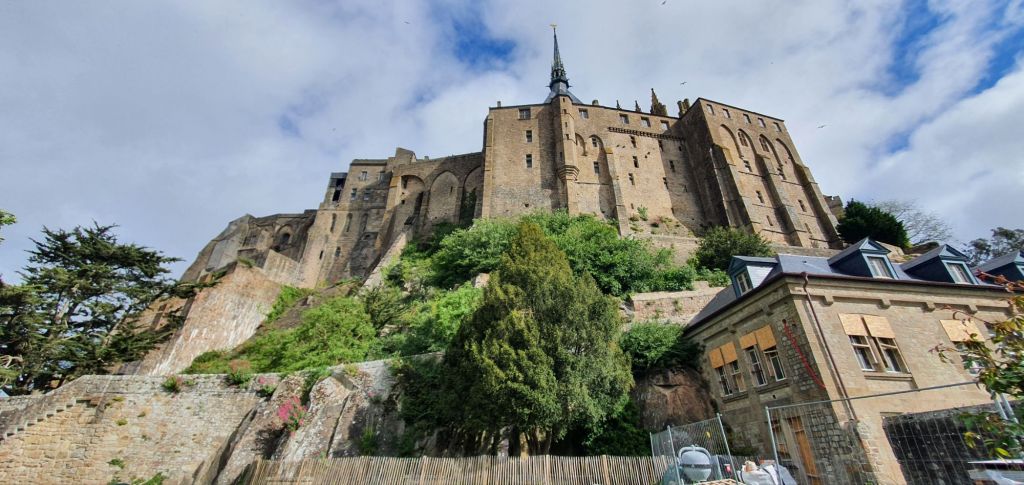
Our campsite for the next 2 nights was Camping Haliotis in Pontorson. This was also a very convenient few minutes stroll to a large supermarket and the bus stop to Mont St Michel. The site had large lush grassy pitches surrounded by hedging as is the usual European way, a swimming pool and cafe area. Next day the weather was forecast good until afternoon so we hopped on the bus early and arrived at Mont St Michel before the main crowds. Later in the morning the crowds and parties of school children increased so we were glad of an early start. Wandering around the little alleyways and looking out across the seascapes the views were all I had hoped for, and it felt very magical aswell as satisfying that I had finally made it there.

Camping Haliotis
Mont St Michel

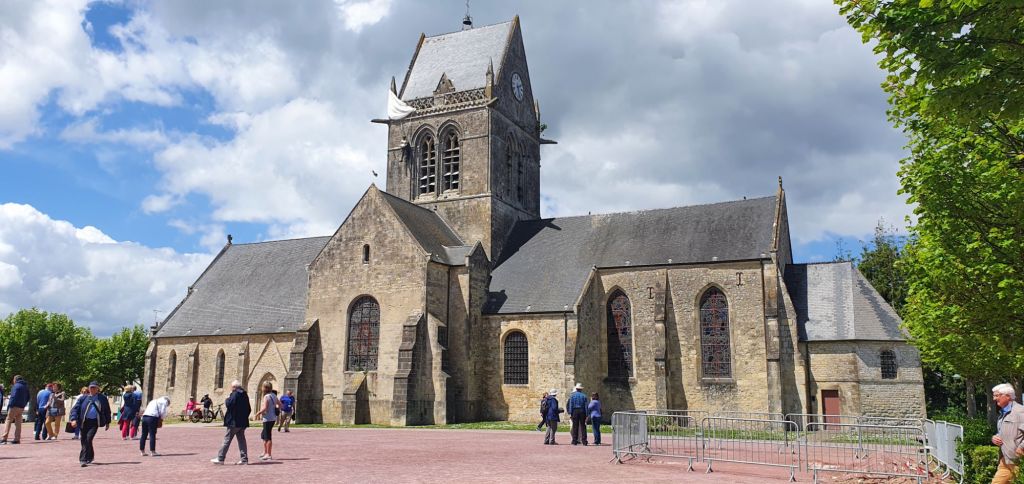
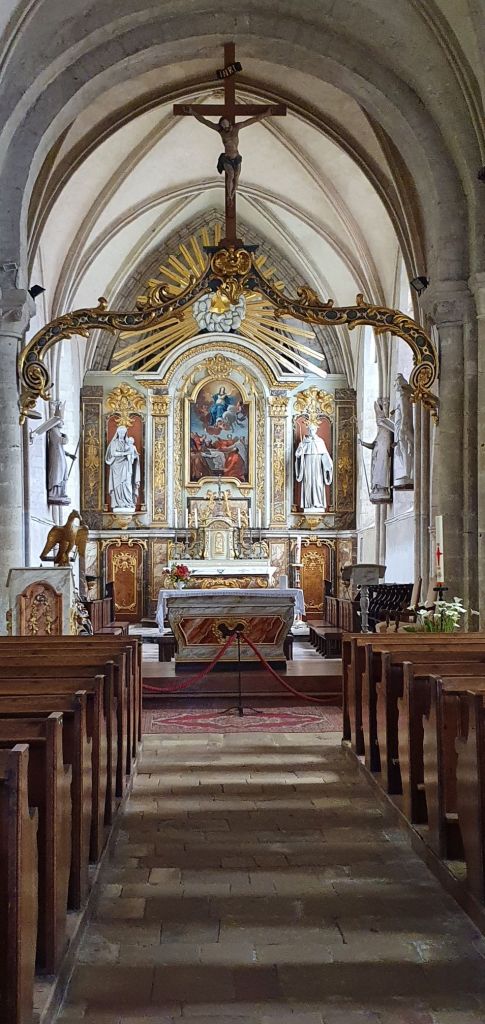
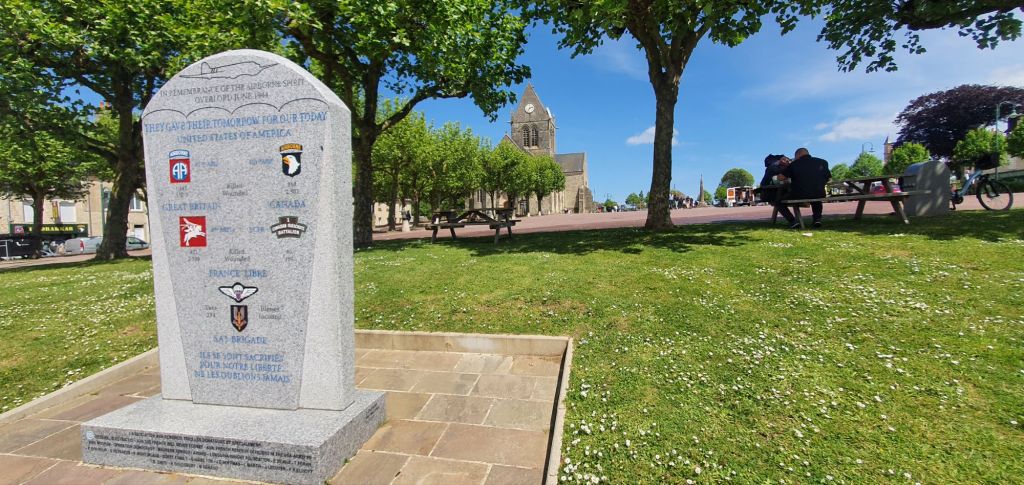
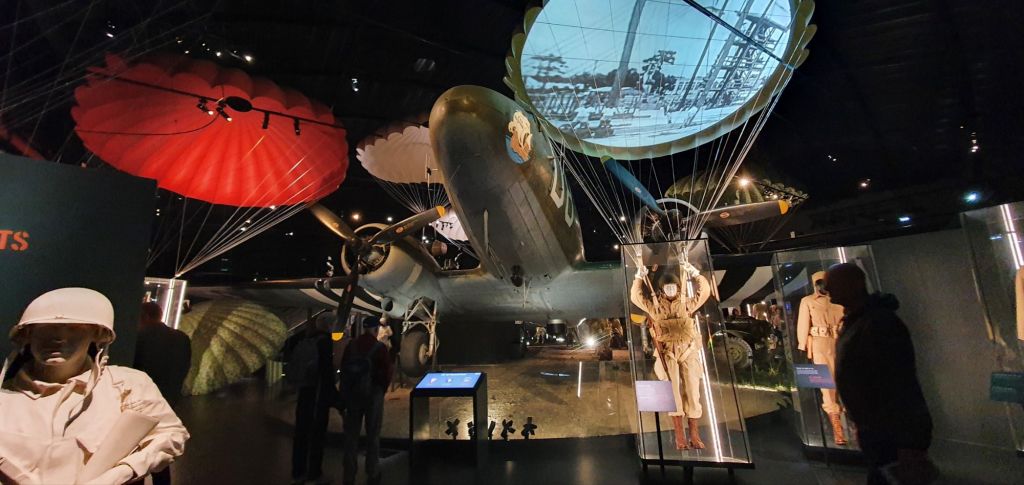
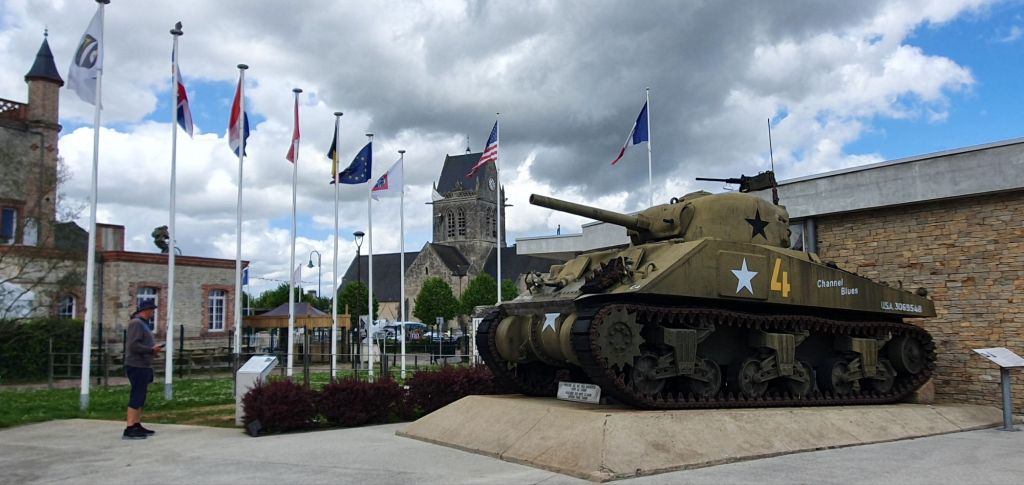
Our next stops were ones to be ticked off Steve’s bucket list. He is an avid reader and has for many years read alot about D-Day so had a long list of places to visit on his wish list. We made our way north to Sainte Mere- Eglise a small town where the American Airbourne Divisions parachuted in, landing in the early morning of 6th June 1944. The Airbourne Museum is fascinating to visit and very informative, the town has an abundance of WW2 memorabilia shops and themed cafes. The church has a reconstruction of the paratrooper John Steele hanging from the spire where his parachute had got caught, he had then pretended to be dead for several hours before he was finally cut down and captured by the Germans.

Sainte Mere- Eglise

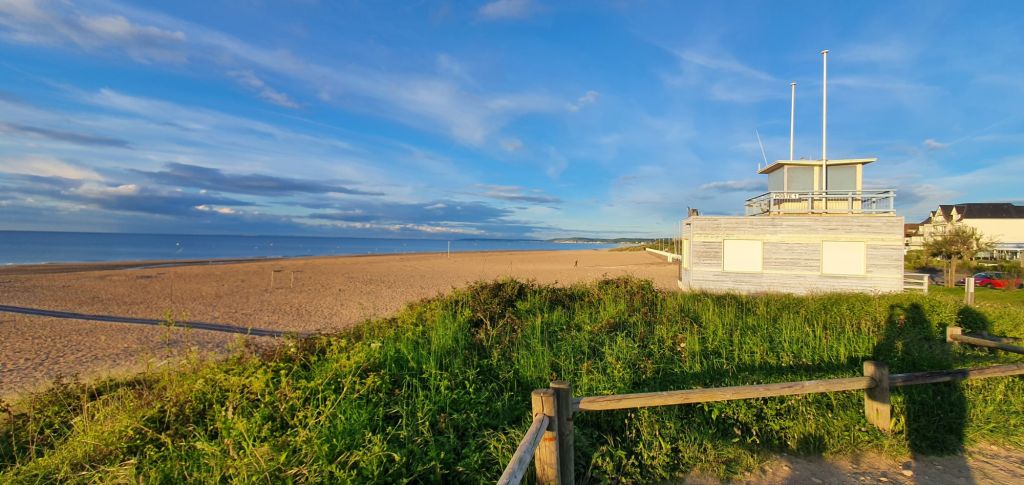
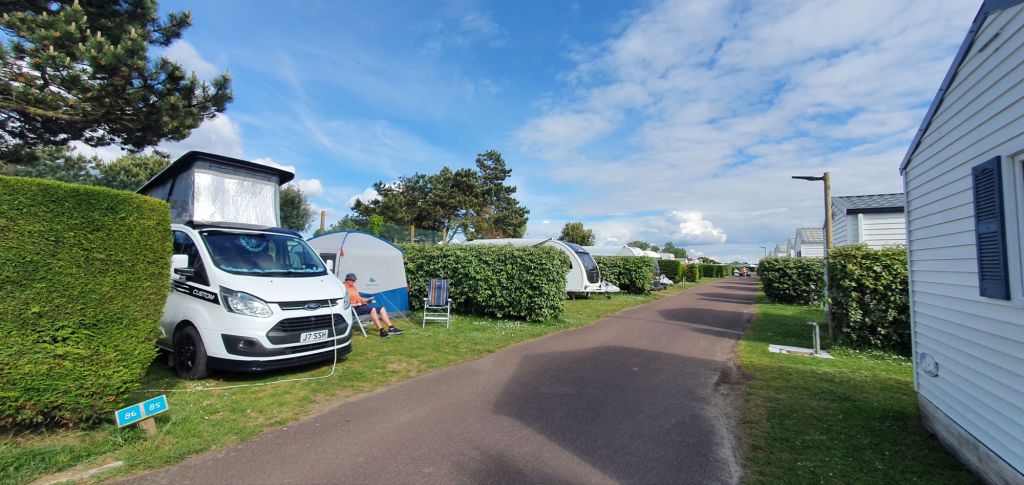
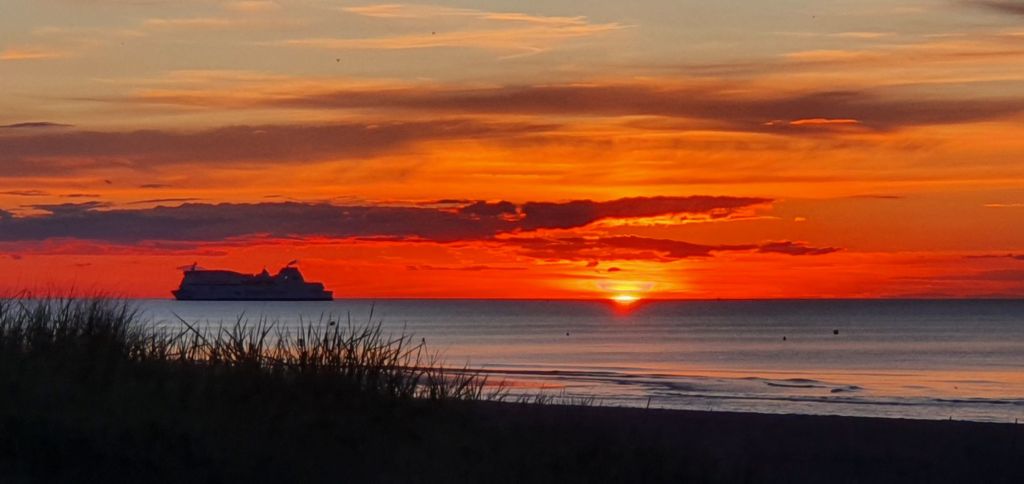
After leaving there we headed to our final campsite destination back along the Northern coastline of Normandy. We were staying at Le Point Du Jour at Merville-Franceville-Plage for 5 nights and from there planned to visit the famous beaches and other iconic landmarks relating to D-Day. The road networks are a dream to drive, we mostly did pay for toll roads just so we could get to our planned destinations in the least amount of time so allowing us more time to be at the actual landmarks. If we hadn’t got such a tight timescale we would perhaps have travelled the more scenic roads and villages as Normandy is a very pretty region. The campsite was a great location adjacent to a beautiful sandy beach which you could take a short walk along to get to the town. Here there were food shops, restaurants, hotels and plenty of bars with spectacular views of the beach and sunsets. The pitches were a little tight for bigger vehicles but the Europeans don’t tend to be bothered about the closeness of their neighbour, and as Vinny was only short we tucked into our pitch nicely. The site had a swimming pool, 2 shower blocks and a small restaurant and takeaway.

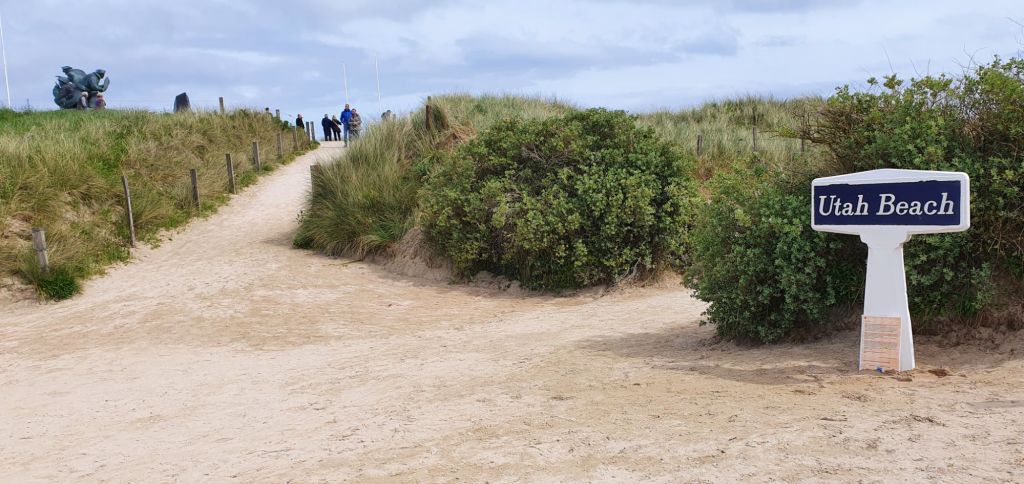
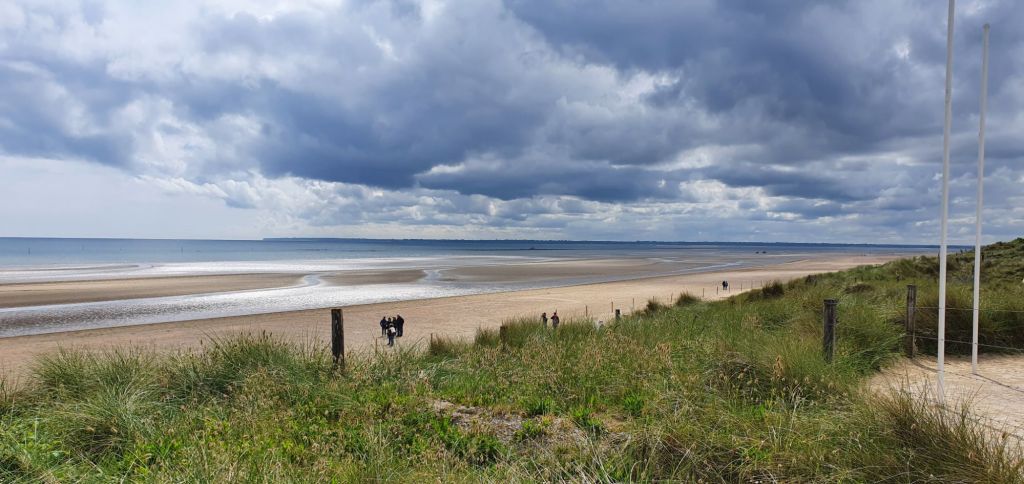
The following day we headed out to visit Utah beach, La Pointe du Hoc, Omaha Beach and the American Military Cemetery. The beaches are so vast, so quiet, so deserted, it is hard to imagine the massacres that occurred on them on 6th June 1944. The Utah Landing Museum tells the story of more than 23,000 American soldiers who landed on the beach that morning their mission to protect the city of Cherbourg and its port from German invasion. There is also Le Roosevelt Cafe, a building and adjacent bunker that was originally a simple fishermans house in the dunes before the German army invaded the area when it then became their telephone exchange. Following the American Allied landings it was a communications centre for the American Navy, and is now decked out in memorabilia where it is very interesting to read the walls which have been signed and written on both by visiting celebrities, relatives of veterans and the Allied soldiers themselves from 80 years ago. There are huge free parking areas and also an overnight camping area further down the road.

Utah Beach and Le Roosevelt Cafe

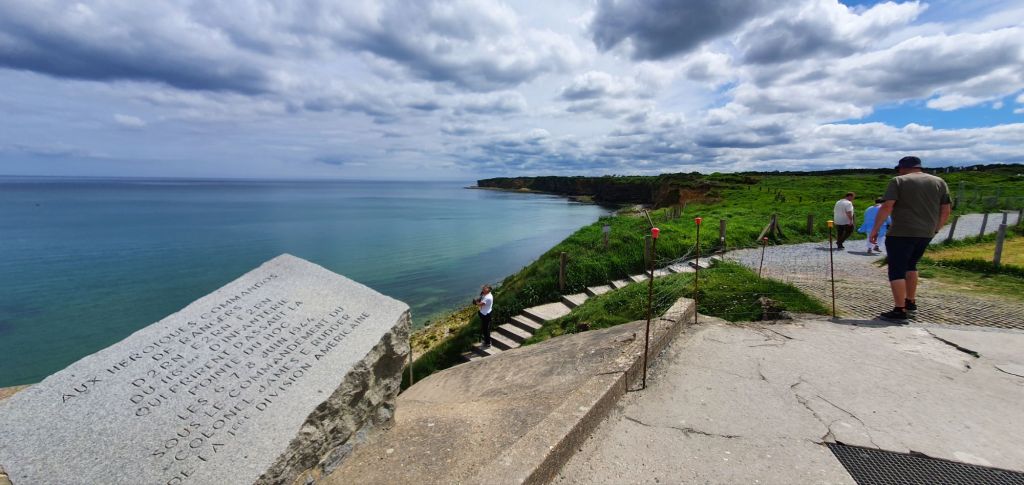
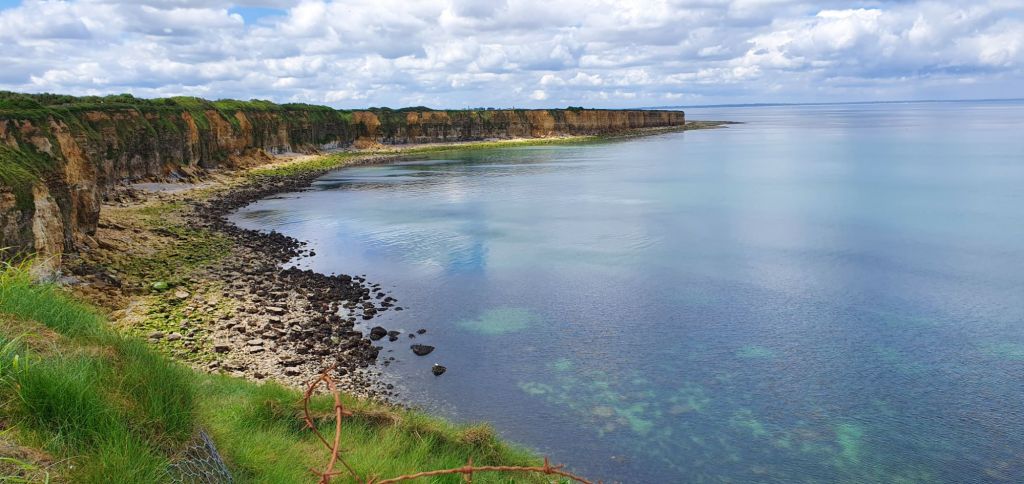
La Pointe du Hoc is a headland bearing the battle scars of its role as the strategic German defence on the coast. Rangers climbed the steep cliffs using ropes under the fire of German soldiers who lay in wait at the top. It has mostly been left for nature to take over the deep craters left by the battle that ensued and for you to use your own imagination when you look around this windswept and now peaceful site. There is a museum and ample free parking as always.

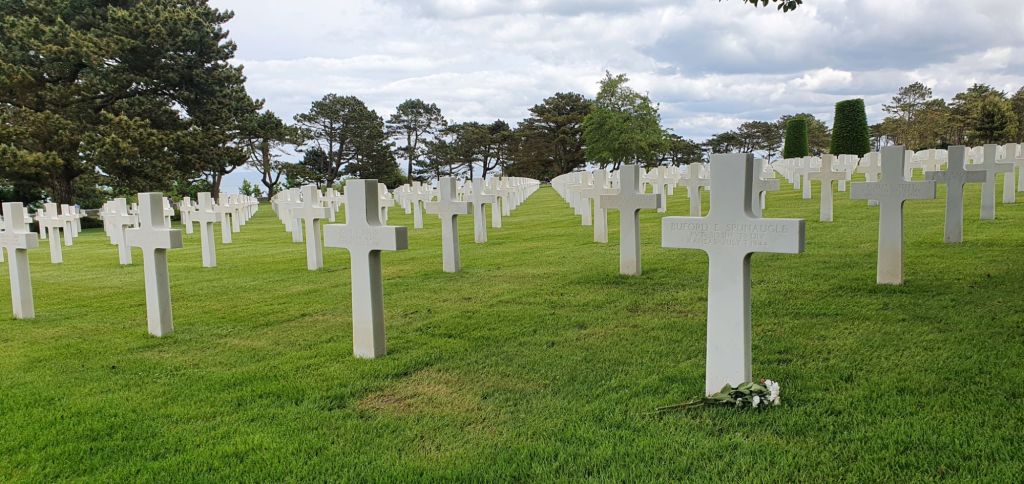
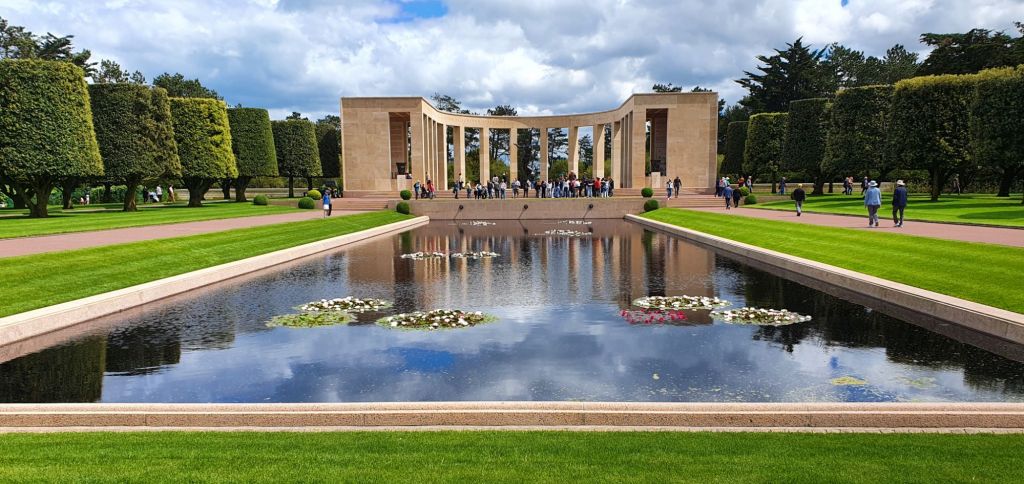
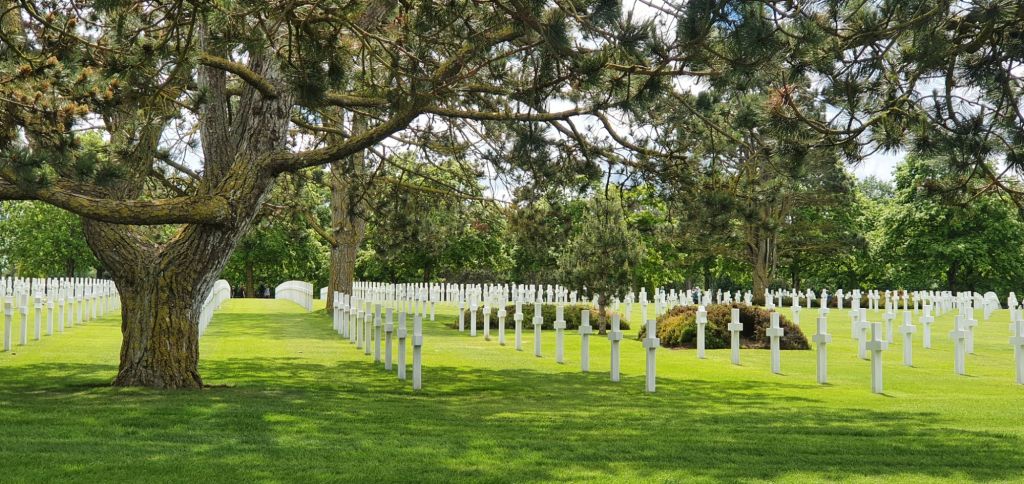
Moving on to Omaha Beach we visited the Normandy American Cemetery. A key memorial site it contains the perfectly aligned headstones of 9,387 soldiers who fell in combat, aswell as the 1,557 who’s names are engraved in the Garden of the Missing. There are graves of 45 sets of brothers who are mostly buried together including Robert and Preston Niland who’s story inspired the film ‘Saving Private Ryan’ There is also a chapel, memorial area and a visitors centre with an exhibition. The site is vast, very quiet and respectful and has the most immaculate grass and landscaping we have ever seen. There are lovely views looking down onto Omaha Beach through the pine trees and plenty of benches to sit and reflect on the sacrifice and enormity of what happened here. It had been a very emotive and quite draining day so after this we headed back to the campsite to recharge our emotional batteries as there was plenty more still to see and do the following day.

American Cemetery

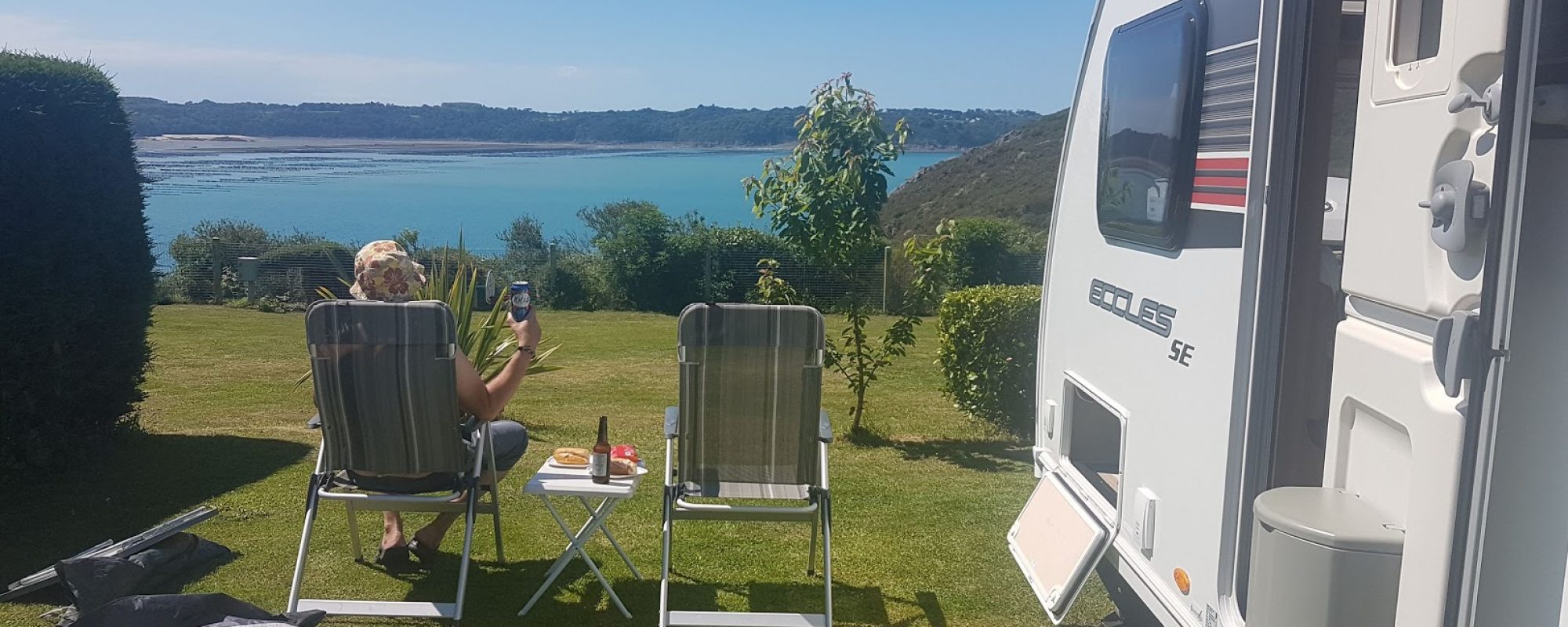
Although the weather wasn’t hot and sunny all the time thankfully it was still dry and actually if it had been any hotter during the day it wouldn’t have been comfortable to be sightseeing outside all the time. Back at the campsites we did seem to be spending more time sitting inside Vinny than we thought we would as it wasn’t warm enough to eat or sit outside in the evenings. This then got us thinking about future time away – see blog Catch Up no2 2024.

The next day we set off for Longues- sur -Mer German Gun Battery, Arromanches and the British Memorial in Ver- sur- Mer. The gun battery is situated between Gold and Omaha Beaches at the top of a cliff overlooking the Channel and played a strategic role in the D-Day landings when the Germans spied the ships and craft heading towards the Normandy coast. It has a self guided tour on large information boards and explanatory signs.

German Gun Battery & Mulberry Harbour

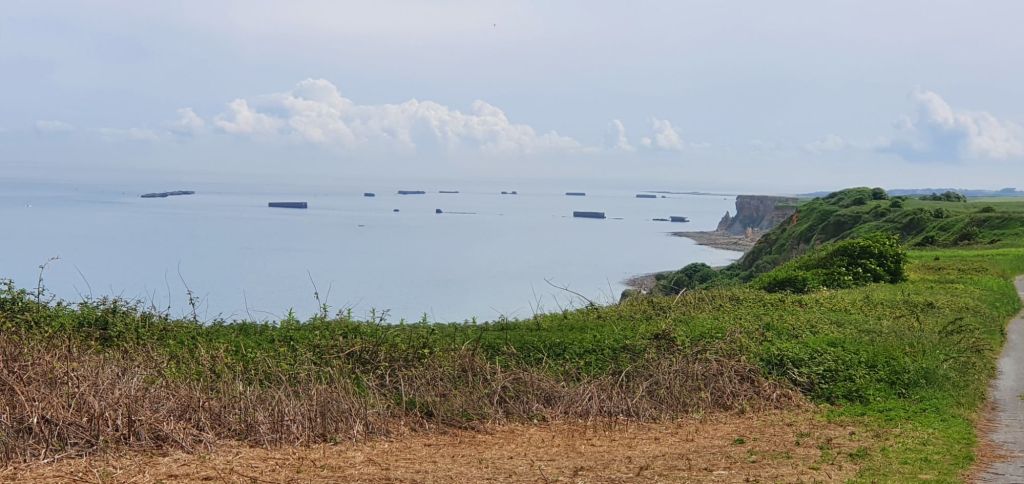
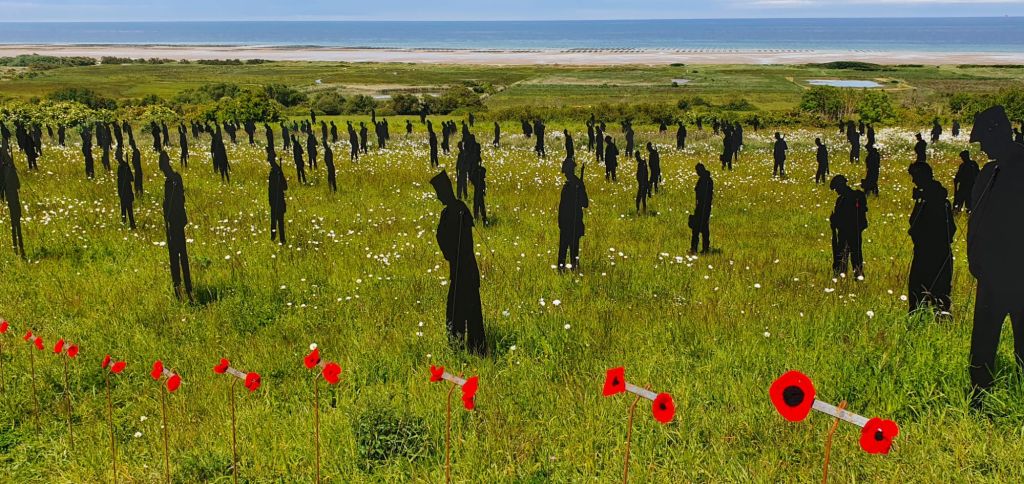
Arromanches is pretty upmarket little coastal town with plenty of eating and drinking options in the town and along its beachfront promenade. The beach stretches out as far as the eye can see and is the location of the Mulberry Harbours. These are huge floating concrete blocks, having been towed across the Channel from England were then assembled to form walls and piers creating an artificial port used to land vehicles and supplies for the Allied troops. Meant to last for no more than 6 months the harbours can still be seen in situ today. On the clifftop overlooking Gold Beach is the 360 circular cinema showing a documentary film ‘The 100 days of the Battle of Normandy’ which bombards you from all sides with footage of the liberation of the region before the Allies moved on to free the rest of Europe from Nazi occupation. There is also the D-Day 75 Memorial Garden with its lifesize figures of soldiers made from metal washers welded together. The location is a spectacular viewpoint.

Arromanches-les-Bains and D-Day 75 Memorial Garden

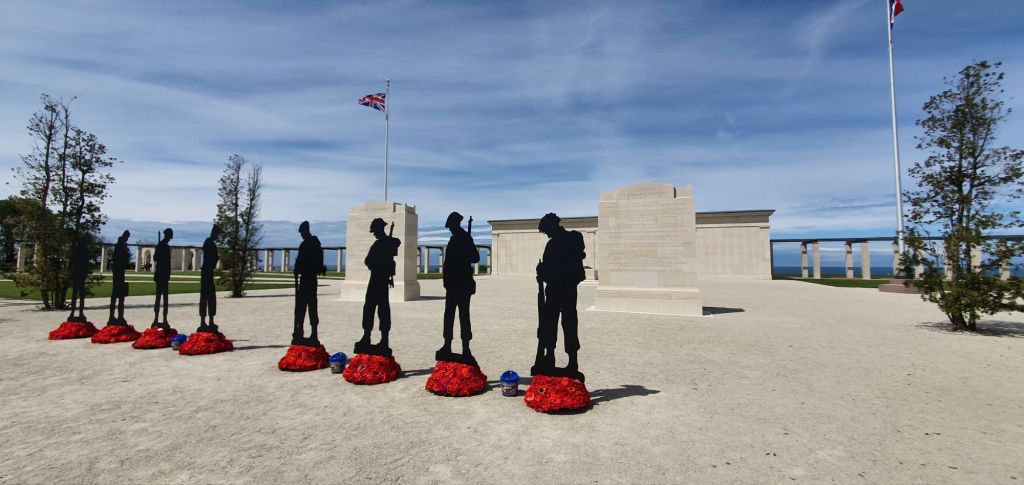
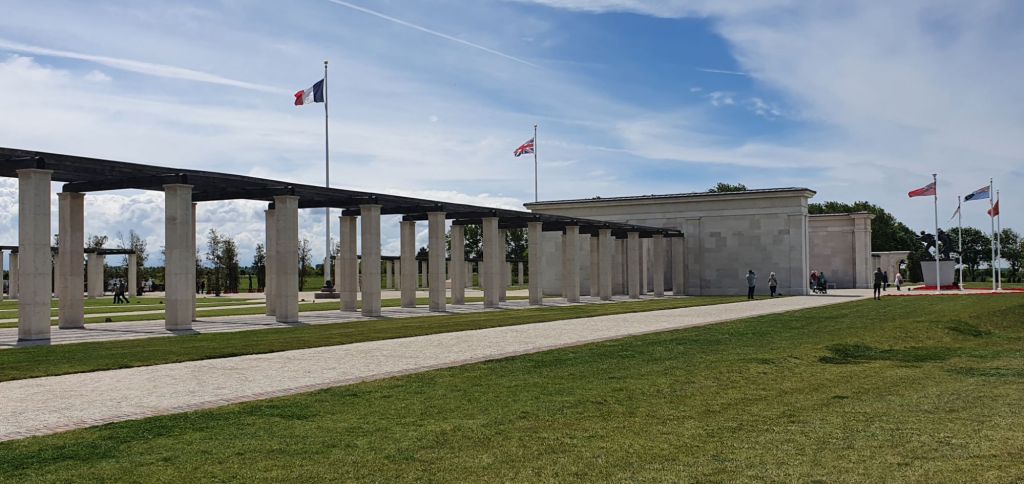
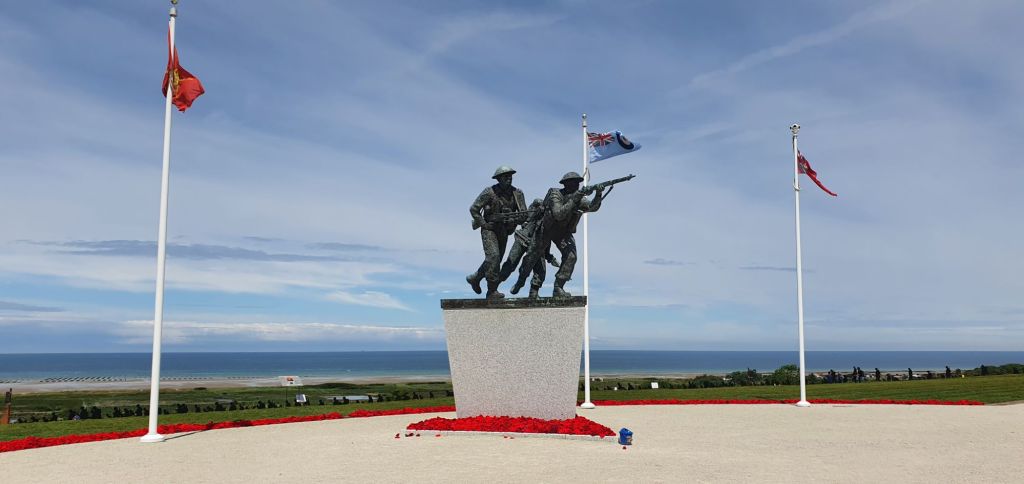
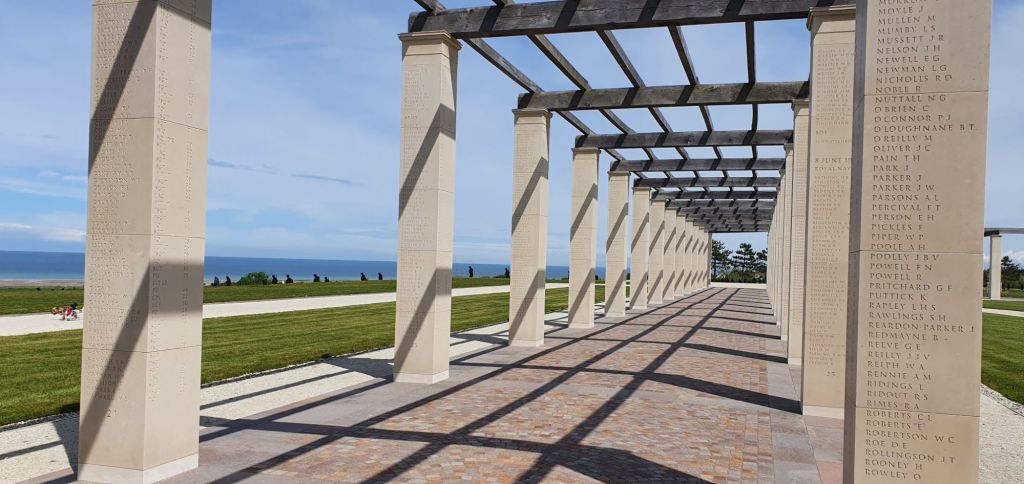
Travelling east along the coast we arrived at the British Memorial of Ver-sur-Mer. It overlooks Gold Beach where many of the British landed but most strangely its access road is through a housing estate! The site comprises of a large three sided monument with cream stone pillars leading off in a large rectangle surrounded by green lawns. It was inaugurated in June 2021 and pays tribute to 22,442 soldiers under British command who played their part in the landings and subsequent Battle of Normandy, their names are engraved on the walls and pillars of the Memorial. It was here we had a surprise discovery on seeing the Standing with Giants silhouettes displayed that we had previously seen at Fort Nelson in Portsmouth last year. The art installation was there as part of the D-Day 80 commemorations due to take place from the Memorial on 6th June.

British Memorial

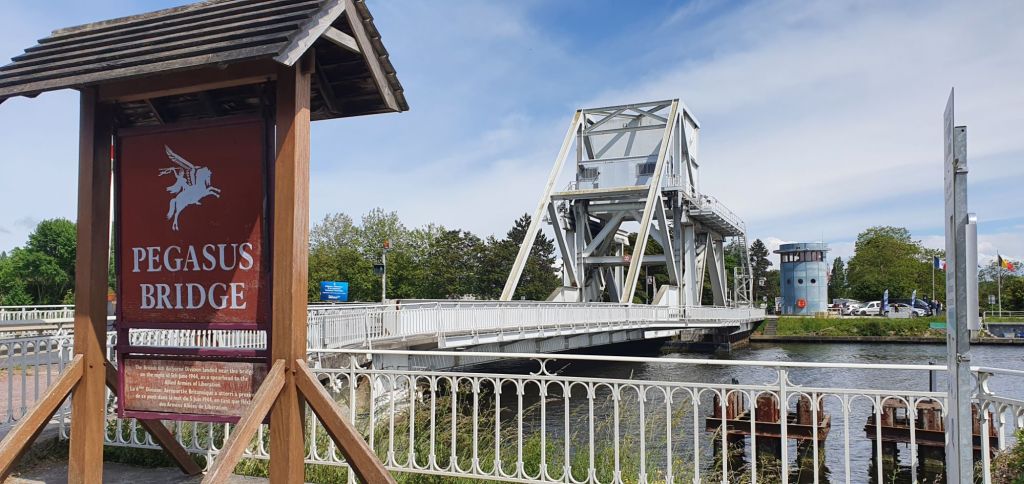
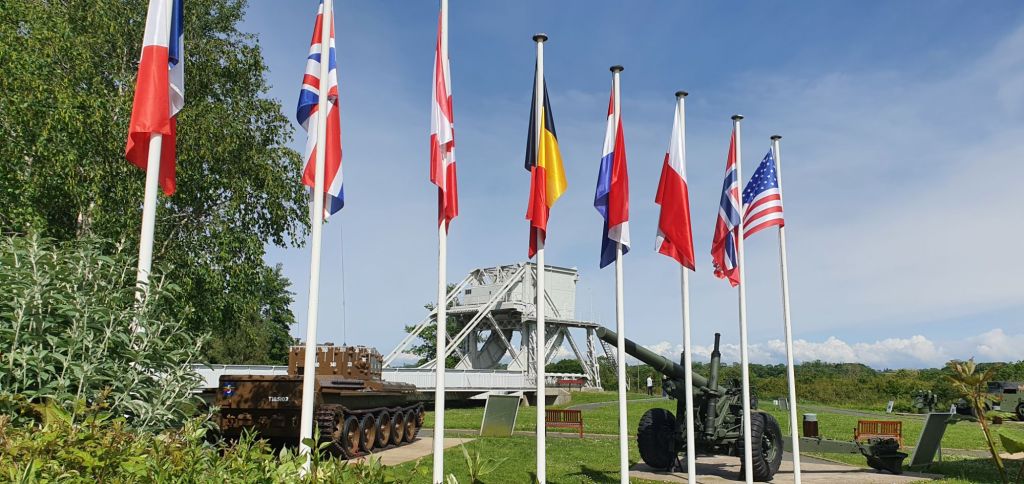
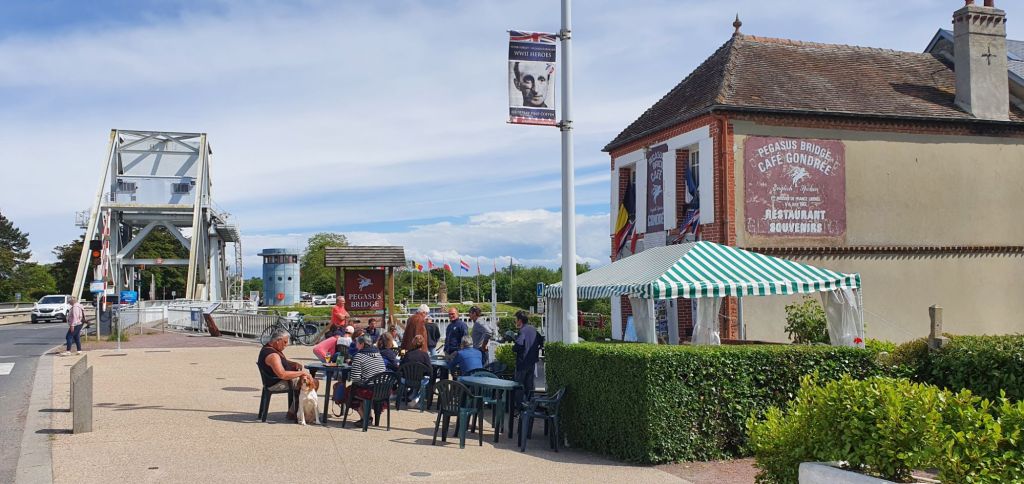
Heading back towards the campsite we crossed Pegasus Bridge at Benouville, one of the first points that Allied soldiers set foot on Normandy soil. The original bridge is now located in the Pegasus Memorial Museum nearby having been sold to the museum for 1 franc in 1994 when it was replaced by a new more substantial bridge. On the west side of the bridge the Cafe Gondree was reputed to be the first building to be liberated in France and is still run today by the then owners daughter who was living there as a small child in 1944. It is now a popular meeting point for re-enactors and their period vehicles with its walls adorned with WW2 memorabilia.

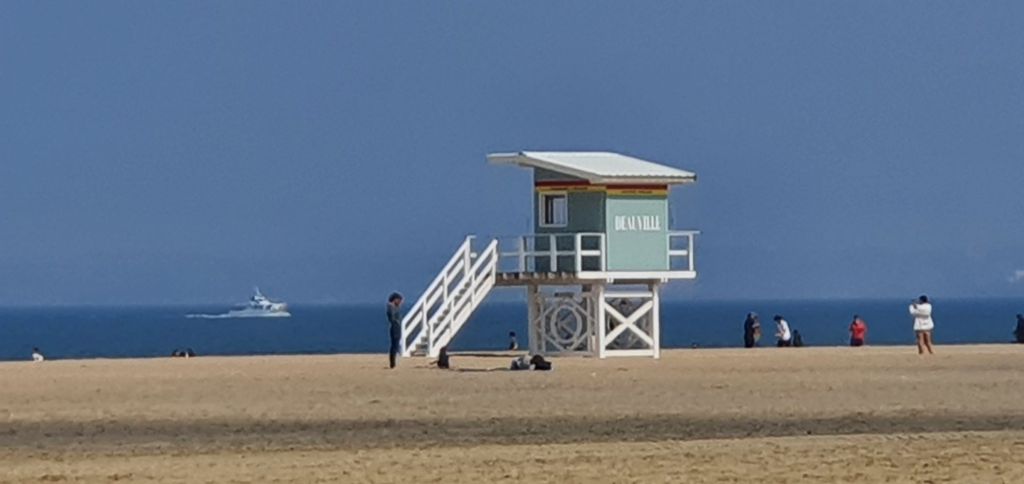
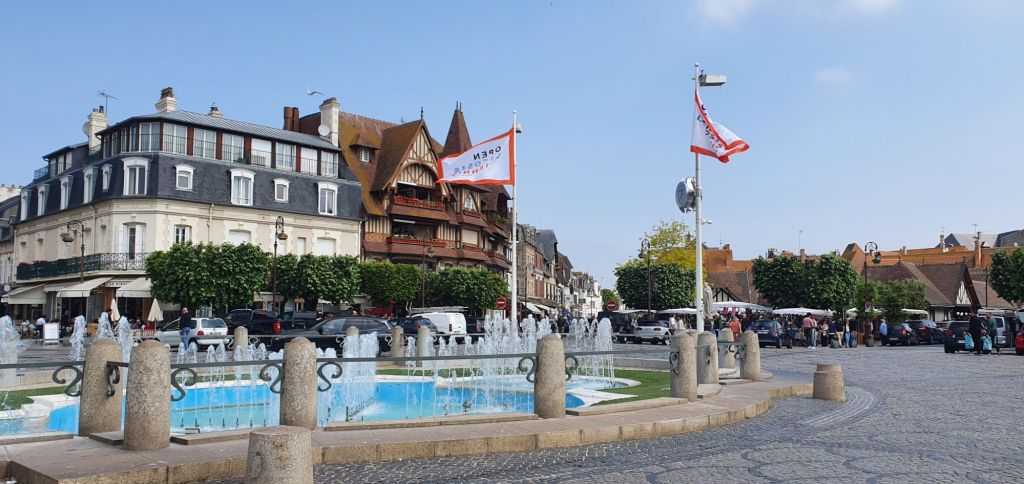
Our final day before heading home was spent visiting Deauville, a smart seaside town that has attracted the wealthy and famous since the 1800’s. It is known for its grand casino, golf courses, horse races and American Film Festival. Its wide sandy beach is backed by a 1920’s boardwalk with bathing cabins that are named after the stars of stage and screen. The town has lovely half timbered buildings and every branded boutique you could name has a prime spot on its many chic shopping avenues.

Deauville

On our last morning we departed Merville and headed to Dieppe for the crossing back to Newhaven. The sea was calm, the sun was shining and we reminisced as we sailed home from an unforgettable 10 days in Normandy. It has a stunning coastline, flower filled traditional villages and history around every corner.We agreed that it had been an emotional rollercoaster of a holiday, very heart-rending from the stories we had read, the harrowing scenes we then pictured and at the loss of so many lives from all sides. It is a time in history that will both be celebrated and mourned forever and a place that we will most definitely return to very soon. There is so much more to see and do there relating to D-Day and we haven’t even touched on the fact that Normandy itself has so many pretty towns,villages and countryside to explore.

A Bientot Normandie