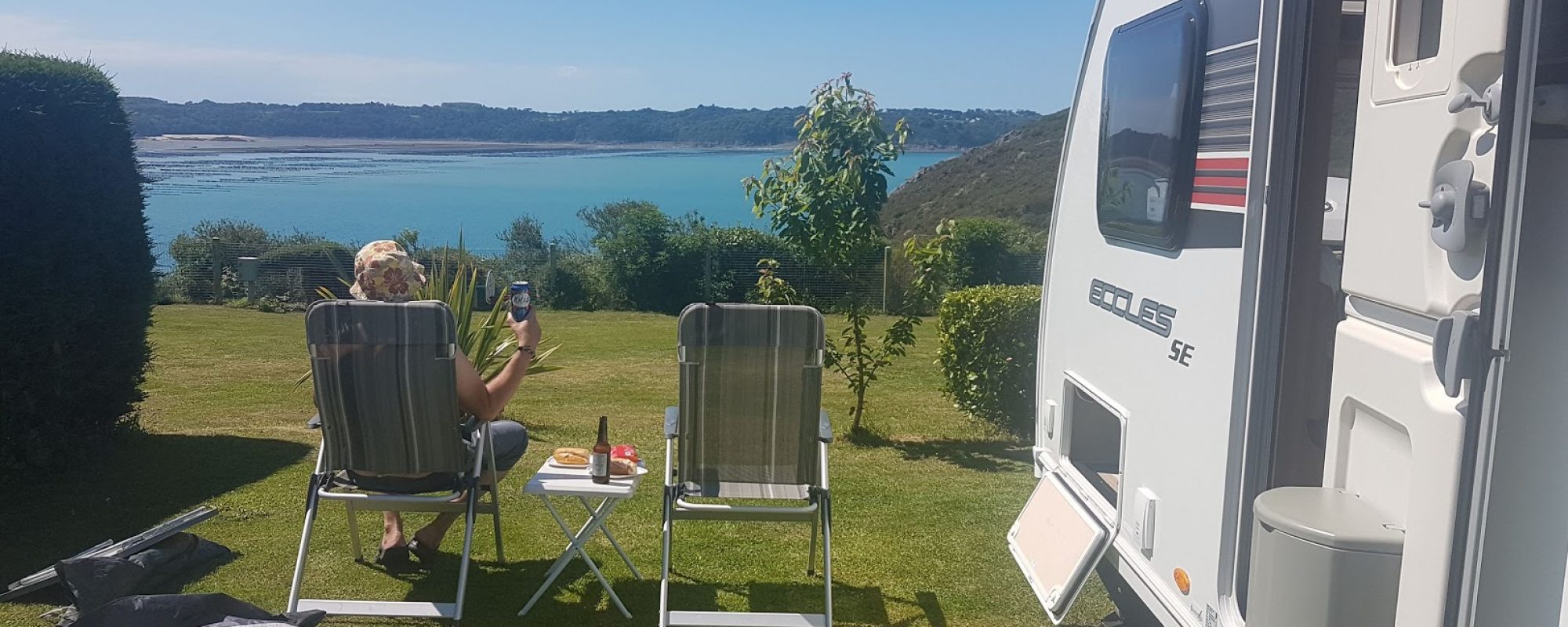
London Calling

During our winter months off from site we had taken a trip in the motorhome to London staying at Abbey Wood CAMC. We enjoyed this glimpse of London life so much that we vowed to return as soon as we could plan it in, it took 8 months but eventually we made it back there to carry on our sightseeing.

A date was booked and after handing the site over to our colleagues we got packed up and set off, but heading for London on a Friday afternoon was not the ideal time to be travelling the M25. The temperature was 32 degrees and as we were heading South the sun was hitting us full on through the windscreen as we sat stationary, occasionally chugging a few feet, then stationary again. Aahh the joys of a journey, but one we knew was the only option to get to our intended destination. Finally the holdups cleared and a short time later we were driving through the gates of the Campsite, after a friendly and efficient check in we set off to find a suitable pitch. Abbey Wood is a surprising hillside wooded oasis, huge trees give dappled shade to many of the pitches and to find some respite from the blazing sun these were where we headed for. After a couple of laps we found our perfect pitch. Our UK numberplate was definitely in the minority here, the location rightly being very popular with overseas visitors seeing the London sights.

After a chilled evening and a peaceful nights sleep the following morning we walked 10 minutes down to the station to catch the Elizabeth Line into the City. Thankfully the weather had returned to normal British summertime and had cooled off sufficiently for it to be a pleasant temperature.

We emerged from the underground at Westminster and shuffled our way through the crowds of people, most having their photographs taken with Big Ben in the background. As part of Steve’s big birthday celebrations I had planned two surprises for the day, the first being a tour of the Houses of Parliament. He does love a good political debate and has listened to Prime Ministers question time for many years, so to see where the action actually happens was going to be a real treat.

A short queue to get through security checks and we were on our way into the Palace of Westminster. The first area you enter is Westminster Hall, a vast open space built in 1097 and almost the only part of the ancient Palace of Westminster which survives mostly in its original form. A magnificent oak roof was commissioned in 1393 by Richard III, the largest medieval timber roof in Northern Europe. In more recent times it has been used for Coronation banquets, veterans gatherings and parades and was also where Queen Elizabeth II lay in state for the public to visit.

Westminster Hall

After collecting our audio commentry devices we then continued into St Stephen’s Chapel. For seven centuries St Stephen’s was at the centre of the political and religious life of the nation. As part of a royal residence in medieval England, St Stephen’s witnessed the worship of kings and queens and their households. In 1548 St Stephen’s took on a dramatic new role as the debating chamber of the House of Commons. After the devastating fire of 1834 it was repurposed by Charles Barry as St Stephen’s Hall, which is still the public entranceway into Parliament today.
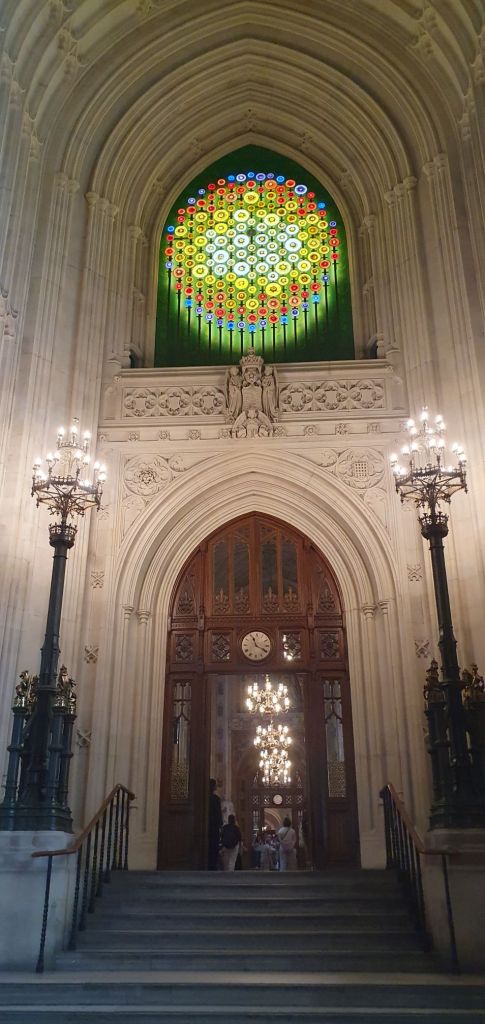
St Stephen’s Hall

Moving on from St Stephen’s we were guided by our headphones through the many corridors, lobbies, meeting and debating rooms, all lavishly and opulently decorated. The House of Lords with a red theme, House of Commons with a green theme, carpets that made you want to take your shoes off and sink your toes into them. Gold and gilt decoration, artefacts, paintings, furniture, scriptures all recording centuries of our British history. It certainly was an eye opening tour but unfortunately with a no photography rule of the areas after St Stephen’s Chapel.

After 2 hours following the audio tour marvelling at what there was to see and listening to the explanations of each area through our headphones, we arrived back in Westminster Hall. The cafe was located there so we headed in for a cream tea before embarking on the second surprise.

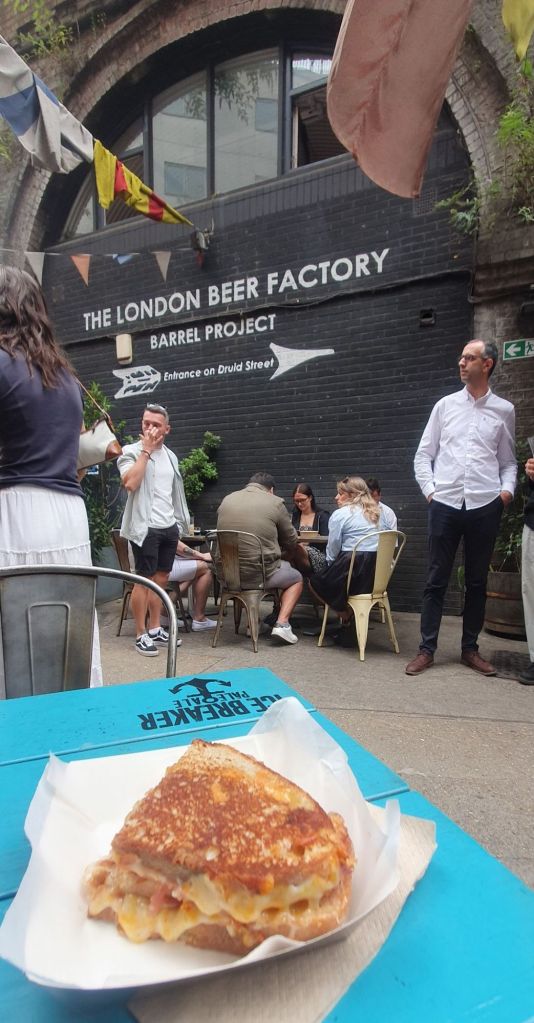
Back on the underground we took the Jubilee line to Bermondsey, an area south of the river. Ten minutes walk from the station brought us to Maltby Street Market, a cobbled lane full of independent food and drink venues housed in atmospheric 19th century railway arches. This exciting street food experience is open at weekends only so we were lucky enough to catch it. After walking up and down a couple of times trying to decide what to go for we made our decision and plumped for the cheese toasties. Obviously not just your average cheese toastie but a mega mouthwatering delight that was created with skill right in front of us as we waited to collect it. You can take the food from the stalls into any of the bars along the alley to have with a drink, or sit outside at one of the many tables available as we did. The atmosphere was buzzing and it was a great place to people watch. It felt very community orientated rather than touristy.

The next stop of the day was just around the corner at Hiver Taproom where we had a cider tasting experience booked. Hiver is an independent beer and cider maker using honey to produce their unique taste and also to support bees and beekeepers across the country. Their taproom and outdoor beergarden are located under Victorian railway arches as part of the Bermondsey Beer Mile. We tasted 5 different ciders accompanied by cheese and crackers whilst listening to a very interesting and amusing talk on the cider making process and how they incorporate honey instead of using sugar in their beers and ciders. By the end of it all plus the drinks we’d had with our toasties earlier we were very merry indeed as we wobbled our way back to the underground and Abbey Wood!

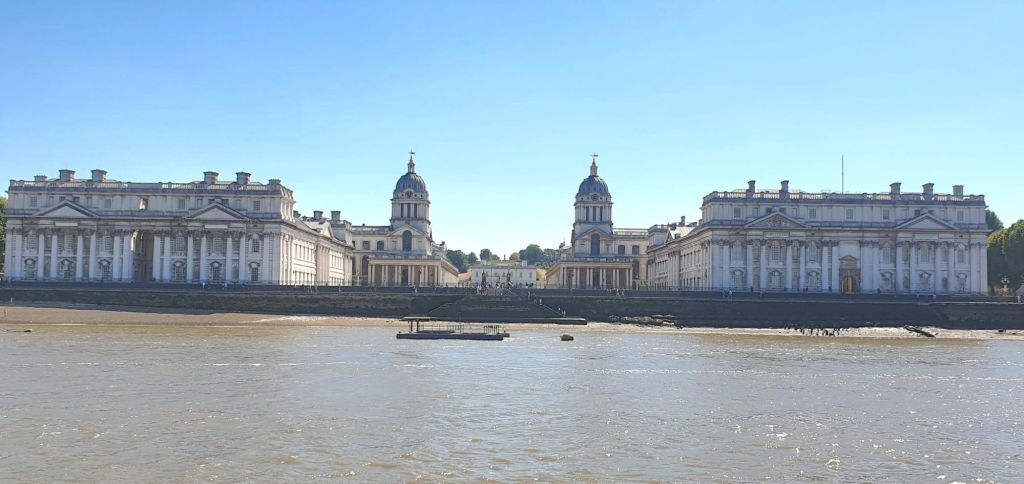
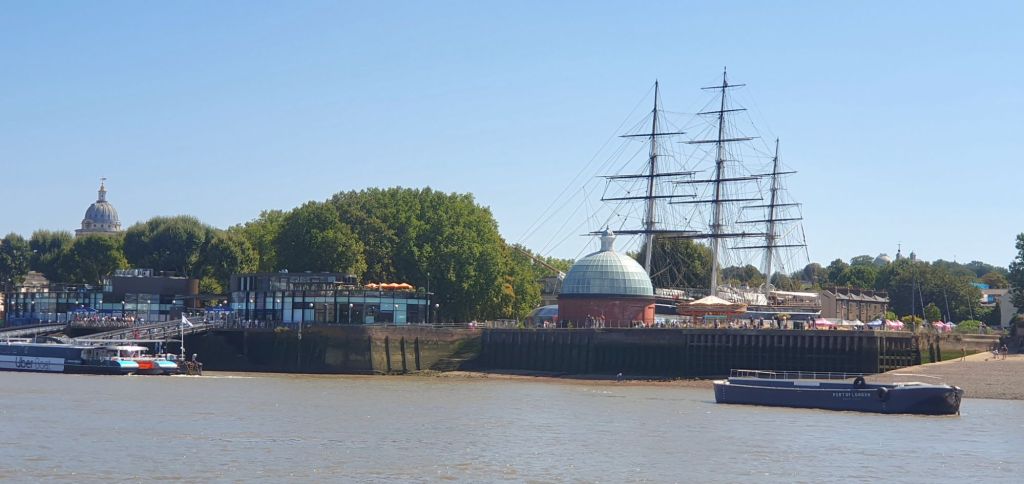
On deciding to go for a gentle activity for Sunday we booked a river cruise from Westminster to Greenwich. Hopping once again on the Elizabeth Line, changing  at Canary Wharf to the Jubilee Line we arrived at Westminster Pier to board the Thames River Sightseeing cruise open topped boat. We got prime seats in the sunshine on the top deck and settled in for an hours view of London from a very different perspective.
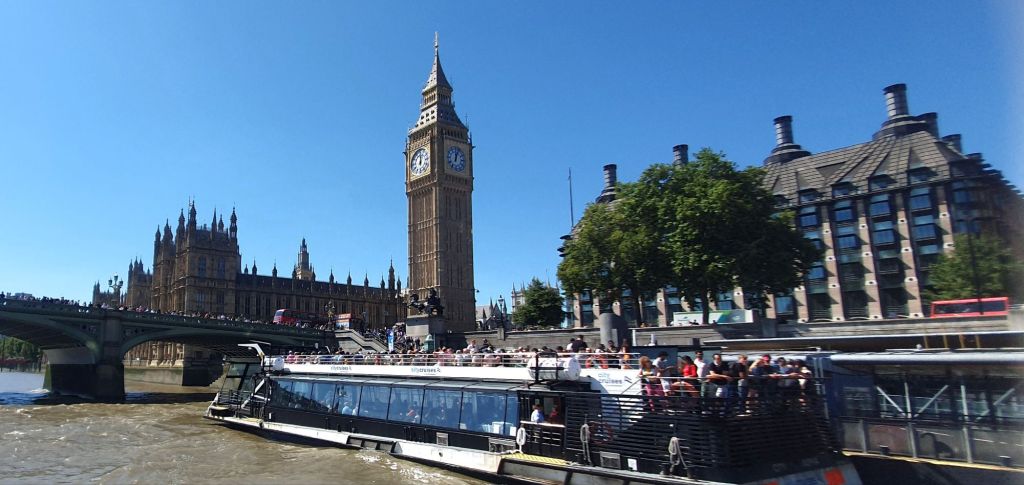
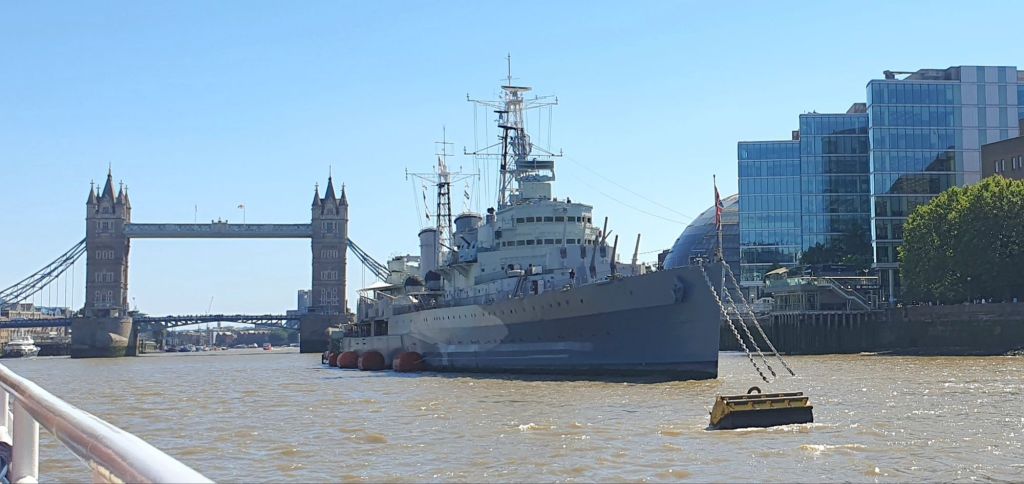
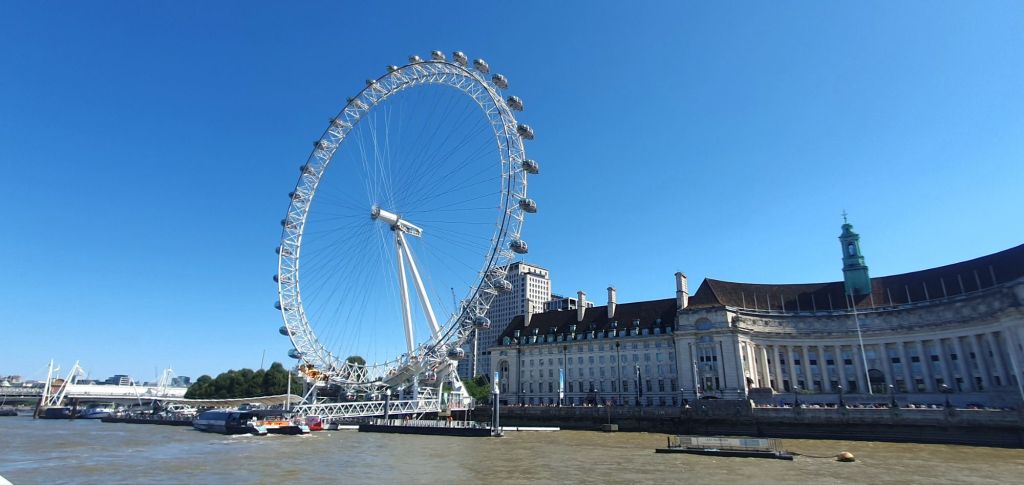
We cruised along the Thames past iconic landmarks, under famous bridges, spotting centuries old wharfs and the oldest pub on the Thames, The Prospect of Whitby which dating back to 1520 was used by river pirates. There was a very amusing live commentary from the boat skipper giving us interesting facts and stories associated with each of the sights as we passed. He really did bring the river and its history to life, its something we’re so glad we got to experience.

Sights from the River Cruise

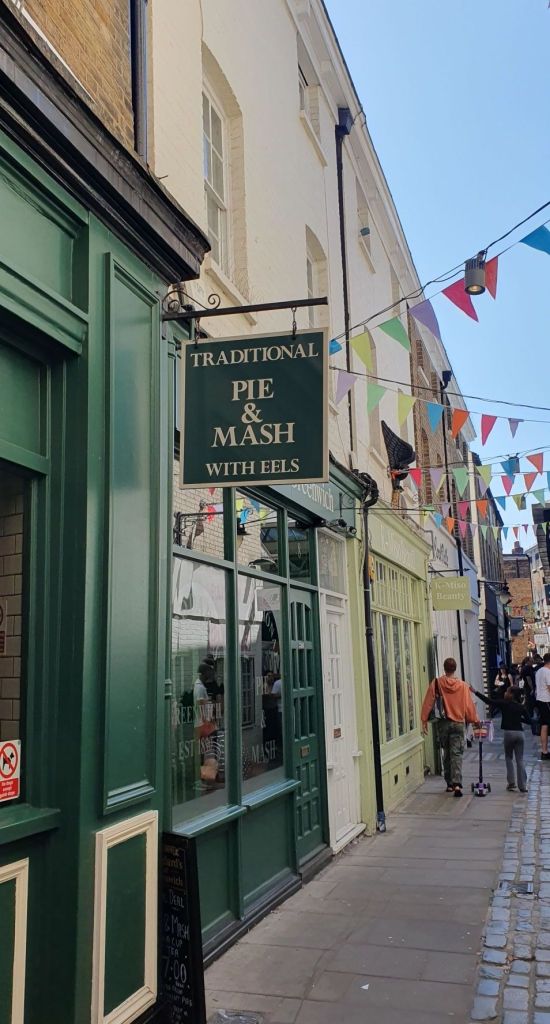
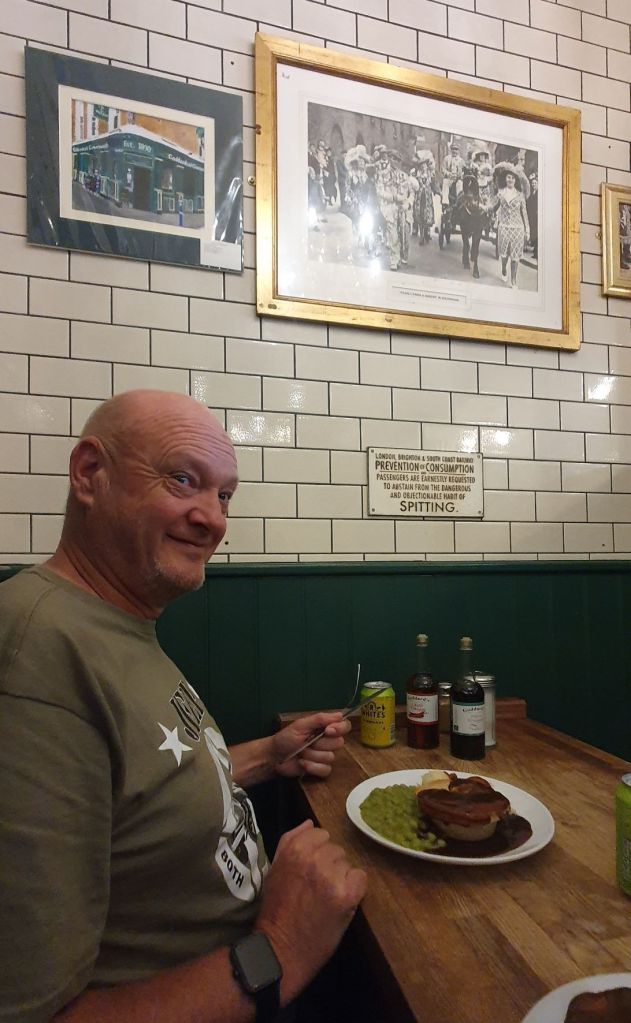
After disembarking the boat at Greenwich we made a beeline for Goddards pie and mash shop. We had been previously on our last London visit and knew it was where we wanted to get our lunch! This was followed by a wander around the craft market and window shopping in the alleyways and boutiques.
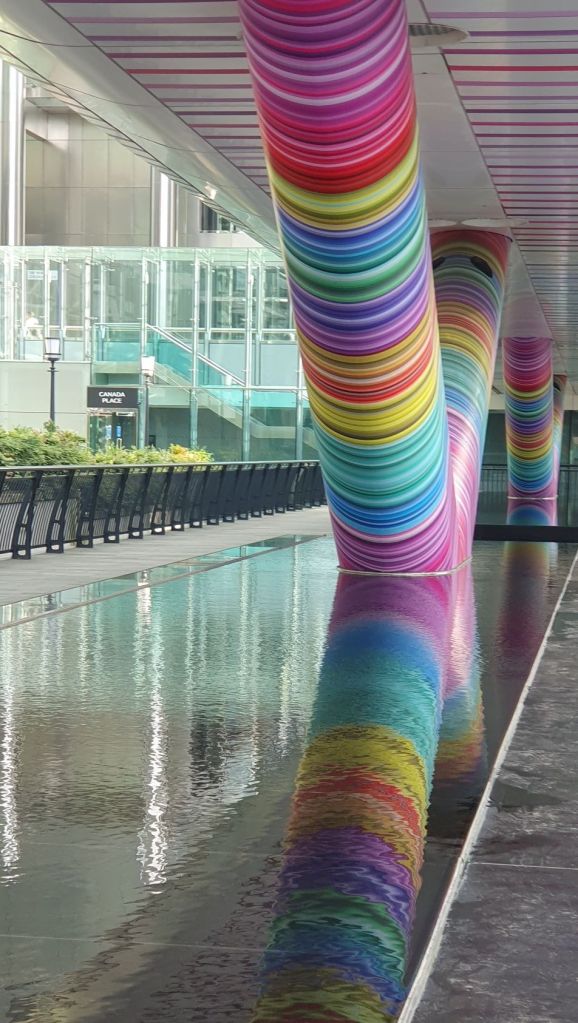
The Docklands Light Railway trundled us back to Canary Wharf which never fails to amaze as you gaze forever skyward at the towering apartment and office blocks. We discovered a roof top garden which was a tranquil green oasis of calm far removed from the bustle and noise of the streets and plazas below.

Canary Wharf

We rounded off our London weekend sitting in the evening sunshine outside the motorhome under the canopy of conker trees, desperately trying to spot one of the dozens of squarking green parakeets sitting in their branches. Maybe next time we will. And there most definitely will be a next time.
French Roadtrip Part 6 – Last of the Chateaux then Heading for Home

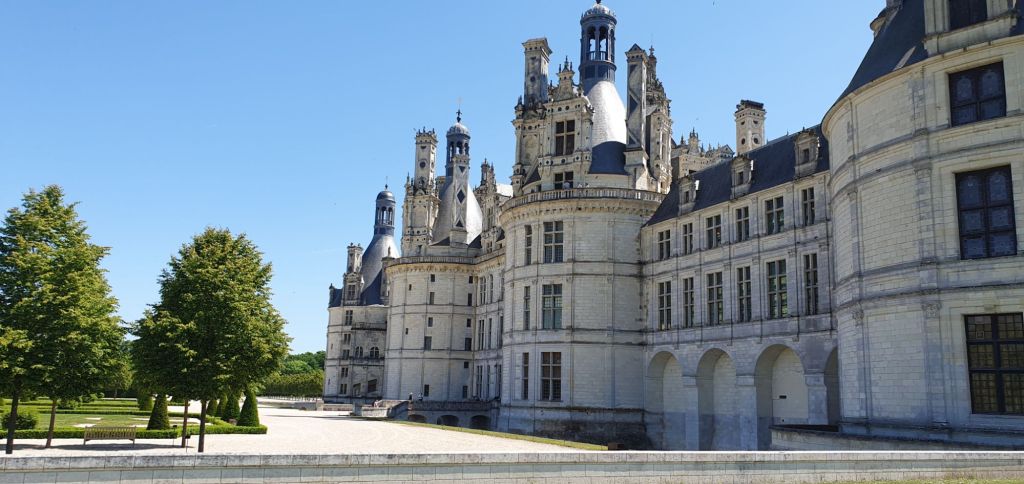
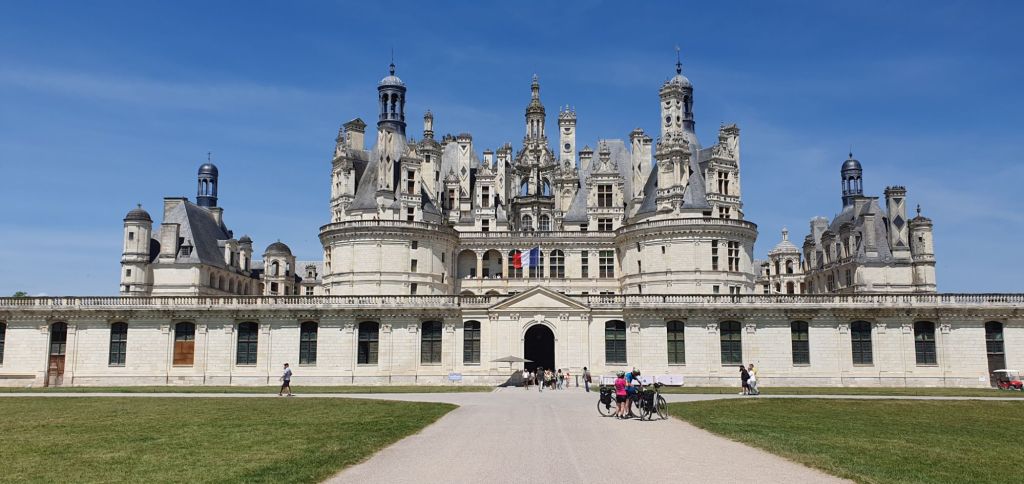
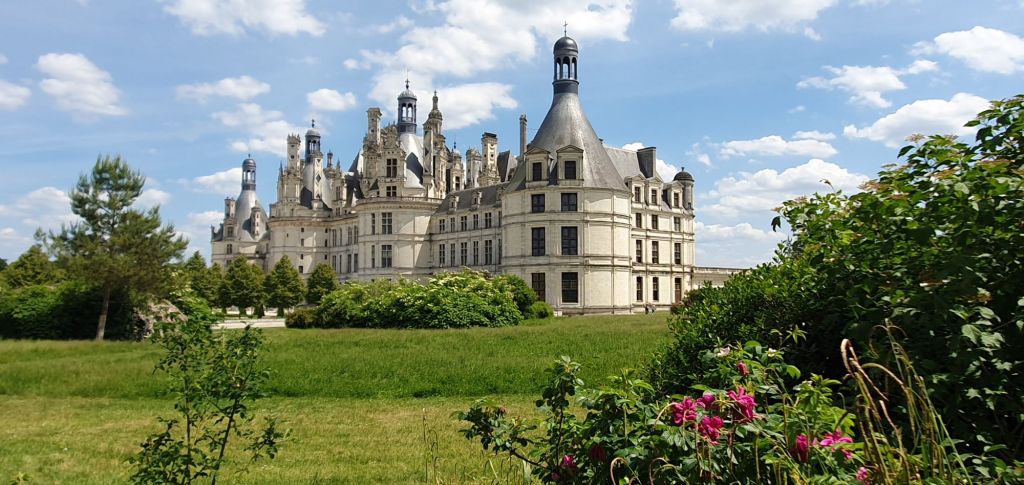
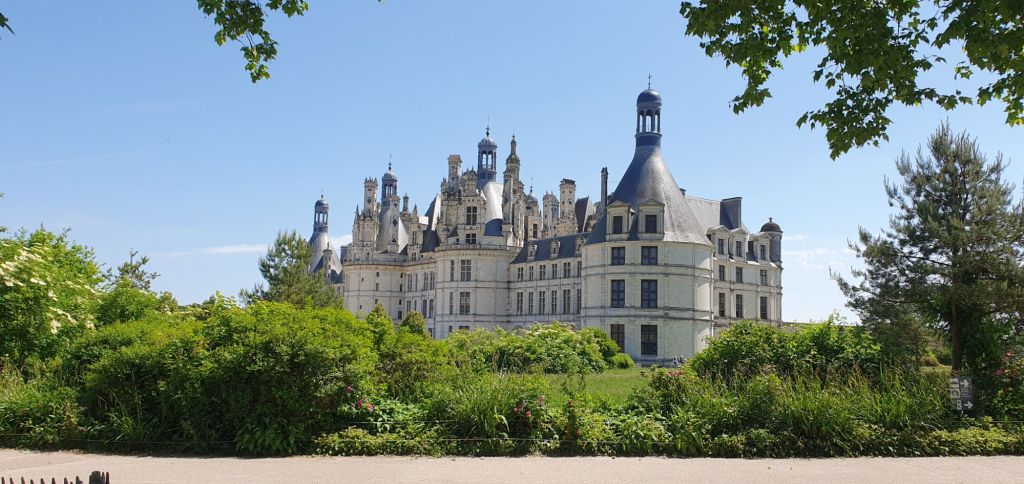
The final location on our 2025 French roadtrip was to visit Chateau de Chambord, an amazing construction built by the best French and Italian architects in order to entertain royalty, host hunting parties and dazzle guests with its grandeur and fascinating double spiral staircase said to have been designed by Leonardo Da Vinci.

We stayed at Camping Huttopia les Chateaux which is an 8km cycle ride through the forest to Chambord, so after our first night settling in there the following day we set off for the Chateau. After a few hundred yards cycling on roads we picked up the signs leading us onto the hardsurfaced forest trails. The sky was blue, the sun was shining and the temperature was rising so we were thankful of the coolness the shade of the trees gave us as we peddled along. The route was quiet and easy to follow, most sections being long straight pathways but towards the end the paths were weaving in and around the trees. Although it was an easy ride I don’t have the best cycling ability so I’m thankful I managed to stay upright on two wheels! As we emerged from the forest the last kilometre was then on smooth tarmac roads to the main vehicular entrance. Here there was a large bike park which was nearly full, obviously it was a popular way to travel to visit. It was much busier than the previous two Chateaux we had visited. After collecting our tickets and visitors guide we followed the crowds wandering the pathways and had our first glimpse of the magnificent Grande Facade.

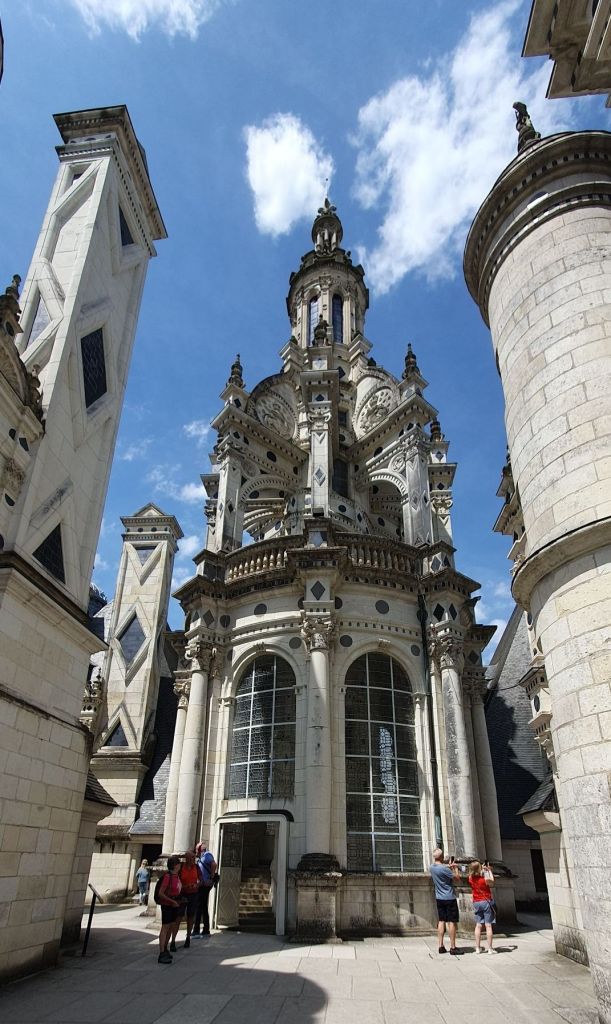
Chambord’s construction was started in 1519 by King Francis I with the keep and two wings being added during the next 150 years until the Chateau and its park was finally completed by Louis XIV in 1684. It has 4 floors, more than 400 rooms, 77 staircases and 282 chimneys. Following several changes of ownership it was bought by the State in 1930 and listed as a World Heritage Site (UNESCO) IN 1981.

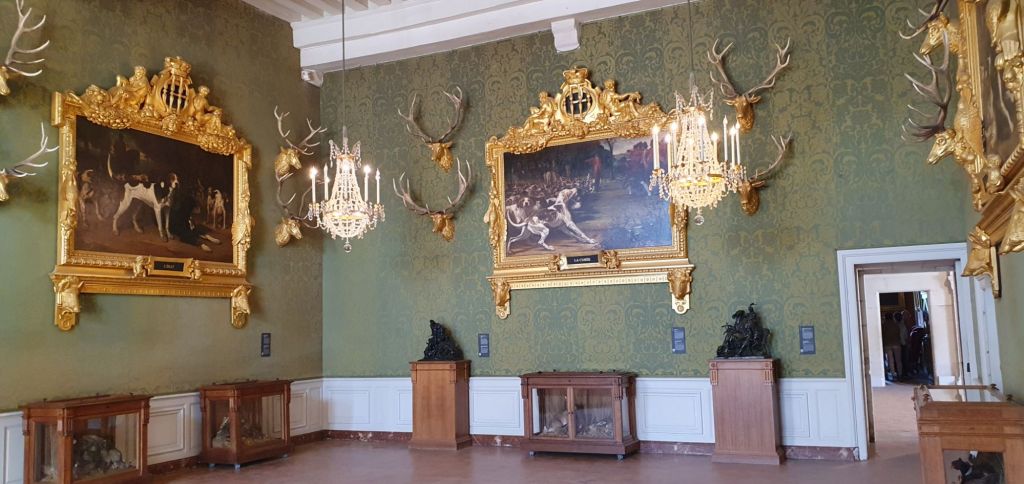
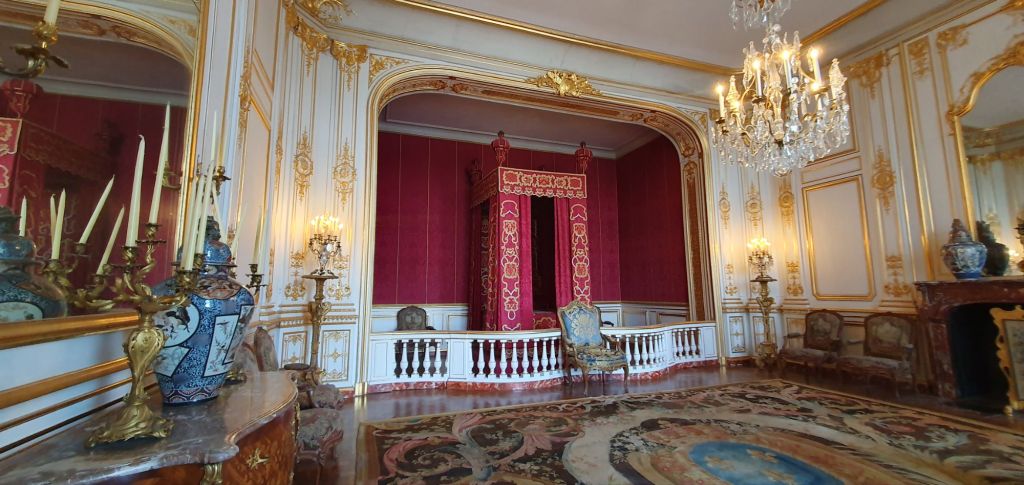
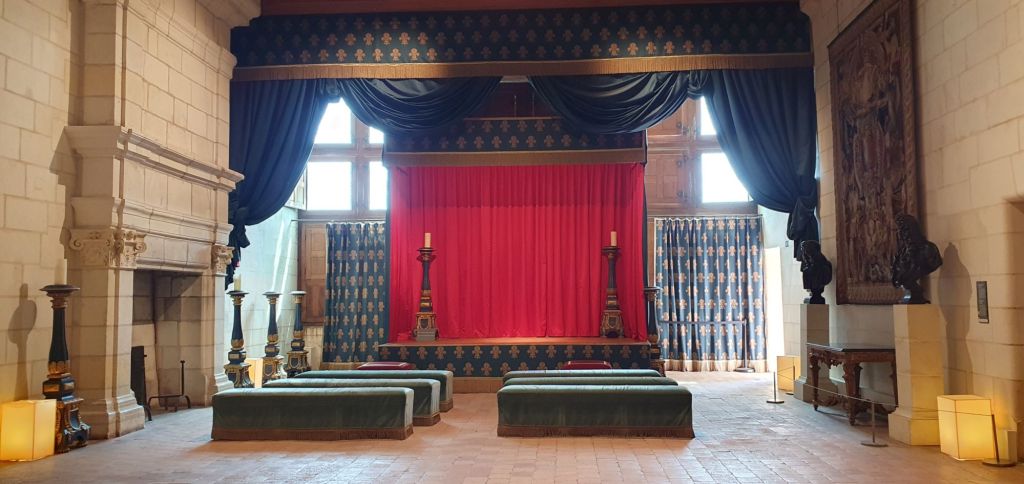
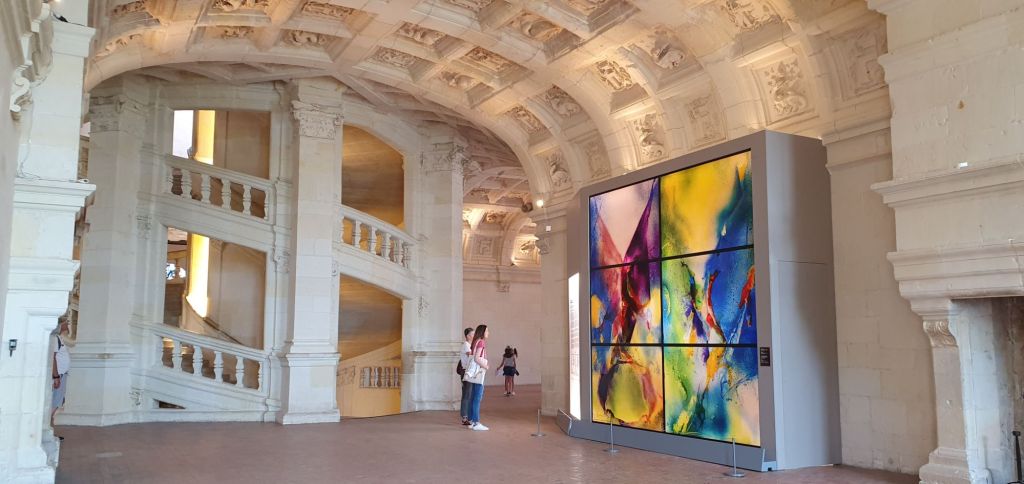
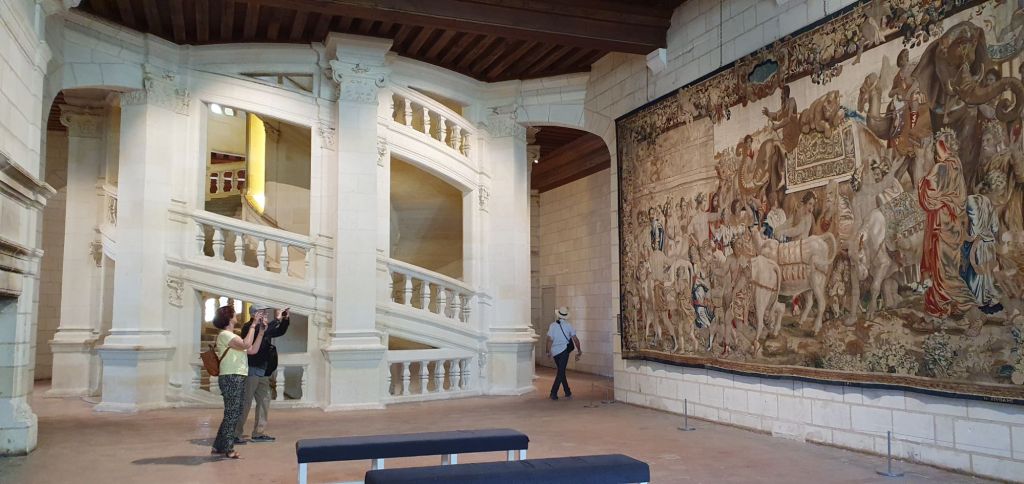
After entering through the keep the focal point is the grand double spiral staircase at its centre. Inspired by Leonardo Da Vinci it is a monument in its own right. Formed of two flights of steps that wind one above the other with windows opening onto a central core, it is a puzzling mind game as you can see others climbing the same staircase but your paths will never cross. The building was designed so that you can wander aimlessly in and out of rooms on each floor but are always able to return to the staircase at its core so never get lost – although that’s easier said than done as Steve and I were losing each other all the time as we explored its many rooms and exhibitions! Royal bedchambers, ceremonial apartments and Louis XIV’s theatre are all authentically recreated to relive the different centuries of the Chateau’s occupation.

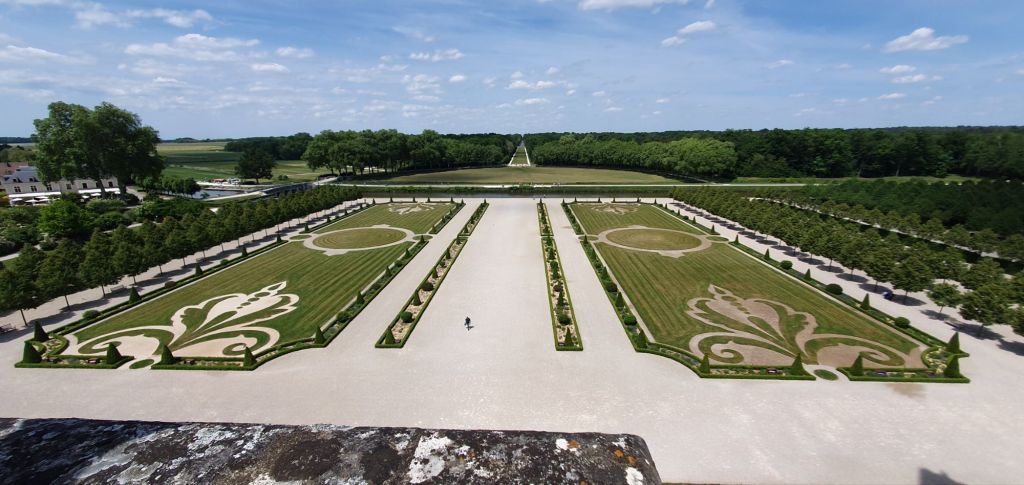
At the top of the keep the grand staircase leads out onto the open terraces which offer a magnificent panoramic view of the surrounding gardens and parkland. The French garden was restored in 2016/17 after years of research to reproduce the exact layout of the lost 18th century gardens with its symmetrical planting and fleur-de-lys design.

The surrounding parkland has over 20km of trails and walking routes to explore with bikes and electric carts available to hire. You can also take a 4×4 tour and hire a boat to cruise along the 4km of canal.

After several hours of exploration inside and out we made our way back to the bike park and headed to the forest for our return cycle journey. Not quite sure of which windey path we had arrived on we ended up cycling about an additional kilometre before we recognised a signpost through the trees pointing back to the site. The scenery was tranquil and peaceful with birdsong, butterflies and wild flowers lining the route which helped us on our way under the cool canopy of trees. Arriving back at Huttopia we flopped into our deckchairs having clocked up several thousand of our daily steps and 16km of pedalling.

The next day was our penultimate holiday day, one where we had to forego leisurely sightseeing to hit the road North to get within an hours drive of Dieppe ready for our ferry the following morning. It was a 320km drive estimated by Google maps to take 3.5 hours, so add on an hour because we don’t drive as fast as they think we do, and there’s always more traffic than Google initially anticipates, and we should be at Pavilly by middle to late afternoon. As I have said in previous blogs we do use the toll autoroutes to get to and from our required destinations, not everyone’s choice I know, and hopefully in our future retirement years when time is not a constraint we will be able to wander the roads less travelled and make it all about the journey not the destination. But until then we can only have 10 days each trip in which to see the world!

We had decided on another Camping CarPark stop for our last night located in Pavilly just north of Rouen and under an hour from the ferry port. I had prebooked our spot there on the Camping CarPark app just to be safe as it only has 8 pitches. It was easy to find located in the village and looked like it had only recently been constructed. There were 4 vans already there and by early evening it was full. A 10 minute stroll into the village centre and there is a good sized, well stocked convenience store which provided us with our evening meal and snacks for the onward journey home. The rest of the village looked all closed up and as it had started drizzling with rain we didn’t get to explore any further.

After a good nights sleep we arose the next morning, ate an unusual breakfast made up of everything that we shouldn’t be bringing back into the UK, and started the 55km journey to Dieppe ferry port. No hold ups at check in, not long to wait in our designated lane and we were boarding. We found our favourite reclining lounge seats and settled in with coffee and snacks for the four hour sailing. A few pages of our books and a little snooze later, we woke to the sight of white limestone cliffs on the horizon.

After only 10 days away driving back on the left suddenly seemed wrong and so unnatural. Roadworks and the M25 brought us quickly crashing back to reality though. During the journey home we reminisced about each day of the holiday, the locations, the views, the food, the wine, the experiences. And then the inevitable question was asked – “Right then, where are we going next time?”

So to find out keep reading the blogs to see where our travels take us next.

French Roadtrip Part 5- Another Loire Châteaux

After two nights at the perfectly placed Camping de Moulin Fort it was time to move further up the Loire Valley to be within cycling distance of another Chateau on our bucket list, Chateau de Chambord, but before we arrived there another one was due to be visited on the way.

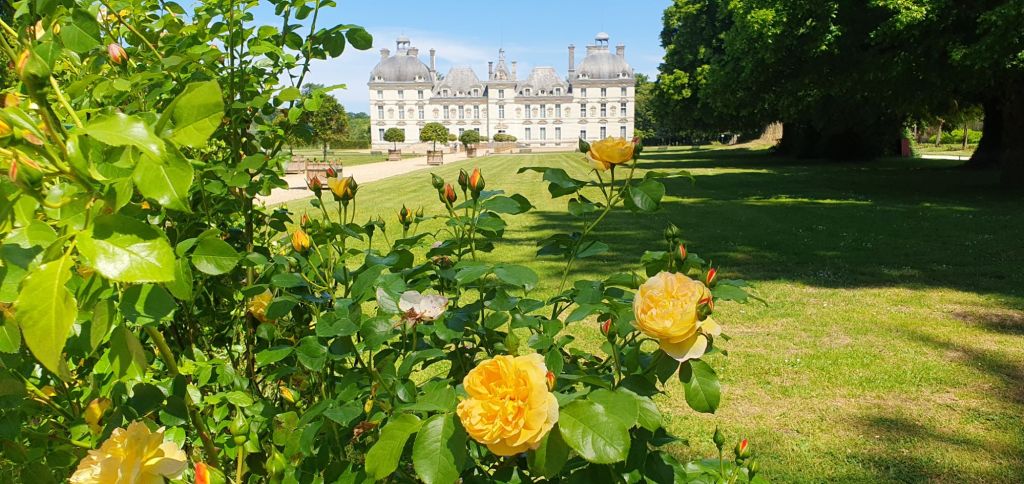
The planned driving route took us virtually past the front door of yet another Chateau that was not to be missed, so with time to spare before check in at our next site we found ourselves parking up in the village of Cheverny.

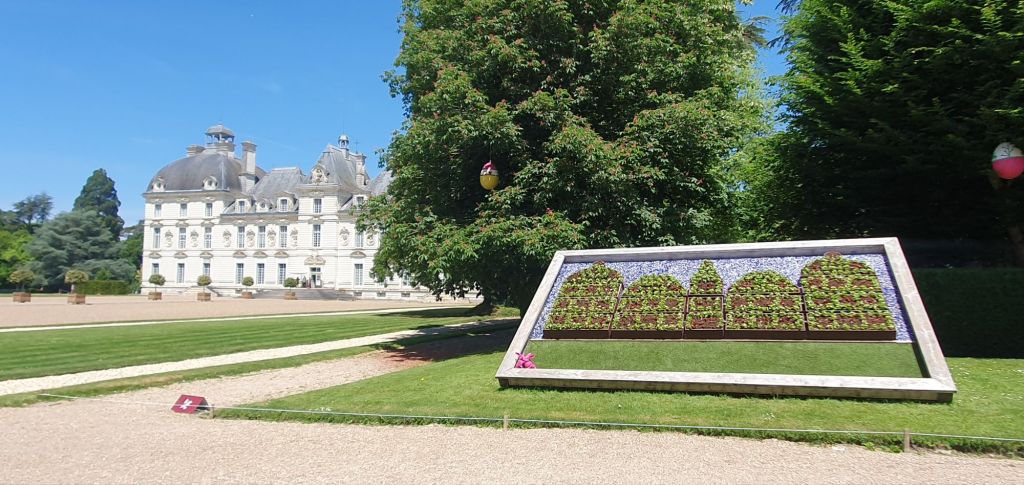
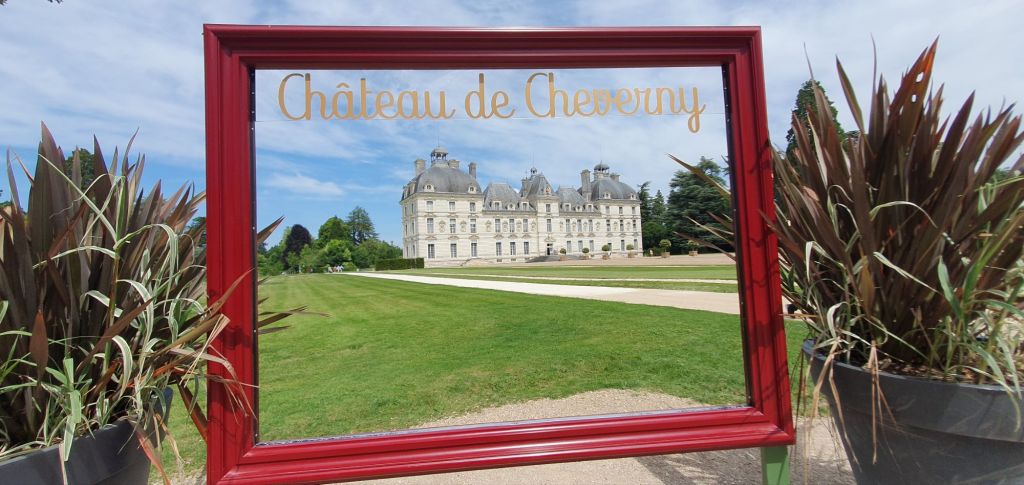
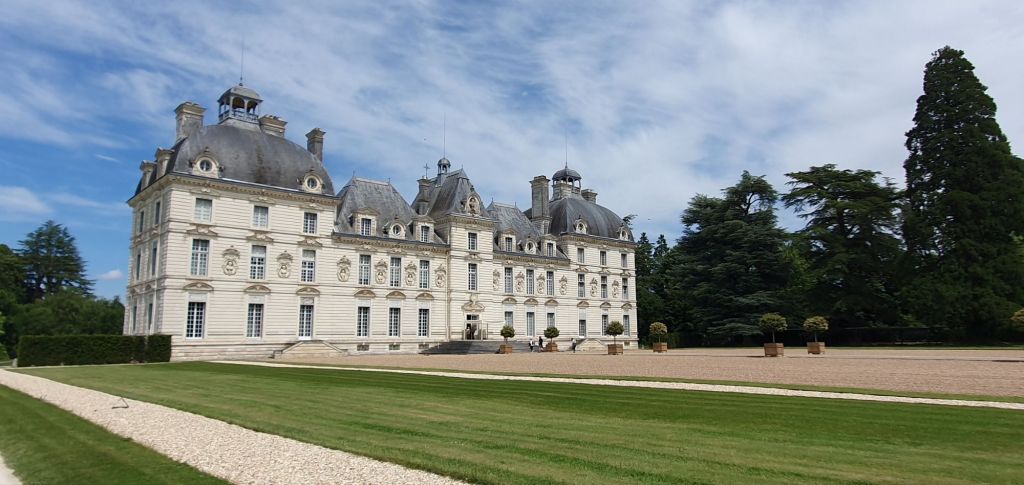
The village aswell as the motorhome park up was virtually deserted so no problem in finding a space for our 8m long vehicle. There is also an area next to the designated parking that appeared to be for overnight stays as it had a service point and we could see that this was nearly full. A short walk down the village street brought us to the elaborately gated entrance of Chateau de Cheverny. After paying our entry fee at the shop we were given a site map and guide and stepped back out into the warm May sunshine to explore this French gem. Yet another stunning vista awaited us as we walked along the pathways and rounded a corner.

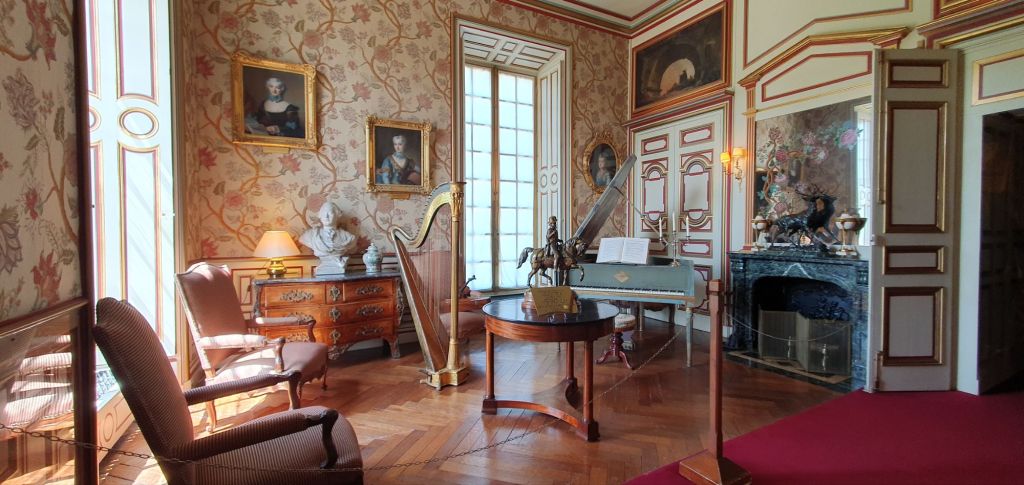
The Chateau was one of the first French stately homes to open to the public in 1922 and the estate has been owned by the same family for more than 6 centuries, although the Chateau itself has slipped out of their hands twice in that time. Once being bought by Diane de Poitiers after she was ousted from Chenonceau by Catherine de Medici. It was bought back by the Marquis de Vibraye in 1825 and so returned to the Hurault family whose descendants now live in the apartments in the right wing. Whether it’s because it still is partly a family home but we thought it felt intimate and homely even though it is stunning on a grand scale.

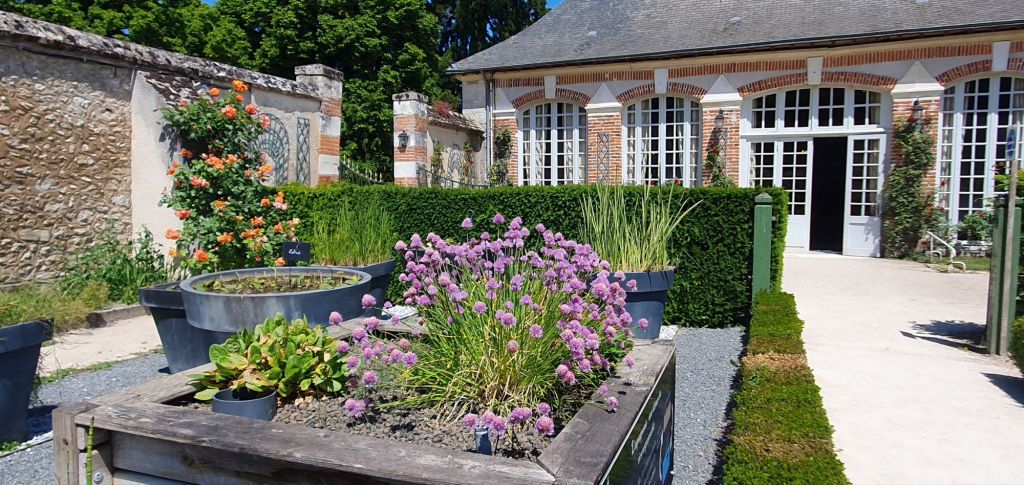
In 1943 Herge, the author of Tintin, was inspired by the architecture of Cheverny when he created Marlingspike Hall for his comic book strips. There is a Tintin museum located in the former stables and a large shop as you leave, which was a great bonus for Steve and kept him entertained whilst I took a tour of the beautiful flower filled gardens. Strangely this was our holidays’ second encounter with Tintin as there was also a shop on the quayside in St Martin on Il de Re that we had discovered a few days before.

Cheverny is also an important hunting venue. The onsite kennels house about a hundred French hounds, each with V for Vibraye shorn into its right flank. One or two were lounging around their compound in the full sun but most were taking shelter in the shade against the kennels.

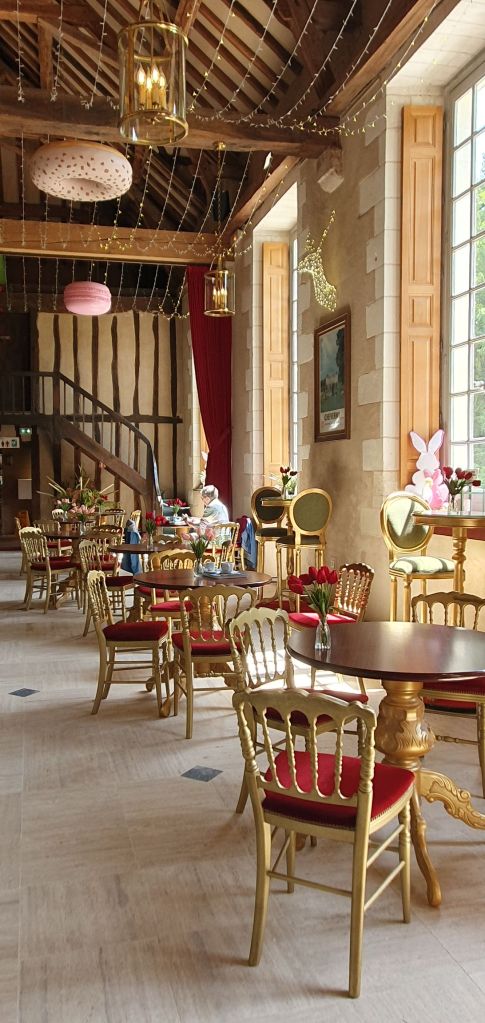
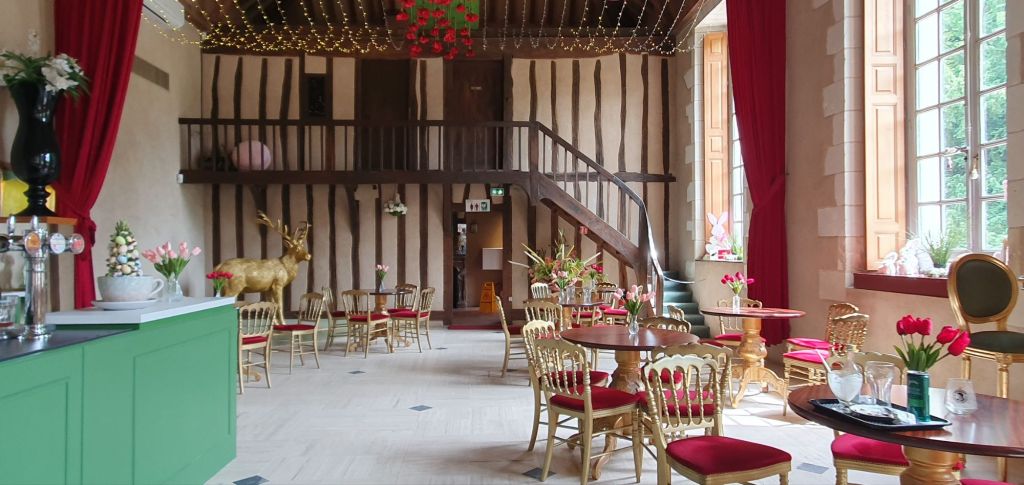
The 18th century Orangery now houses a cafe where we enjoyed our lunch surrounded by its decadent gold furnishings. As with many Chateaux this Orangery building was used to hide the nations art and valuable property during the Second World War, most notably apparently the Mona Lisa.

After we had toured the Chateau, its gardens, Tintin museum and had lunch, time was marching on and we could now check in to our next campsite. We reluctantly left the stunning vistas of Cheverny and took to the road heading for Bracieux. A short drive later we arrived at Camping Huttopia les Chateaux, a fairly large site situated in a forest. After having to inform the reception that we couldn’t fit on the pitch they had initially reserved for us, we ended up on a large sunny pitch with its own picnic table, what a bonus. The site has a bar, restaurant, bike hire, swimmimg pool and playground, alot of amenities but it felt spacious and quiet out of the main holiday season. The pitches were all lush grass making a change from the dusty patches you usually encounter on European sites. Chilling out in the last of the evening sun we had a bbq and plenty of wine to round off another amazing day of our French roadtrip holiday.

Read the next and final part of our French Roadtrip blog as we cycle through the forest to Chateau de Chambord and our trip comes to its end.

French Roadtrip Part 2, Le Mans to Ile de Re

According to the satnav it was a 4 hour journey from Le Mans to our next destination Ile de Re. With luck a straightforward run on the toll roads should see us there for late afternoon as we always mentally add an hour on for the ‘unexpected’

The sky had brightened during our time inside the Le Mans 24h Museum and as we headed south the sun began to break through. This was more like the weather we’d hoped for. The trusty satnav successfully skirted us around La Rochelle and the Pont de L’ile de Re soon appeared on the skyline up ahead of us. We paid the €8 toll to cross the bridge and it felt like we were travelling to another country. The sky above us was clear, its deep blue colour reflecting in the sun sparkled waters beneath us. How therapeutic it was to see the sea again.

Pont de L’ile de Re

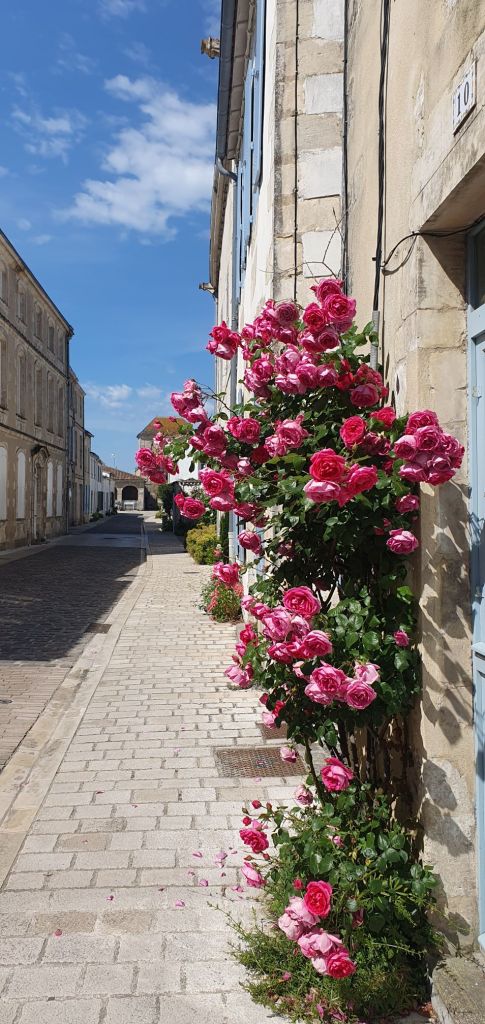
Ile de Re is 19 miles long and 3 miles across at its widest point. It almost looks like two islands on a map as salt marshes carve into the flat landscape leaving thin strips of land navigable only by bicycle and one road. Cycling is the main mode of transport here, there being hundreds of miles of designated mostly off road cycling paths criss crossing the Island taking you to picturesque villages and out of the way beaches. Our chosen campsite was about half way along the island so a few more miles of navigating through small villages, catching tantalising glimpses of sandy beaches through pine trees and passing through vineyards and poppy fields until we spotted the turning off to the site.

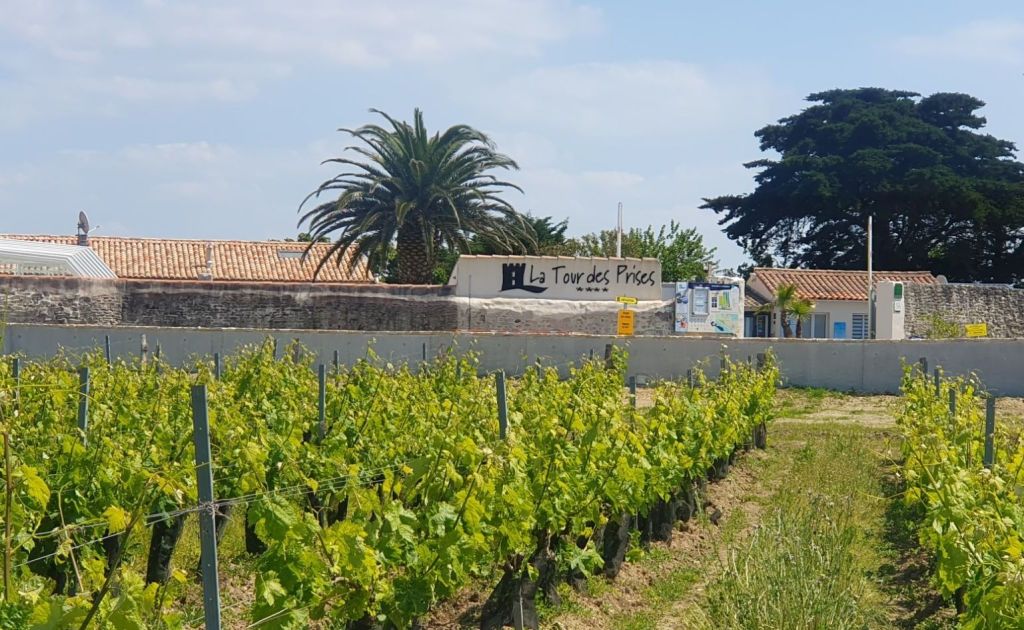
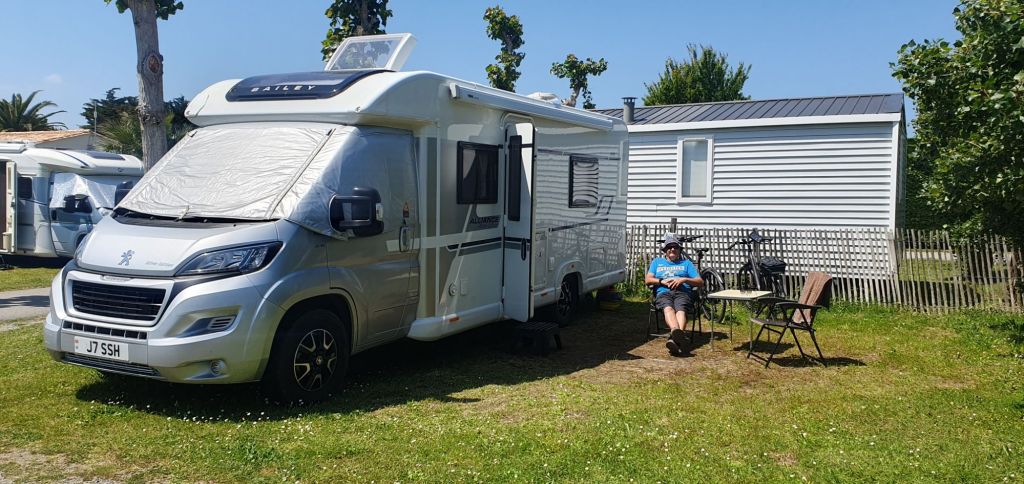
La Tour des Prises Campsite sits surrounded by vines and salt marshes the nearest large village being La Couarde sur Mer. It has a covered swimming pool, games room and bike hire, but no shop or restaurant. The facilities are mixed gents/ladies showers and toilets which are plentiful and clean. The pitches are the usual European standard having bare soil patches on sparse grass with hedging between. Our motorhome is 8m long with the bike rack on the back and didn’t fit on the first pitch they allocated us so we had to revisit the reception to request another.

Our first excursion on the bikes was to St Martin de Re, a main town and marina on the north coast of the Island. Armed with the cycle map we set out from the site directly onto the marked off road route, pedalling through a landscape of vines and poppies we reached the coast in less than 10 minutes. The sea was a long way out and barely visible leaving a vast expanse of wet rippled sand on which oyster farmers could be seen at work. Huts were dotted all along the coast path selling their produce and offering temptingly cool drinks. There are between 6-8000 tonnes of oysters farmed every year on the Island. 

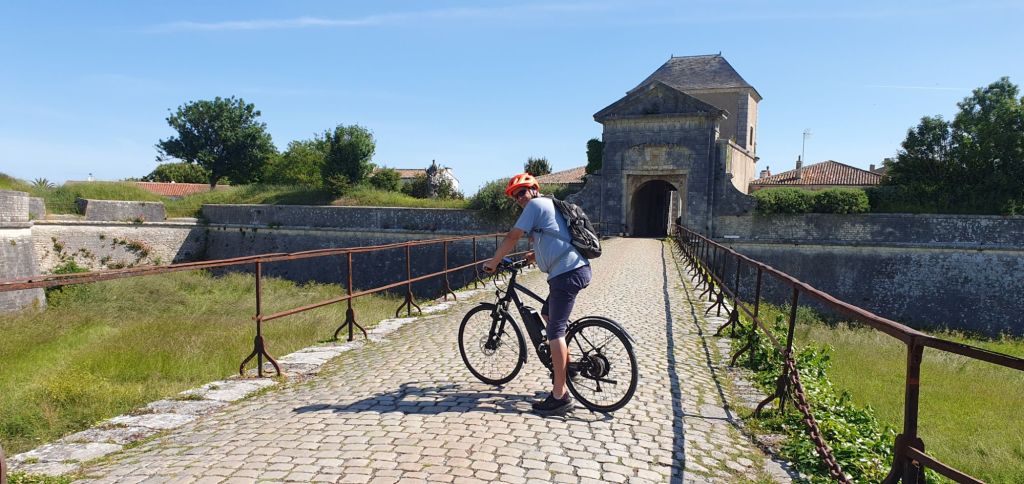
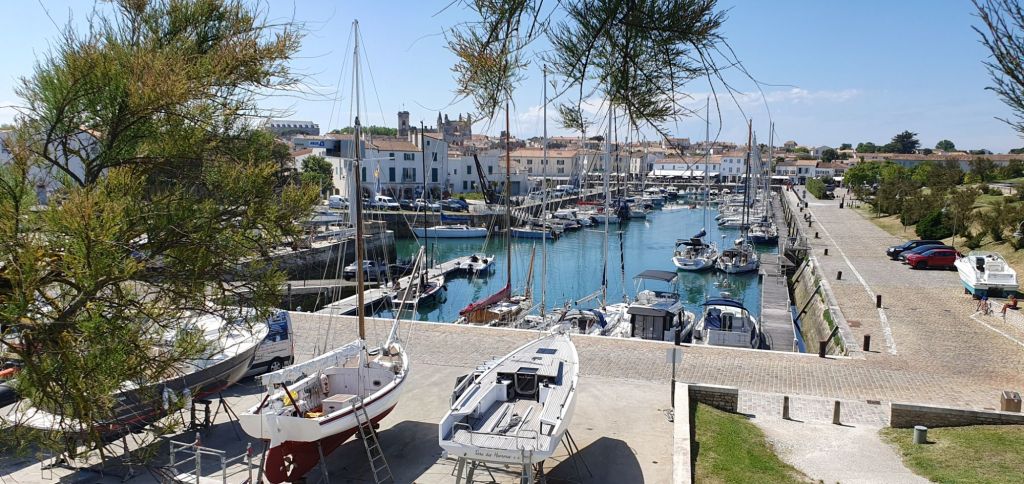
Our approach to St Martin was across a moat bridge and through 17th century ramparts which surround the town. Pretty blue shuttered houses on narrow cobbled streets led us down to the marina, a buzzing area lined with restaurants as far as the eye could see. It was barely midday and each one was doing a roaring trade. We secured the bikes and spent a couple of hours strolling around being tourists, visiting the lighthouse, browsing the shops and having lunch overlooking the marina. There was a TinTin shop which kept Steve occupied for a while whilst I raided the Tourist Information centre for more maps and the bus timetable to La Rochelle. Reluctantly it was all too soon to get back on our bikes and retrace our wheels back to the site. The cycle path was incredibly busy, a constant stream of bikes snaking both ways along it. A stop off halfway back to find some shade under which to enjoy a patisserie we had bought earlier was very welcome.

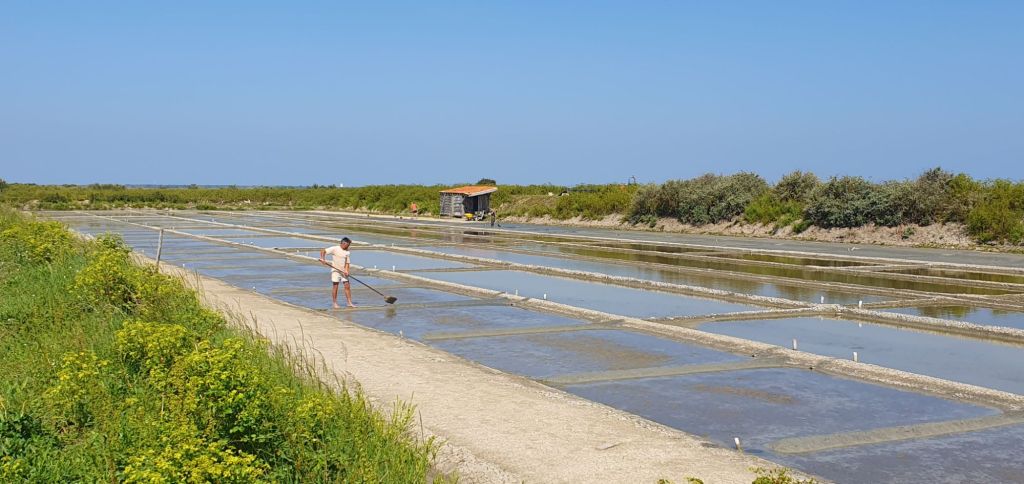
Following another study of the cycle maps we decided our next excursion was going to be through the salt marshes to Ars- en-Re, a small coastal village to the West of us. Again we rode straight out of the site onto the traffic free network of paths that guided us through the flat countryside. We rode along a warren of pathways weaving around the patchwork of salt beds baking in the sun, tended to by their owners patiently waiting for the water to evaporate and leave their bounty behind. Little huts selling their precious produce were dotted along the route.
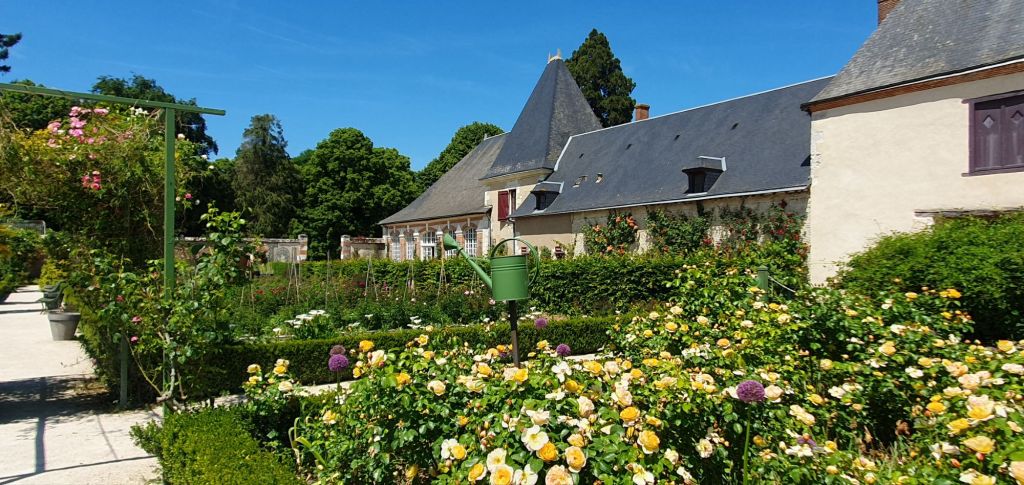
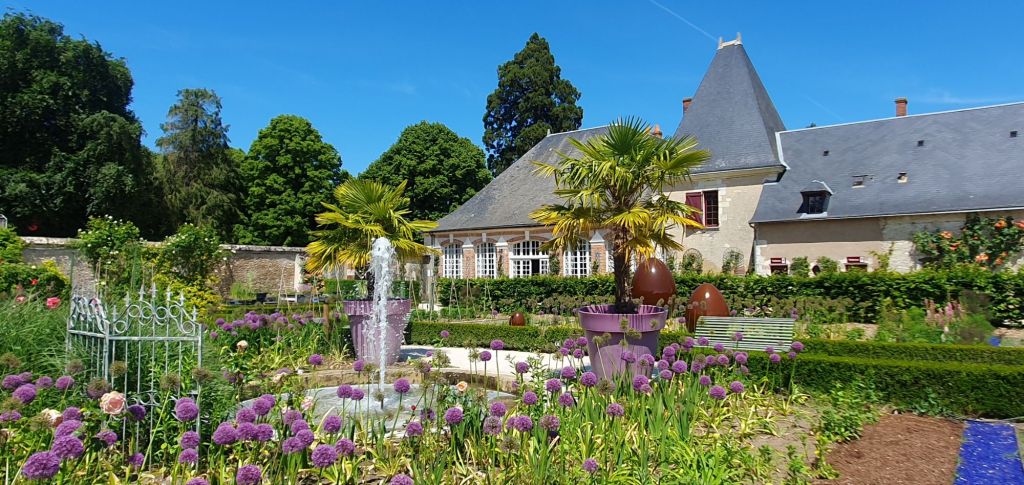
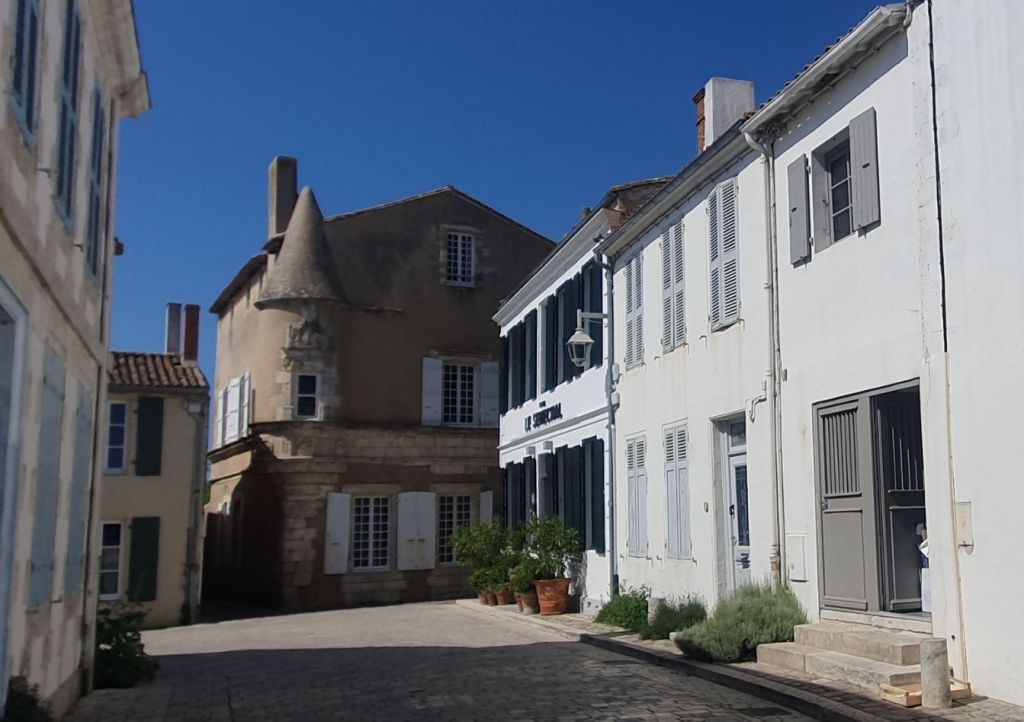
We arrived at Ars-en-Re secured the bikes by the small harbour and strolled into the village centre. It’s central square is dominated by the 12th century church with a distinctive black and white bell tower which serves as a navigational aid for sailors. The cobbled streets are again typical of the Ile de Re villages, pretty shuttered stone houses with flowers tumbling from window boxes and around their doorways. After an hour of losing ourselves amongst the many dead ends and alleyways we found our way back to the harbour and ready for the ride home.

Two days of bike riding had left our ‘behinds’ needing a well earned rest so the following day we let the bus take the strain instead and whisk us off the island to La Rochelle.
Read about our day out in La Rochelle in the next blog: French Roadtrip Part 3

Season starts again

After spending the winter time off site and at home in Shropshire, the end of February had now arrived and it was time to go back to work and our summer home away from home back at Warwick Racecourse CAMC.

Having retrieved our onsite setup gear, utility tent, mats, chairs, tables, cooking equipment and work uniform from the storage unit, we collected Mo and headed off to site. The journey is all motorway and takes about an hour and a half so a fairly easy run – subject to traffic-  between our two lives. Over the winter we had semi-air suspension fitted to the rear of the motorhome to smooth out the ride, also in the hope to reduce the amount of internal noise that is generated from the cupboards and drawers as we clatter and bang our way along the M6 motorway past Birmingham. That is one thing we never even thought about when contemplating moving from a caravan to a motorhome – the amount of noise that you hear when driving along. You never hear how much is banging about in a caravan when its being towed behind you, but despite wrapping the cutlery, crockery and oven shelving in towels and bubblewrap there still seemed to be a heck of a lot of noise going on behind us in the motorhome. I’m glad to report that the air suspension does a terrific job and all is now quiet, well quiet-er, than our previous journeys.

We arrived to site on a sunny and quite mild day, the motorhome was driven into the compound and we soon had the kitchen/cooking tent erected next to it. We don’t use an awning that’s attached to Mo so we have a quicker getaway if we are using the motorhome on our time off.

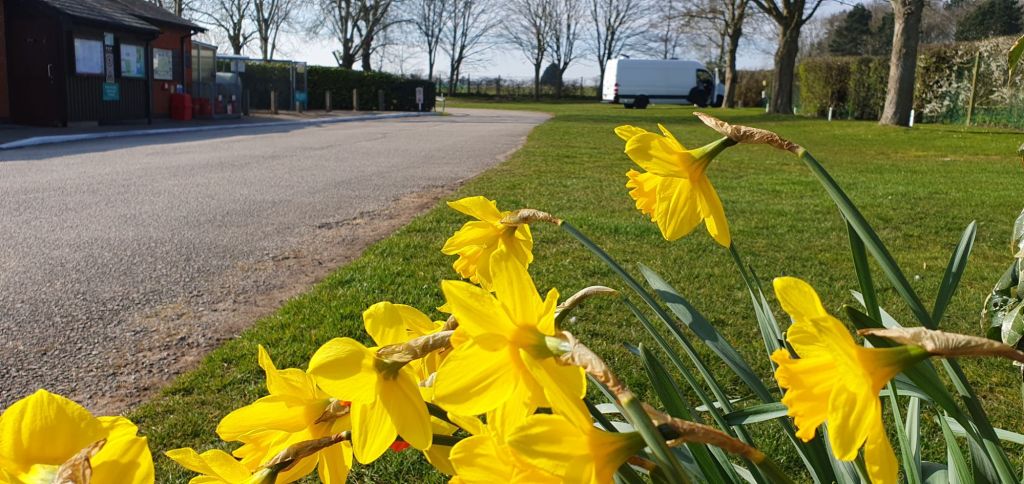
The site was looking very spring like with rows of daffodils standing to attention nodding their bright yellow heads as we passed, crocus poking up through the soil, blossom in the hedgerows and signs of trees budding all around. Although the days were sunny and surprisingly mild the hope that Winter was on its way out soon faded fast with clear skies and frosty mornings for the following days.

Jobs to get the site ready for opening were ticked off each day and before we knew it it was time to handover to our colleagues on opening day. The weekend was due to be a full house with members eager to start getting out and about after the glimmer of Spring days to come.

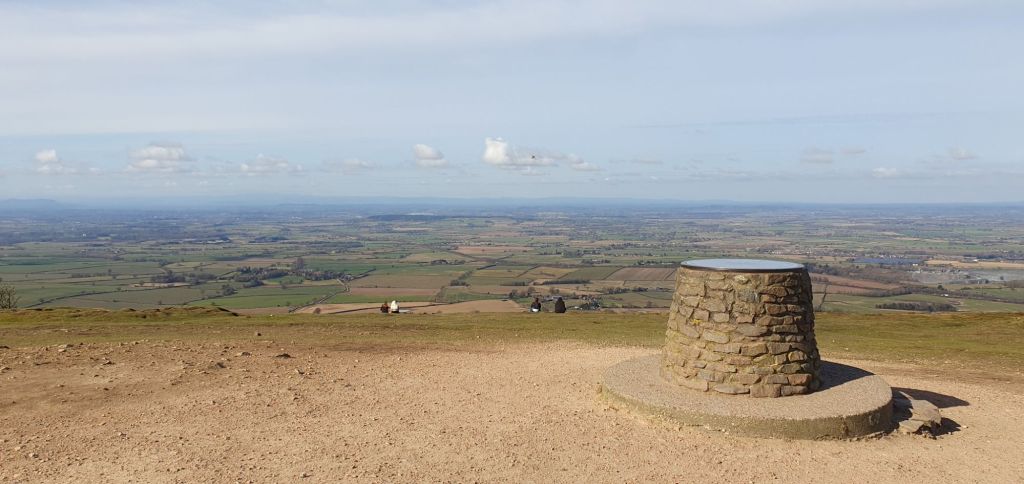
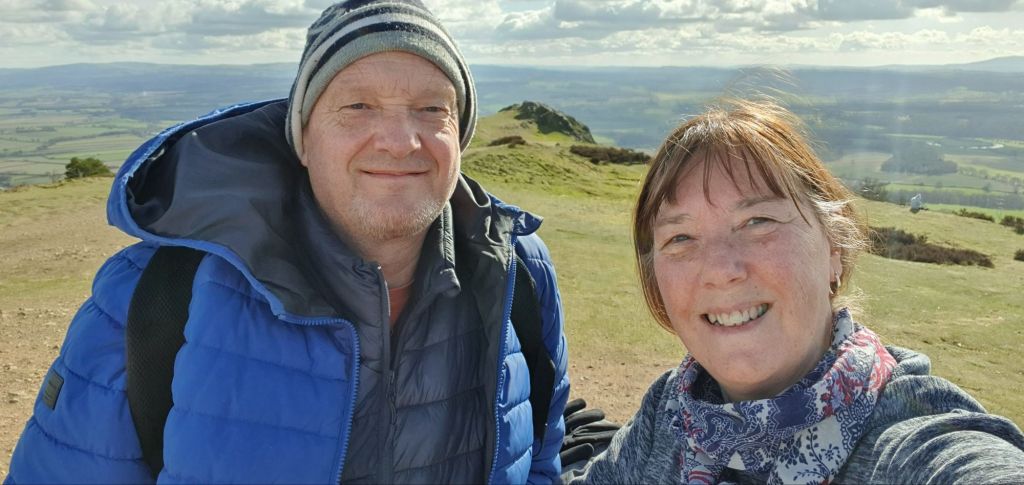
Back home again for our few days off the sun was still shining and temperatures mild so we decided it was time to tick off an item on our bucket list. Having lived within striking distance of the Wrekin all our lives, and for the past 3 years even closer, it was about time we actually climbed it. The Wrekin hill is a well known local landmark rising above the Shropshire plain situated between Telford and Shrewsbury. It’s summit is 1335 feet above sea level and can be seen as far away as Manchester and Gloucestershire. There is an iron age hill Fort almost 20 acres in size at the summit, aswell as a radio tower and toposcope. I’m not going to lie it was more of a slog to the top than I imagined, but perhaps that was more to do with the 4 month sabbatical we’d just had! It was busy with dog walkers, cyclists and runners all clearly much fitter than me. On finally reaching the top we were rewarded with 360° stunning views of Shropshire and beyond. The toposcope pointed out the direction and distance to other local landmarks, towns and points of interest which were all clearly visible as it was such a lovely day. After a well earned rest we made our way back down, this time putting my knees to the test instead of my lungs, arriving back at the base feeling very satisfied at our achievement and a tick off the bucket list.

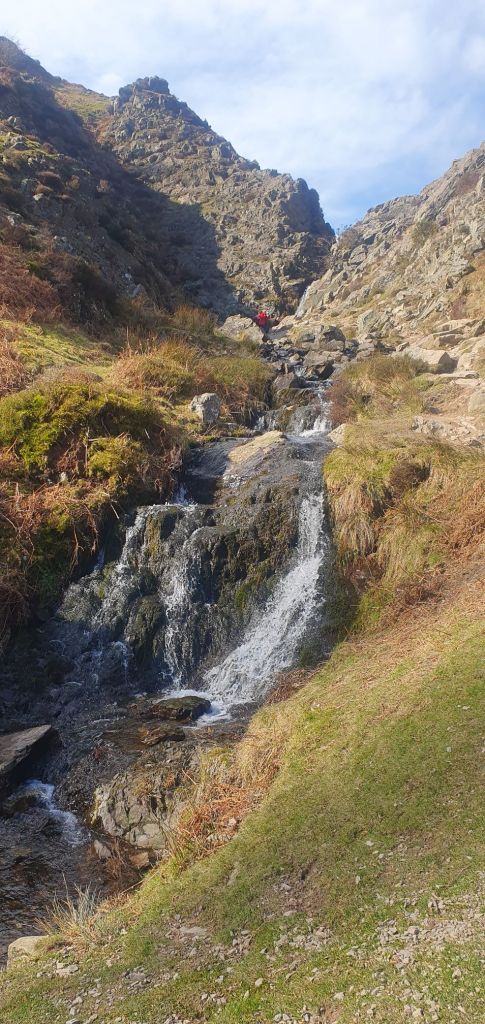
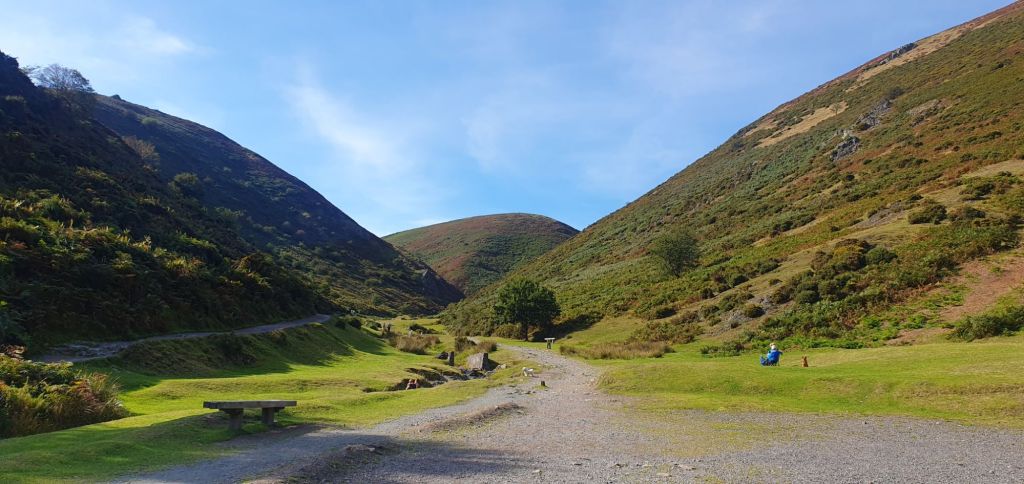
More days out during this stint at home were to Carding Mill Valley, Church Stretton and Benthall Hall National Trust. Spurred on by our climb up the Wrekin a few days later we walked to the waterfall at Carding Mill Valley. What starts off as a leisurely walk following the stream then turns into a scramble over rocks for the final section. The waterfall itself was rather underwhelming when we got there unfortunately, but it was still very enjoyable to be out in the sunshine. There were many parties of schoolchildren there that day, kitted out with clipboards and rucksacks enjoying the fresh air and sunshine instead of a stuffy classroom.

Carding Mill Valley
Benthall Hall

All too soon our home time was over and back again we went to Warwick with plenty of work to do to keep us occupied for the next 12 days. The site was full most nights as the unusually warm spring sunshine was definitely encouraging people to get out and about on road trips.

Catch up with us next time as we take a mini break at another CAMC site and prepare for our own road trip to France.

There’s no place like home

After arriving back to our new home in the second week of November we threw ourselves into decorating and renovations, and also shopping for all the items we had either sold, given to charity or taken to the tip a few months previously. There has been a few items with hindsight we wish we had kept but who knew at the time that we would be back in a house within a year. Having disposed of every stick of furniture we owned it has been great fun discovering the many antique and pre-loved shops in our area finding pieces suitable for a 19th century cottage. We are very well placed in Shropshire with Ironbridge, Bridgnorth, Ludlow, Church Stretton and Shrewsbury on our doorstep to make the most of all that’s available.

Sunny Shropshire

The place isn’t very big and there wasn’t too much that needed doing, so once the tasks we could tackle ourselves had been accomplished we started to plan the bigger changes we wanted to make, like replacing the bathroom and adding a downstairs wc and cloakroom. Creating the new cloakroom would end up leaving the kitchen too small so an extension was then going to be needed to remedy that. Oh and while we were at it why not build a front porch and change the external doors for ones more aesthetically suited to the property. Ambitious plans costing alot of money and requiring planning permission unfortunately. Not to mention that we are also situated in a conservation area so negotiating with the local Heritage Planning Dept was going to need some time and patience. The bathroom replacement was a quick win so that was planned in to start when we leave the cottage to return to site at the end of February. Albeit it is then going to be sitting there unused until November it is going to be easier to carry out the work without us being there.

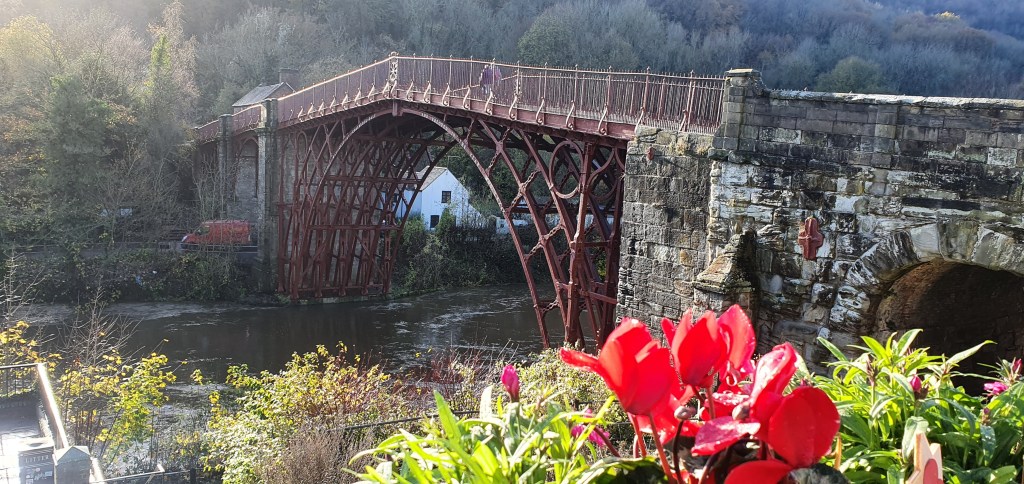
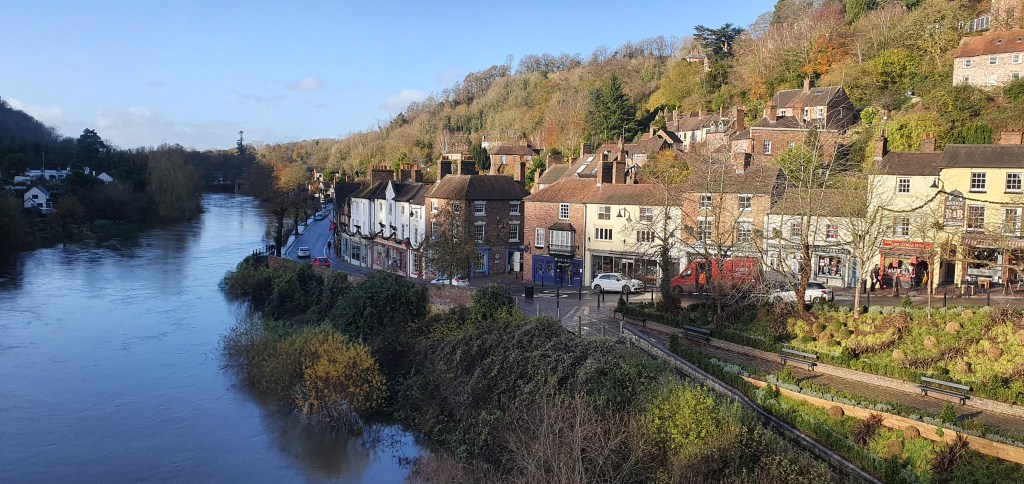
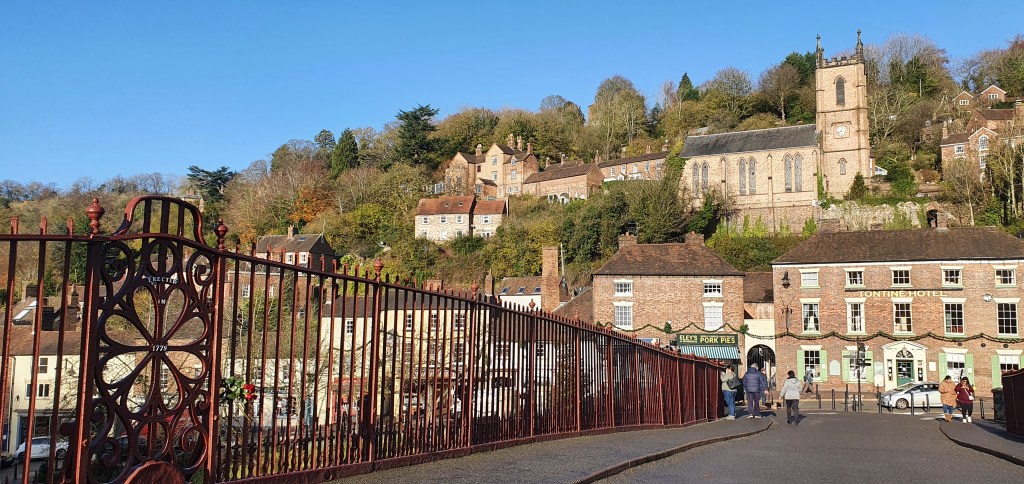
Through November the weather was mostly dry with sunny blue skies so we took days out combined with antique shop browsing to the surrounding towns and villages. Coalbrookdale and Ironbridge are 10 minutes away and we must admit to visiting several times for breakfast in a cafe along the River front. They do the best scrambled egg on toast. We park in the large pay and display by the Visitors Centre and walk up alongside the River Severn to the Bridge then browse the bookshops and gift shops before inevitably ending up in the Antique centre back by the carpark, with a few exciting finds having been purchased from here so far. The iconic bridge was built by Abraham Darby III in 1779 and was the world’s first bridge constructed from iron. Ironbridge Gorge is home to several museums and heritage sites preserving it’s national importance of being the roots of the Industrial Revolution in the 18th century. The Ironbridge Gorge World Heritage site covers 5.5kmsq and it was in Coalbrookdale in 1709 that Abraham Darby I developed the production technique of smelting iron with coke ( not of the cola kind!) which began the Great 18th century iron revolution. During the next century associated works and foundries sprung up in the surrounding areas benefitting from this new industry, and consequently dwellings appeared on Horsehay Common probably built by squatters drawn to the area by work, one of which is ours.

Ironbridge

Right on our doorstep we are finding walks and discovering the history of the area along the way. The Coalbrookdale Company needed additional furnaces and Horsehay Pool provided a sufficient water supply and land for lease. The furnace at Horsehay first came into blast on 5 May 1755. A railway from Horsehay to the nearby Severn wharves was built and the first waggon of ‘pigs’ (iron) was shipped down through Coalbrookdale and on to the wharves almost within sight of the Ironbridge that was to be completed 24 years later. The Coalbrookdale Company further developed the area, constructing brickworks and later a pottery in 1838.

Horsehay Pool at the bottom of our lane

Shrewsbury is our nearest big market town, again set on the River Severn it is the county town of Shropshire and only 9 miles from the Welsh border. The town centre still boasts a medieval layout, has 660 listed buildings some timber framed dating back to the 15th century and is the birthplace of Charles Darwin. Its windy back streets and passages house many interesting independent shops, our favourites being an antiquarian bookshop and traditional ironmongers.

Shrewsbury Park alongside the River Severn

Bridgnorth, a town just along the River Severn, has also yielded a few choice pieces for the cottage from its many interesting shops. Built up on the hillside of the fast flowing River there is a Low Town and High Town. Also it is the main station for the Severn Valley Railway, a 16 mile heritage steam line running along the Severn Valley Gorge. A ruined castle stands on the hill and a cliff railway (when in use) can take you between Low and High town giving far reaching views across the Shropshire countryside.

As Christmas approached we put the DIY on hold and decorated the cottage ready for the festive season. The family were glad we had now got an oven big enough to take the turkey and that the task of cooking Christmas Dinner was safely back in Mom’s hands and her kitchen! I really don’t think any of them were relishing the thought of eating a barbecued chicken leg sitting in a draughty awning – they haven’t as yet fully embraced the caravan lifestyle.

Cosy for Christmas
Polar Express events at Horsehay Station Telford Steam Railway

However the week before Christmas things took an unexpected turn with my Dad who was 101 having a fall at his home and breaking his hip. Christmas and New Year was fitted in around hospital visiting hours but despite putting up a brave fight, fraility and old age took its toll and he lost his battle for recovery in mid January. The following weeks were taken up with organising his affairs and arranging the funeral. Two months short of reaching 102 he still looked forward to every new day and what he could learn from it, never looking or acting his ripe old age he was a true inspiration to us all.

Time was now marching on and with only two weeks left at home our thoughts needed to be focusing on getting back to work. It was a tall order as there was still so much we wanted to do in and around the cottage, still so many places to visit and many days to spend just sitting by the fire, reading and dozing. In reality our winter at home and our 4 months (nearly) off work had come to an end and our other life was now beckoning.

Catch up with us next time as we leave our winter home and return to our summer home on site.

Homeward Bound

After the sale of the family home at the beginning of the year, and us initially thinking we would be fulltime van-dwellers for the foreseeable future, the ‘foreseeable’ only turned out to be a few months. It was a perculiar feeling not having somewhere to call ‘home’ and not one we had expected to feel at all. Far from feeling free and unshackled we felt lost and adrift, nomads with no roots. There may be many reading or listening to this who are living their dream of permanent vanlife and horrified that we have committed to bricks and bills again (but thankfully with no mortgage this time) there will be those that are in between lifestyles wondering whether to take the plunge and sell up and equally those who couldn’t contemplate life without a castle to call their own. Not one option is right for everyone and whatever you choose or believe to be the right decision at the time doesn’t have to be a forever decision. Its OK to change your mind and travel a different road, the main thing is to do what’s right for you. For us that’s having the best of both worlds, we love living in the caravan and the lifestyle our jobs as assistant site managers gives us, but after 8 months of that we are equally happy to have a proper roof over our heads for the winter and an oven I can fit the turkey in on Christmas Day!

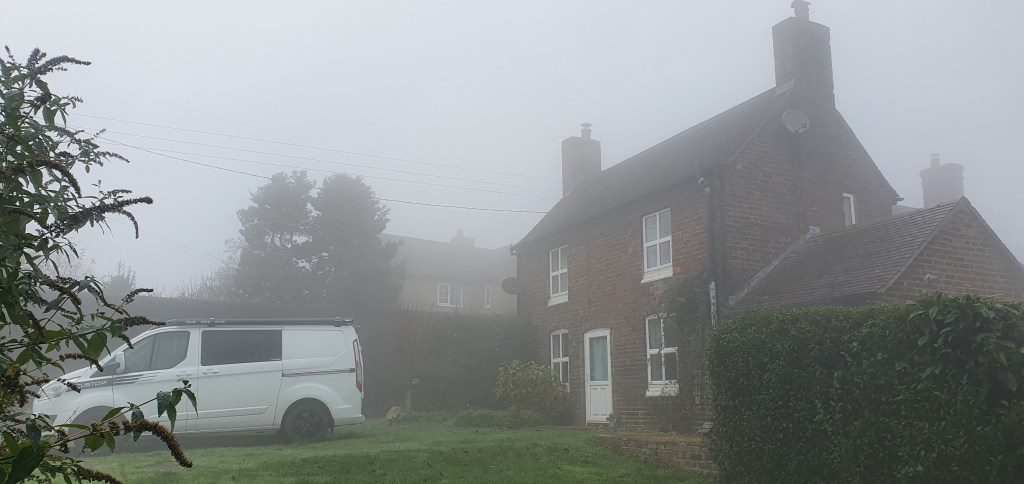
So subsequently we started looking for a new abode, which wasn’t easy being 250 miles away from our search area. We’d settled on an area of Shropshire as it was equal distance between family and after Steve announcing he’d always wanted a cottage with 4 windows on the front and a door in the middle that’s what we were on the hunt for. It didn’t take long to find just that and on a day off we were whizzing up the motorway from Devon for a viewing. All the way up the M5 we were trying to convince each other there was no way we would be buying it, we were just looking. Yeah right, once we saw it there was no way we would be walking away! It was perfect, big enough for the two of us and small enough to lock up and leave when we were away during the caravan working season. We were looking forward to being home for winter already!

A misty morning in Shropshire

Meanwhile we still had 2 months of warden life to plough on with in Devon. After plenty of much needed rain newly seeded pitches were springing back into life with bright green blades of grass visible through the once bare earth. Trees were dropping their leaves early due to the hot weather and others were starting to turn towards shades of autumn. For so long the caravan door had been permanently flung open to cool down but now increasingly we shut out the cold, wind and rain and kept cosy warm in our small space. Days were still sunny but temperatures dropped once the sun went down.

Seasons starting to change

We were still keen to get out and about realising our sightseeing opportunities around here were numbered as time was drawing nearer by the day to us leaving the area.

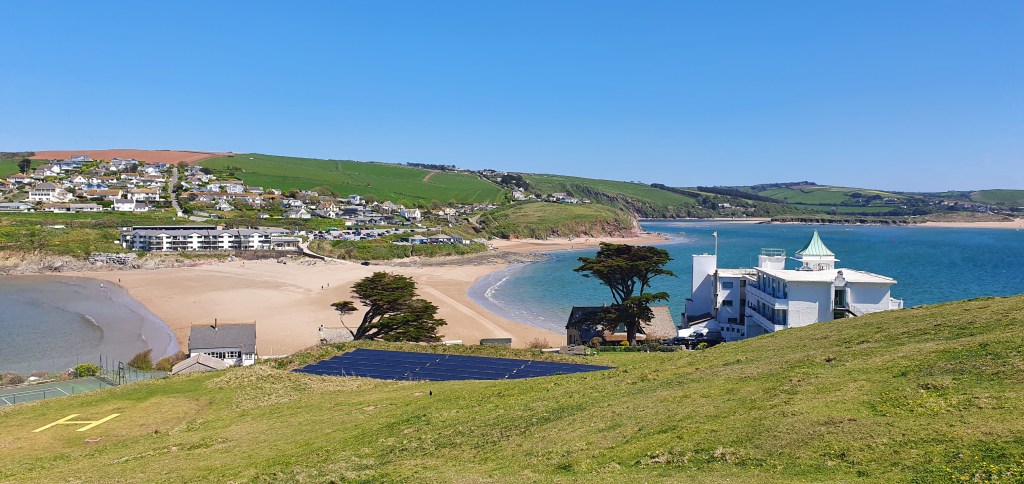
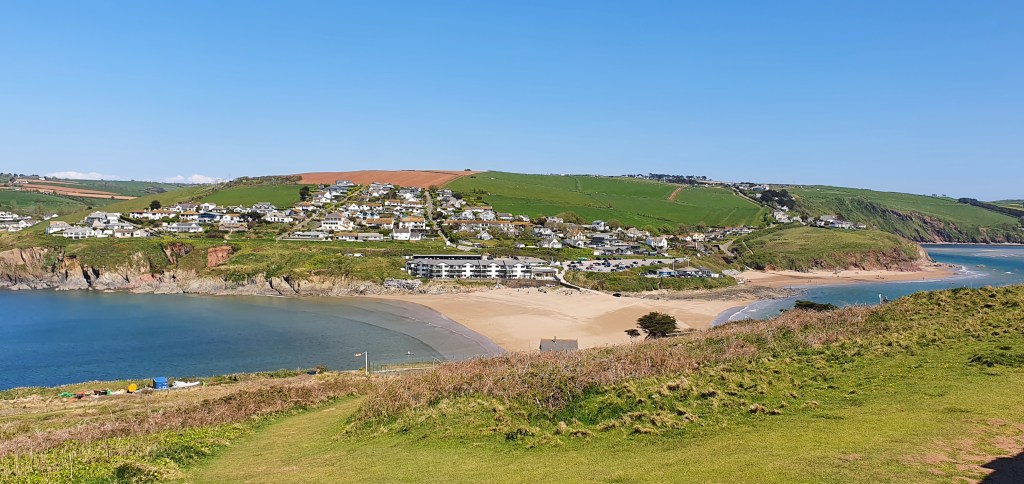
Burgh Island and Bigbury on Sea are a short hop along the coast and an iconic South Devon landmark. Featured in many TV and film locations the Island is only accessible at low tide by walking across the sands or by way of a sea tractor at higher tide. It boasts an art deco hotel built in 1929 that welcomed many rich and famous keen on its exclusive location. Agatha Christie was a regular visitor and used the setting for two of her novels which she wrote in the beach house. You can walk around the island and climb the hill above the hotel for stunning views both back to the mainland across the sands and in the other direction out to sea. Don’t forget to make a note of the tide times though otherwise you’ll get wet feet or have to queue for a tractor ride back!

Views from Burgh Island

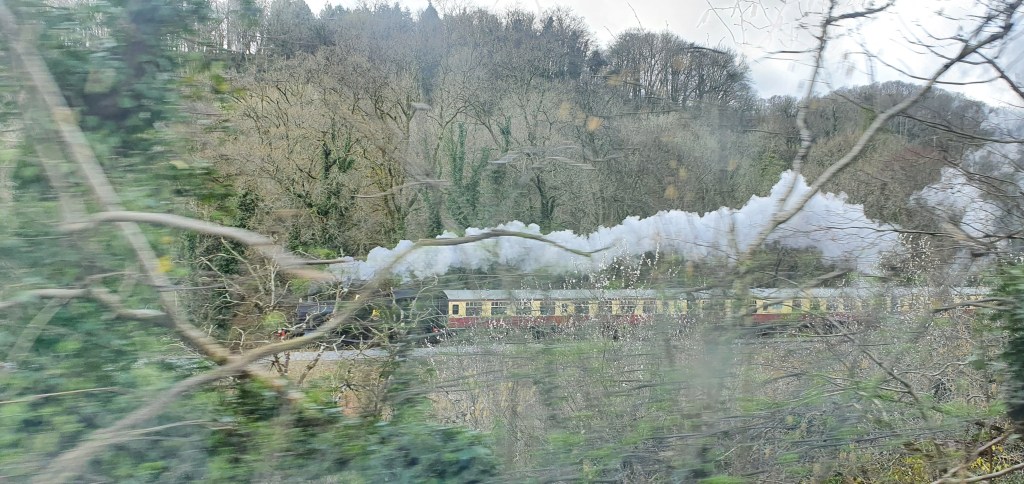
Away from the coast we visited South Devon Railway. A steam heritage line first built in 1872 where you can ride the 14 miles from Buckfastleigh to Totnes and back through the stunning valley of the River Dart. There is refreshments, a gift and very extensive model shop, a museum, gardens and a picnic area at Buckfastleigh Station.

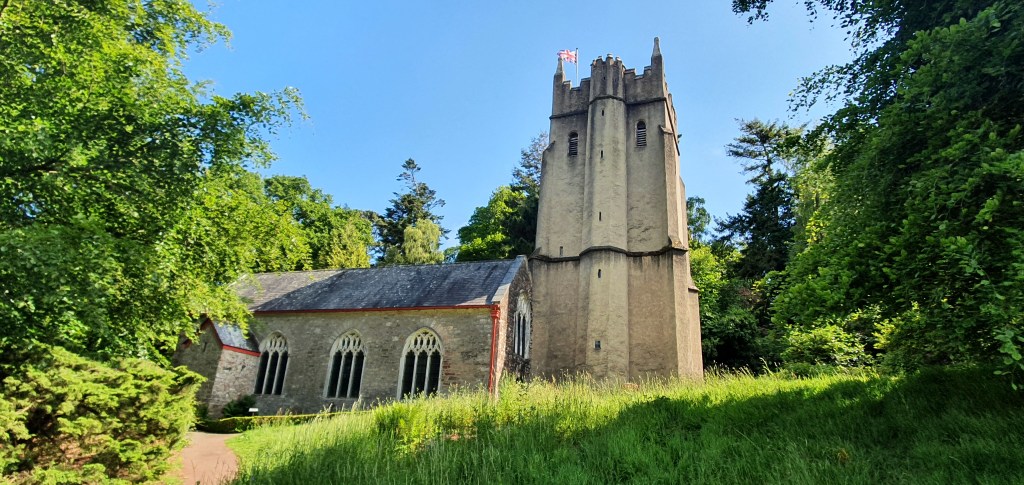
Cockington Court and village is a lovely place to stroll, visit art and craft studios and have a great lunch at the Drum Inn. It is by Torquay so we try to combine it with a trip across the River for other reasons. Cockington Country Park is an area of woodland, parkland, rural countryside and formal garden landscapes and amongst the 450 acre site there are ornamental lakes, a Manor House, chocolate box thatched cottages, art and craft studios, an 11th century church, picnic areas and a cosy pub serving delicious food. Inside the 16th century manor house there are over 20 craft studios, a contemporary art gallery, a tea room and a rose garden, and housed in the stables behind you can watch craft makers at work blowing glass, a blacksmith creating items at his forge, a chocolatier, leather maker, jeweller and sculptor to name a few. The Cockington Estate was owned by only three families from 1066 through to 1932 when it passed into public ownership and was created into a Park in 1991. There is a visitors centre in the heart of the village together with a tea room and a number of gift shops and a game of cricket can be watched enjoying a picnic on the sloping grass banks in front of the manor house. All very quintessentially English!

Cockington Village and Church

Middle of October was time to take down the awning and assess what had to go where ready for taking home or staying in the caravan for next season. Lists were made so as not to misplace anything and piles of our belongings began to appear on every available inch of floorspace. Who knew we had so much or even needed so much stuff in such a small space. The site numbers dwindled first week into November somedays with no comings or goings at all, so slowly the site began to prepare for closedown. Goodbyes and best wishes were given to the seasonal members who had become good friends during their time with us and then it was our time to go too. We pulled out of the gates at 7am to be sure to miss the bus and anything bigger coming the otherway. Vinny the van pulling Bill the Bailey are 40ft long and 8ft wide so meeting another vehicle on these Devon lanes was not going to be a pleasant experience. Luckily it all went to plan and we were soon on the wider roads heading North. We waved goodbye to Devon, its stunning coastline, glorious beaches and picture postcard villages and focused our sights on the next adventure – home.

Don’t forget to read next time as we begin work on the new house and get out and about in Shropshire.

Summer Sunshine

July and August saw an influx of families and holidaymakers spending their 2 week annual summer holiday at Start Bay site. After having mostly couples stay during the early part of the season the change in site dynamics was very apparent. Add to that the hot summer temperatures and being by the sea in Devon, the site definitely had that holiday feeling. Caravans and campers arrived laden down with paddleboards, kyhaks and all manner of water sports equipment that was carried down to the sea every morning by eager enthusiasts and then wearily trudged back up to site just before sunset. Wet suits and swimming gear were hanging out to dry on every washing line ready for use again the following day, and ice creams were outselling the cream teas. The location of our site was a winner for coastal activities and even just for enjoying being by the sea and not necessarily in it – as is the case for me!

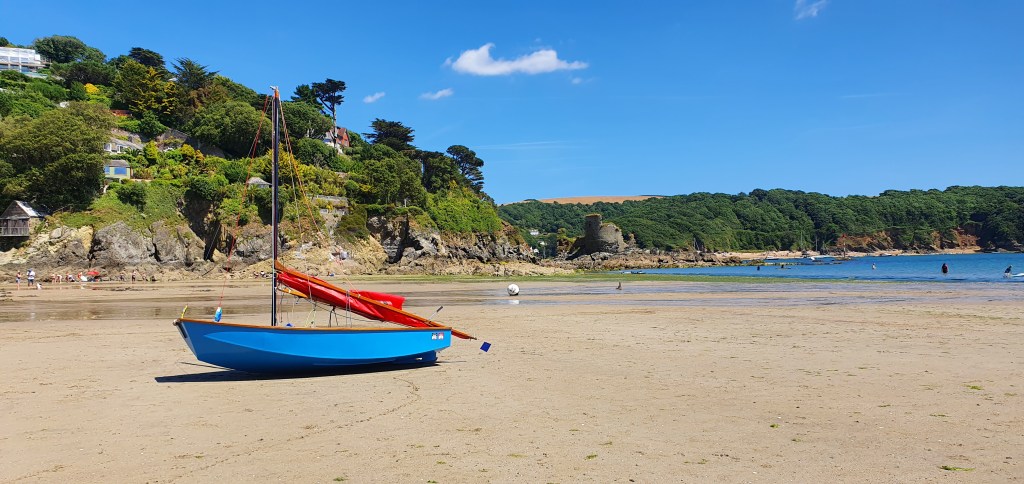
Steve was keen to embrace the water sport culture and so had a days paddleboard tuition on a course in Dartmouth. After a theory lesson on land they hit the water and paddled down the estuary heading for Dartmouth Castle at the mouth of the river, weaving in and out of the creeks, amongst the moored boats and getting enviable views of the millionaires houses clinging to the steep hillsides overlooking the River Dart. Thankfully the weather was still very hot so his (quite a) few dunkings into the water was actually welcomed and he had the last laugh over those that had mastered the art of standing upright and staying on the board better than him! A few days later he got the chance to have another go at North Sands Salcombe, whilst I watched from a dry spot on the beach.

Steve paddleboarding at North Sands Salcombe

At the beginning of August we made a trip back to Rookesbury Park site in Hampshire where we had worked the previous two seasons. We went in Vinny the van and really enjoyed being “the other side of the fence” for a few days staying on a pitch amongst other members and using all the site facilities for a change. You really do appreciate the standard of cleanliness  knowing all the hard work that’s gone into it. Rookesbury had a little makeover during last years closedown and now boasts 10 fully serviced pitches which were proving to be very popular and the whole site was looking splendid, even with brown grass. We were able to catch up with familiar faces and friends we had made during our time there and it was good to see so many still returning for their weekends away and main summer holidays. In fact we enjoyed being back there so much it got us thinking about next years placement and without having to confer and with no debate we both confessed we wanted to return for next season. Selection 2023 process was announced and Rookesbury Park was our choice, we then had to wait another month until the beginning of September to find out our future. 

Weekend at Rookesbury Park

A few days after returning from Rookesbury our world was rocked and our hearts broken. Belle our beautiful cat was found lying at the site entrance by a passing motorist and carried to a patch of grass just inside the gates. There wasn’t a mark to be seen on her and she was always very mindful of cars and traffic never venturing onto the road, so we will never know what really happened to her, she was just in the wrong place for a split second and her 9 lives were obviously all used up. For quite a while afterwards we spiralled into despair, overcome by sadness and loss and it became tough to then love and appreciate the site and the area that had taken Belle from us. We knew then for sure we could not stay another season working here in Devon, the memories were too painful to bear.

Our beautiful Belle

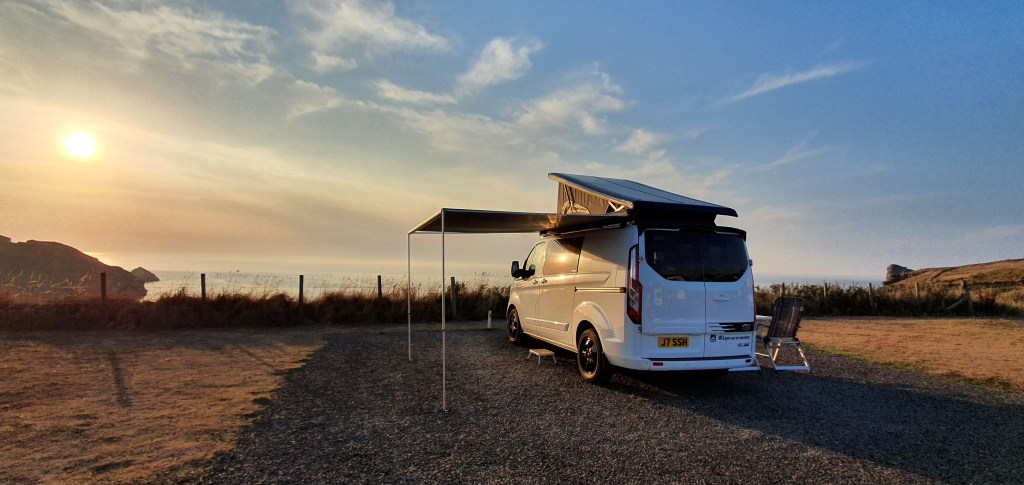
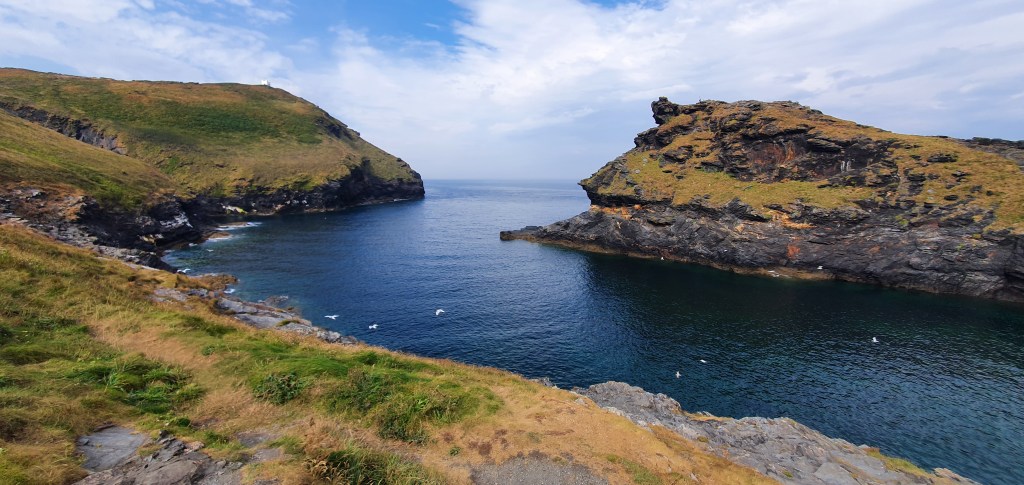
Without Belle to keep us on the site in our time off we planned another few days away in Vinny at Trewethett Farm CAMC on the north Cornish coast between Boscastle and Tintagel. We bagged a stunning pitch on the front row with uninterrupted views of the sea and the famous sunsets and enjoyed a couple of days as holidaymakers. We caught the bus which stops outside the site entrance and got off in pretty Boscastle a couple of miles away. We had visited there previously and so had a nice wander around the village and walked down the inlet past the harbour to where the river meets the sea. A hundred years ago Boscastle was a busy commercial port and the only place where a boat could pull into harbour along the 40 miles of the north coast of Cornwall. Perhaps it is more famous  recently due to the flash floods in 2004 that washed many cars out to sea, flattened around 1000 trees, destroyed homes and businesses and deposited 20 years of silt and sediment on the village in a few hours. The Visitors Centre shows news footage of the scenes as it was unfolding and its incredible to see the force of water as it rages down the valley taking everything with it in its wake. Today the village stands proud and picturesque with little signs of the devastation in endured that day.

Perfect pitch at Trewethett CAMC
Boscastle

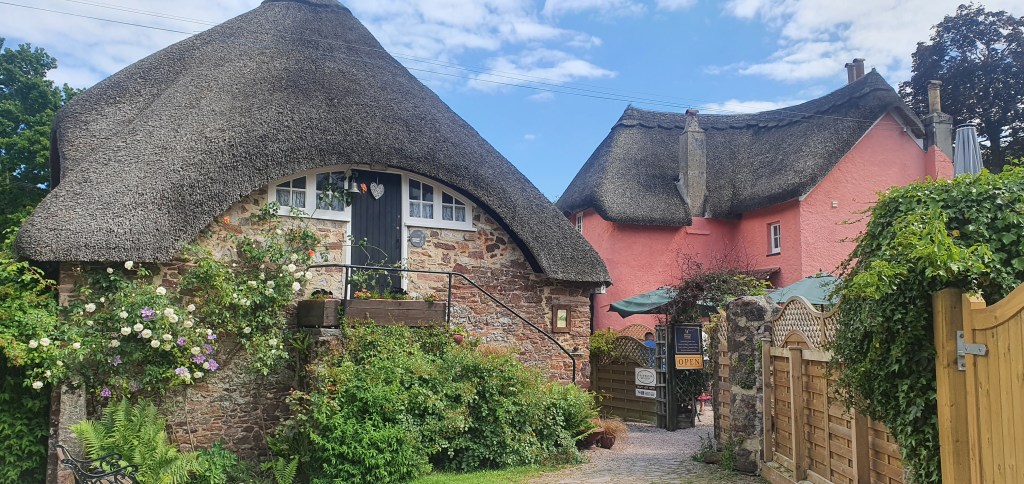
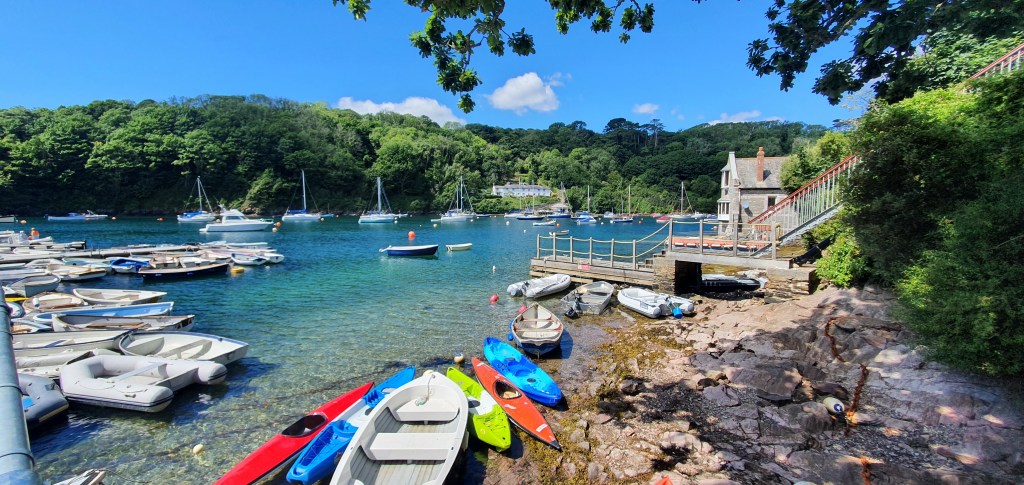
I had heard of a picturesque spot just a few miles along the coast called Newton Ferrers, so a day trip was duly planned to see it for ourselves. Well it certainly didn’t disappoint. Set on a creek of the River Yealm estuary it is a stunning location with breathtaking views at every step. Parking is a little limited but being able to visit on weekdays we managed to find a space in a side road and walked down the hill to the harbour. Pastel painted and thatched cottages with flower filled gardens line the waters edge and modern designer glass fronted properties stand higher up the hillside overlooking the perfect bays below. We spent a long while sitting on a bench by the jetty, soaking up the sun and watching all the activity out on the water. Yachts, ribs and tiny row boats all jostle for a spot to bob about in the picture postcard scene. It has a pub and shop but other than that its the views, peace and tranquillity that are the main attraction. A pure gem of a place.

Newton Ferrers

6 weeks of mayhem and madness soon drew to a close. August Bank Holiday saw a mass desertion from the site and we could once again see sight of empty pitches and areas of grass. Albeit still brown grass from the long hot summer and endless comings and goings. By mid September the member clientele had reverted back to pre-school holiday mode and couples were venturing back out on their road trips. Devon lanes in July and August are not for the faint hearted, especially with caravans and larger motorhomes. After doing battle with oncoming vehicles in Vinny the van, and sometimes feeling like we were reversing backwards more times than we were going forwards, we decided the best idea was to get a small car to whizz around the country roads in instead. After much scouring of the Internet and  garages we found a Hyundai dealer in Torquay who had just the job, an i10. Right mileage right colour right price so I drove it back the same day. We love it and so much less stressful to drive around Devon and get parked in the tourist hotspots.

September also brought us confirmation that we would be returning to Hampshire for the 2023 season, back to Rookesbury Park our second home. I say ‘second home’ as our other news is we bought a house again.

Keep a look out for our next blog as we prepare to leave Devon, move back into a house for the winter and take 4 months off Vanlife.

Sunny scenery

June arrived and the weather continued to remain sunny and warm with the odd torrential downpour just to remind us we are in Start Bay Devon and not St Tropez! Mostly the rain has been overnight so it hasn’t interrupted work or play too much.

Jubilee weekend the site was full to capacity for the first time this season with members taking advantage of the extended 4 day Bank holiday. Bunting was hung from every available structure and flapped away welcoming them to partake in bucks fizz and cream teas provided by the Club to mark the celebrations. Several of the surrounding villages were holding events over the four days and thankfully the threatened downpours held off for them to enjoy the celebrations in dry conditions.

Work on site has continued in earnest with the combination of warmth, sunshine and showers  encouraging everything to grow at an alarming rate. The days fly by juggling office paperwork, facility cleaning, site maintenance, grass cutting, departures, arrivals and pitch checking. Whatever the weather the same jobs need doing every day.

We needed to visit a major town to access banks and shops that are non existent in rural Devon so headed out to Plymouth for a spot of retail therapy. The city is just over an hours drive from Start Bay and there are 3 park and rides situated on the outskirts. We used one on the east side called Coypool which is motorhome friendly with no height barriers. The bus whisked us swiftly into the city and the first stop was right outside the large Drake Circus shopping centre. We got off here not knowing where else to and walked through the retail centre out onto the vast pedestrianised shopping streets. The bus does stop at several other locations in a big loop around the main shopping area so you can get off or on wherever it suits. After conducting our business at the banks and browsing the big brand shops that we have been denied of the past few months, we made our way to the Hoe. Plymouth Hoe is steeped in history and probably most famous for being where Sir Francis Drake had a game of bowls whilst waiting for the tide to turn before heading out to defeat the Spanish Armada in 1588. On the wide green area overlooking Plymouth Sound stands the well known landmark of Smeatons Tower, an iconic red and white striped lighthouse. The lighthouse was originally built on Eddystone Reef in 1759 but was moved stone by stone in the early 1880’s when it was found that the rock it was standing on was crumbling away. It stands 72 feet high and offers views across the Sound and Drakes Island from the restored lantern room at the top.

Smeatons Tower and Plymouth Hoe

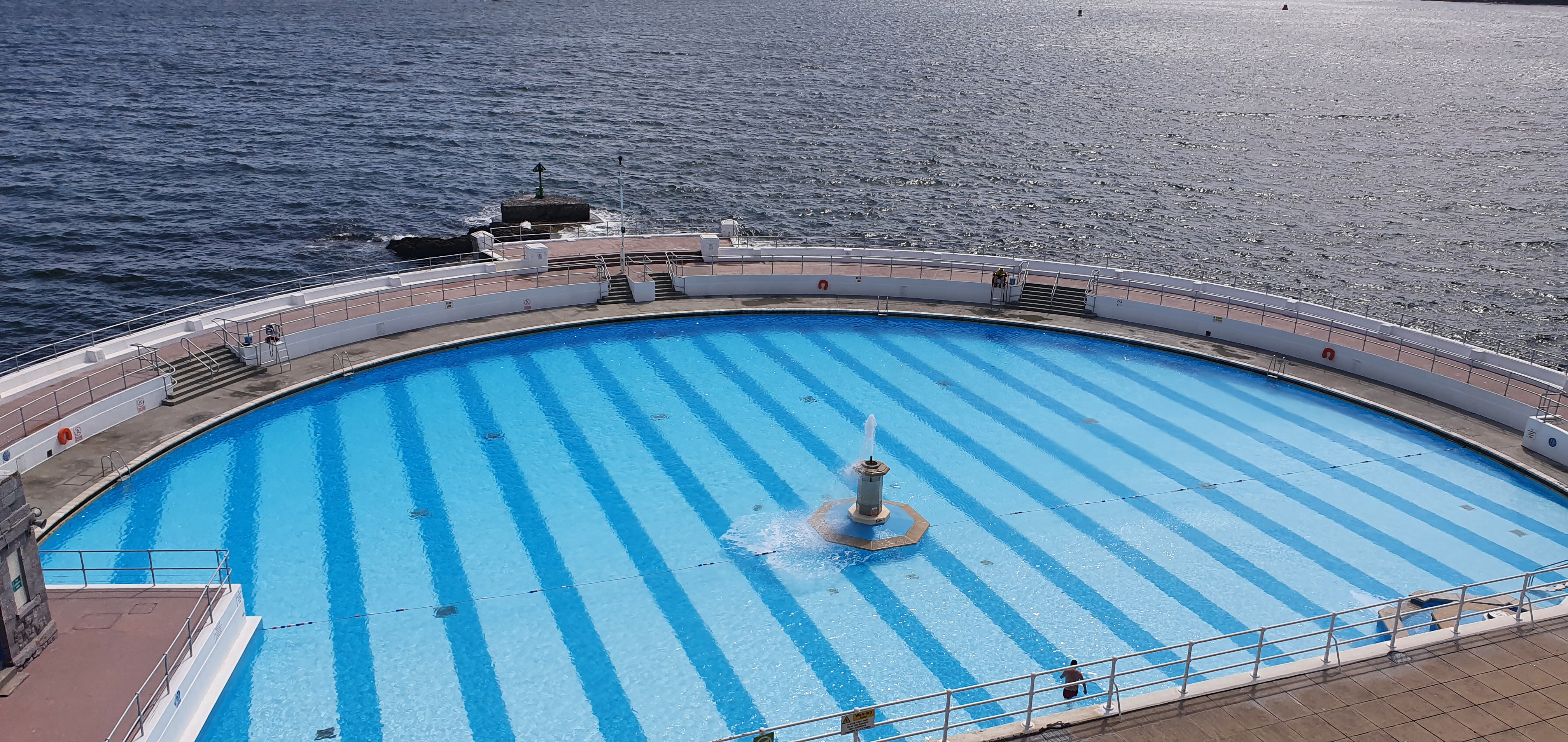
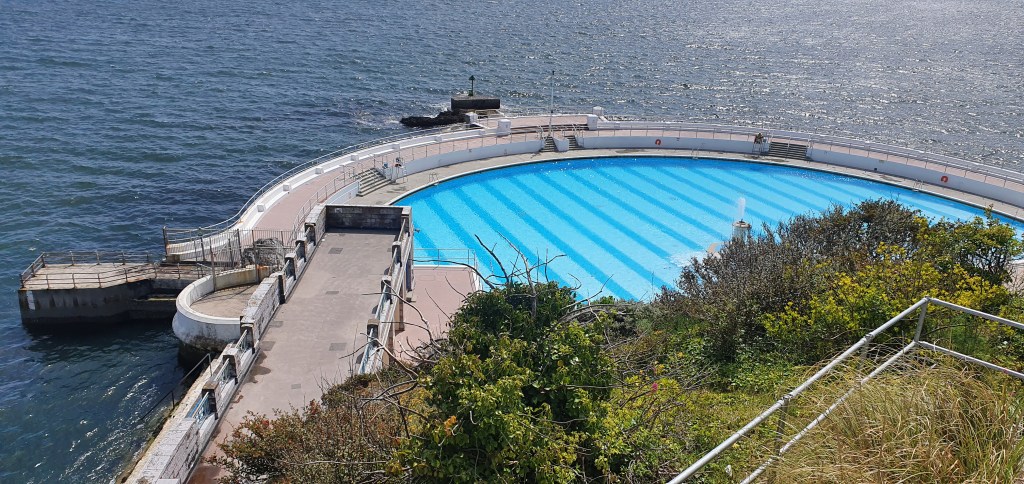
Below the Hoe is the Tinside Lido an open air Art Deco swimming pool. It is a Grade II listed salt water swimming pool originally constructed in 1935. It closed due to neglect in 1992 but after a campaign and fund raising it was extensively refurbished and reopened again in 2005.

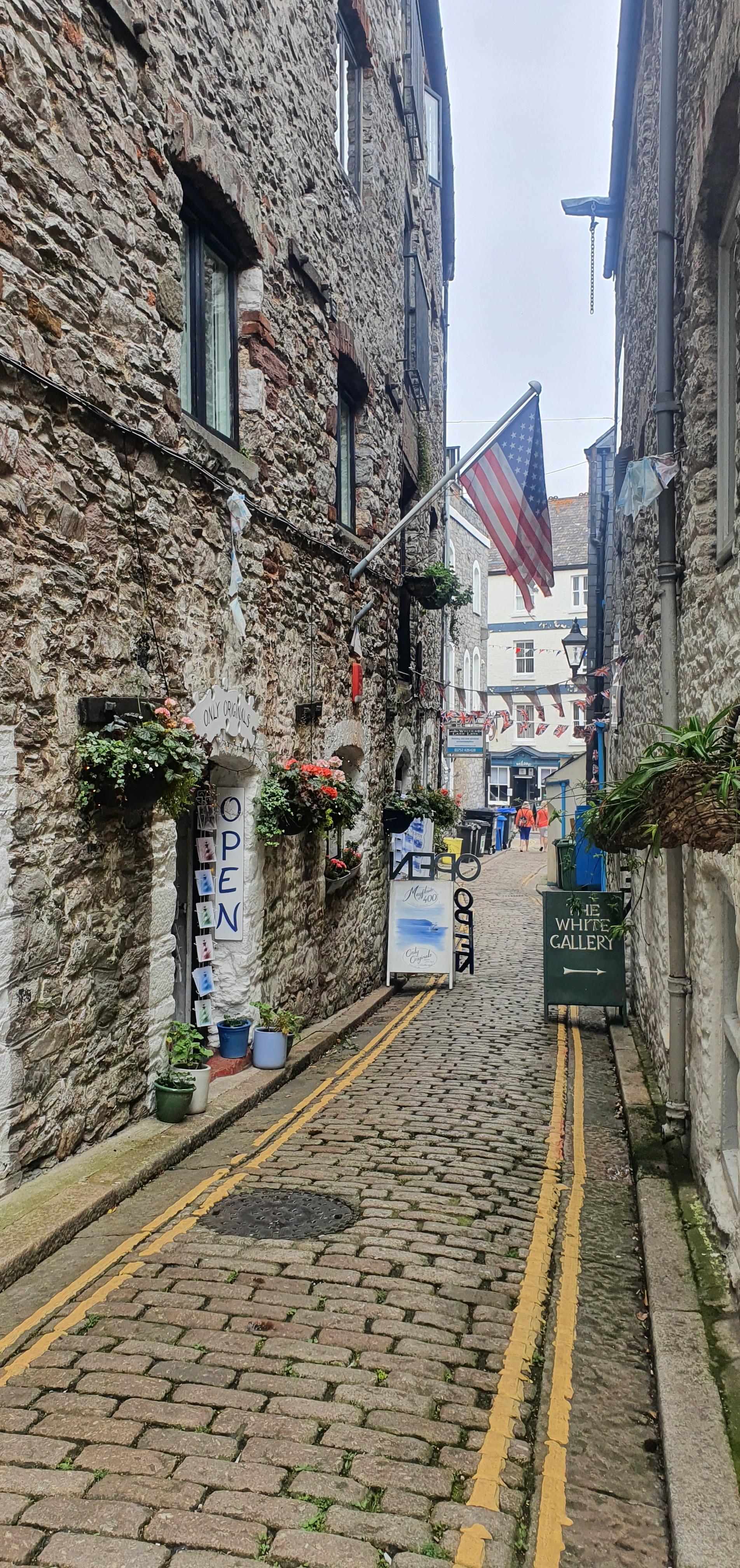
A short walk along the seafront takes you to the Barbican harbour and historic waterfront famed for being the departing point of the Pilgrim Fathers who set sail to discover The New World in 1620. The back streets boast the largest concentration of cobbled streets in Britain and contain 100 listed buildings. Plymouth Gin was founded here, originally the building being a merchants house dating from 1500, it was then a gaol before being remodelled and extended into a distillery in 1793.

Barbican

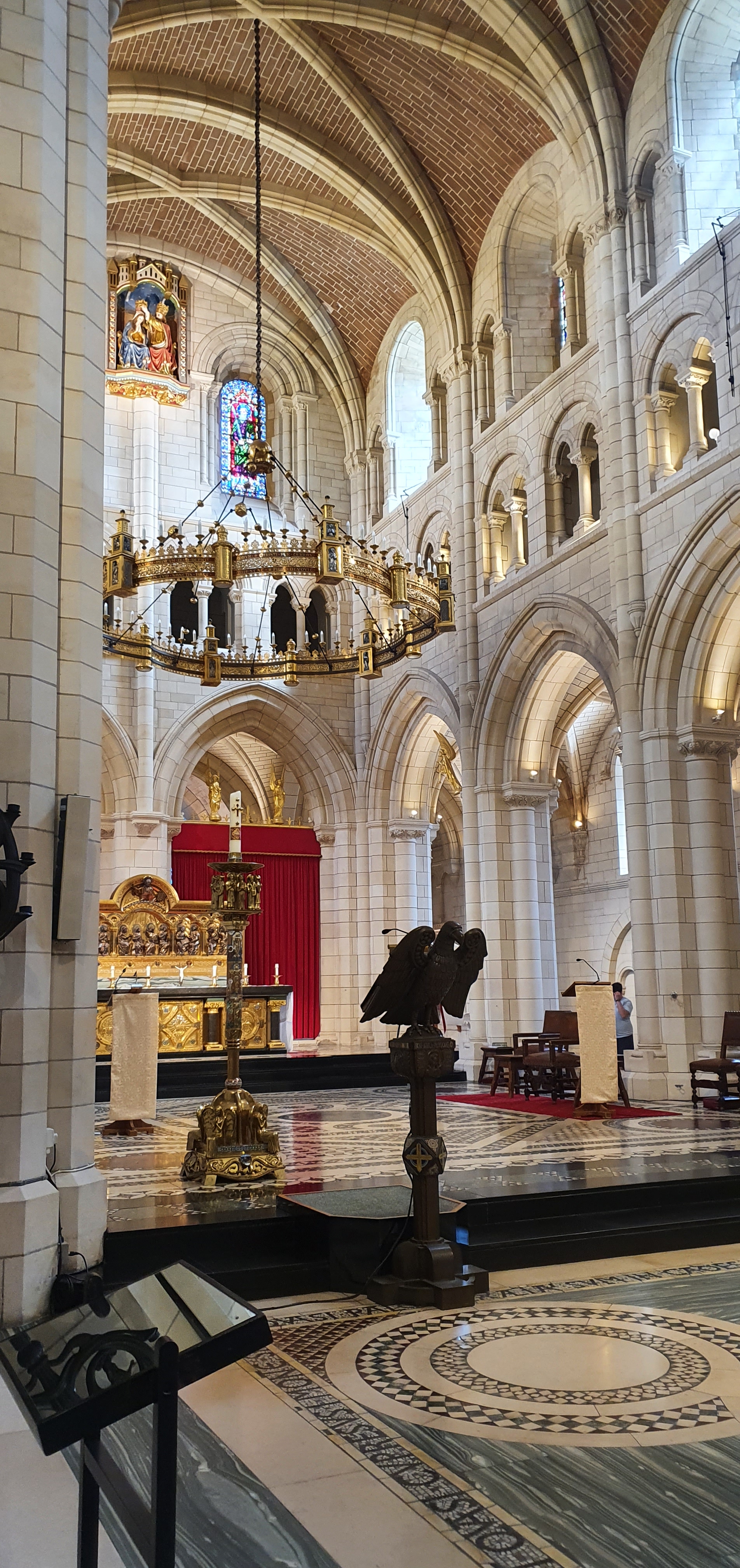
Another day out was spent at nearby Buckfast Abbey. The Abbey forms part of an active Benedictine Monastry that was first built on the site in 1018. The site now includes extensive award winning gardens, a conference centre, restaurant, shop and exhibition centre. There is a very peaceful calming ambiance as you stroll around the immaculately kept grounds and the cooling interior of the Abbey itself was very welcome.

Buckfast Abbey

Moving on from the Abbey we arrived on Dartmoor, a National Park covering a vast area of central Devon and famous for myths, legends, Sherlock Holmes, a prison and wild roaming ponies. We stopped to admire the far reaching views and enjoy the eerie stillness of the moor and were suddenly surrounded by ponies joining us from all directions clearly interested in what we might be having for our picnic and not at all bothered by humans or their vehicles.

Ponies on Dartmoor

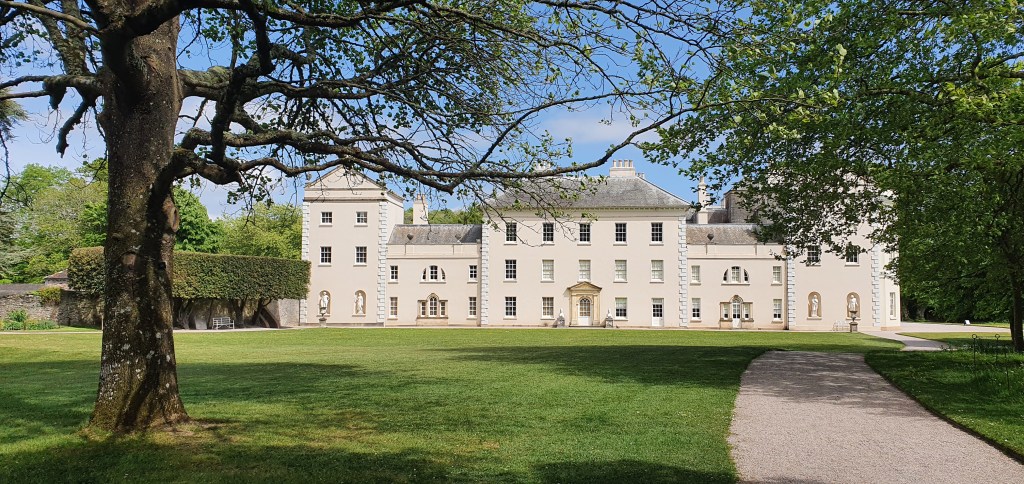
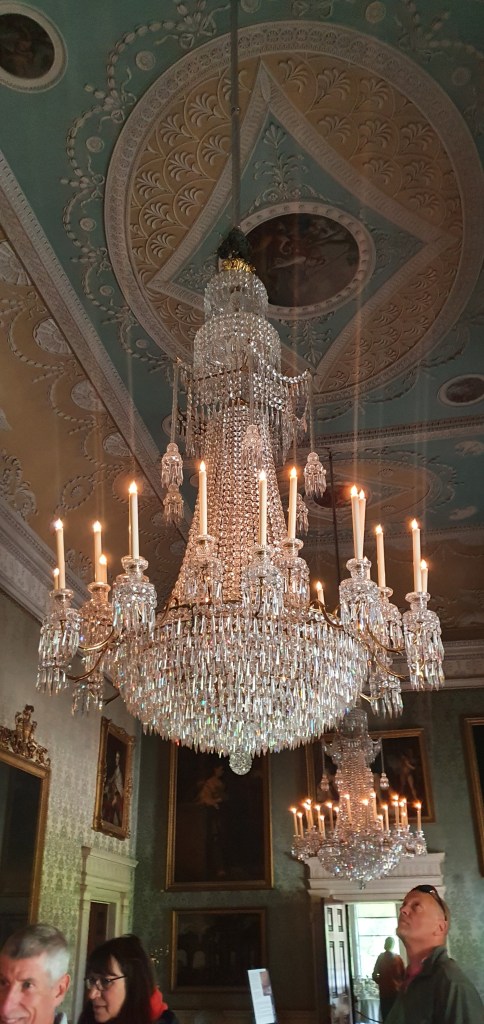
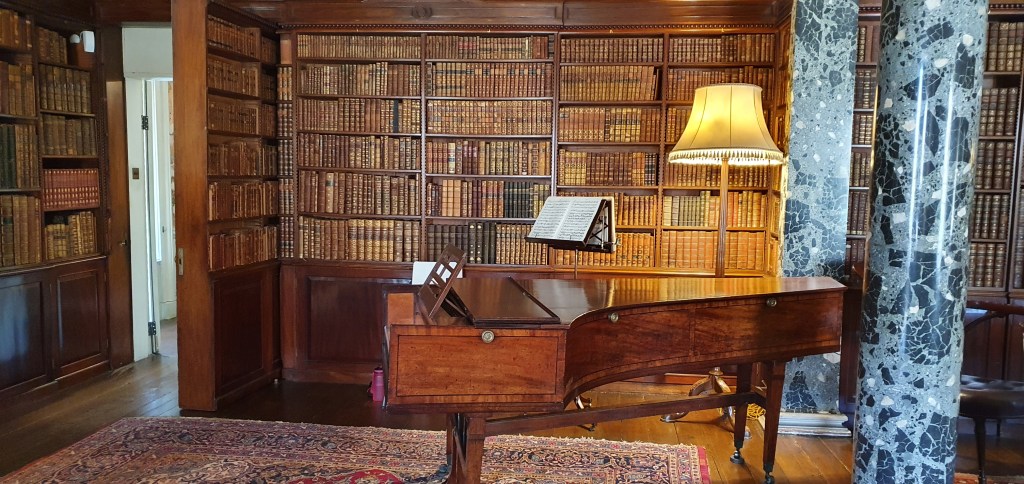
National Trust properties are always on my agenda to visit and so we went to Saltram House, Grade II listed Georgian mansion House near Plymouth. It was transferred to NT in 1951 and has since been used in many period dramas and films including Sense and Sensibility in 1995.

Saltram House

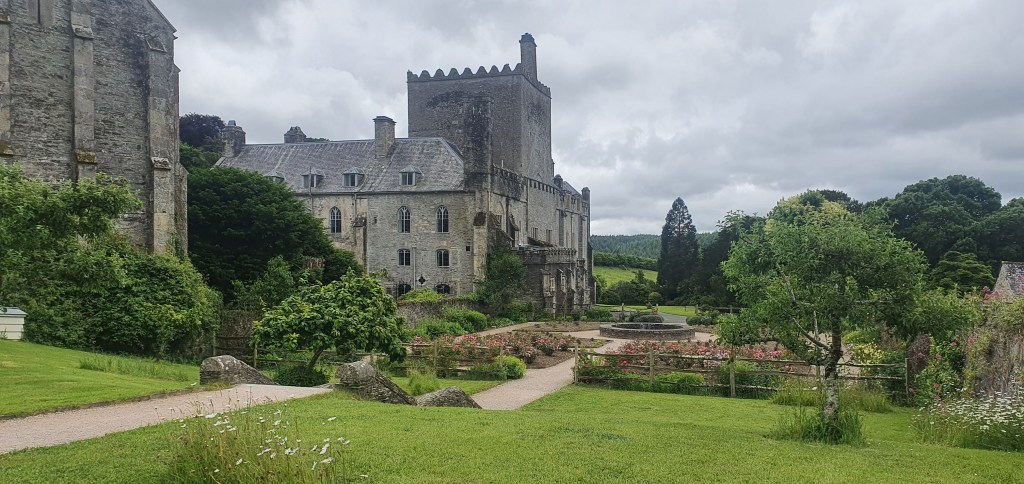
Another we visited nearby is Buckland Abbey. Originally built as a Cistercian Abbey in 1278 it was remodelled and converted into a house around 1576. It was then bought by Sir Francis Drake in 1581 and remained lived in by the Drake family until 1946 when it was bought by a local landowner and presented to the National Trust. There is a very interesting Drake interactive exhibition and a ‘lost’ Rembrandt painting on display.

Buckland Abbey

That was our travels in June and there has been plenty more since, so join us in the next blog as the weather hots up in July and we continue to explore Devon.